Airtouch

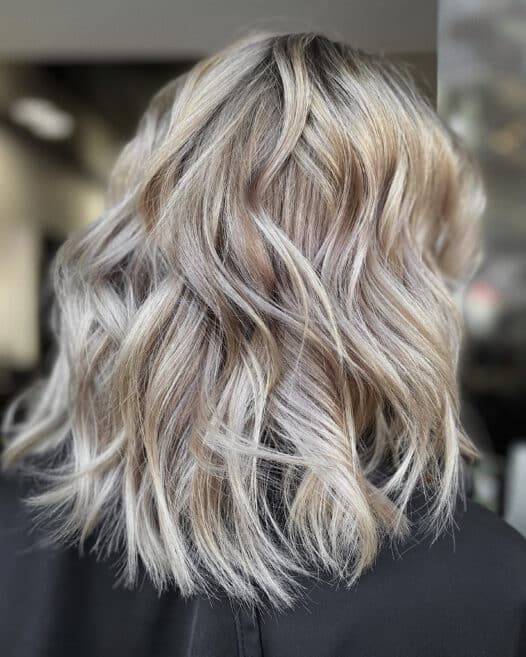
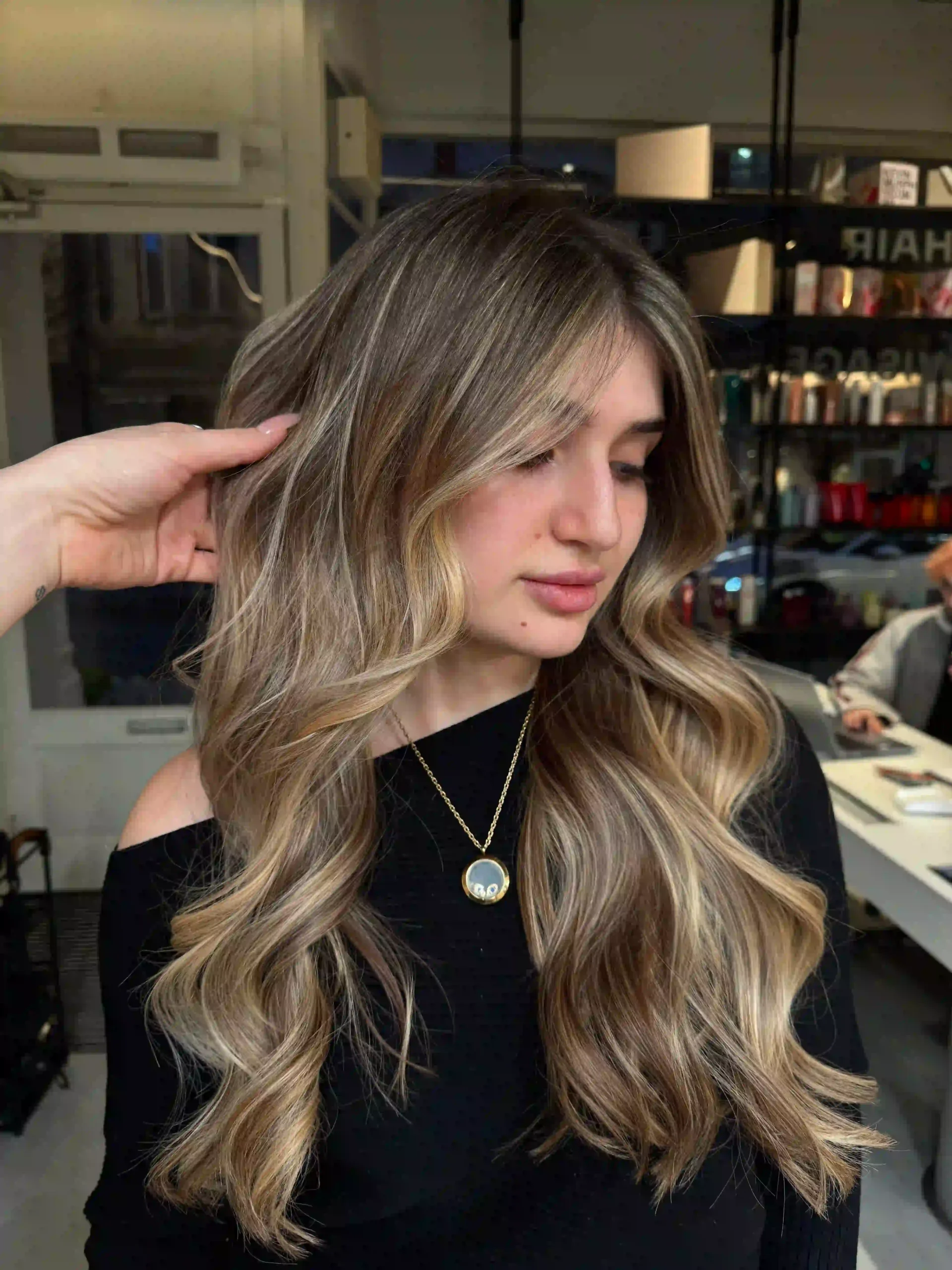
AirTouch hair coloring is a hand-painted lightening service that leaves your natural colour at the root as a soft shadow, so the hair grows out without a line. It suits you if your roots start bothering you four weeks after every colour, if an old balayage has gone brassy and blocky at the top, or if you want to be noticeably lighter without losing condition through the midlengths. PIED-DE-POULE colours AirTouch highlights at both South Kensington and Oxford Circus salons.

Seamless Regrowth

No hard line as it grows out

Bright Without Breakage

Lighter length, midlengths still strong

Fewer Colour Appointments

Four to five months between visits

Real Depth

Sun-lightened, never striped or flat

What is the AirTouch hair color technique?

Sections come off the head no thicker than a centimetre, starting at the nape and working upward. The colourist holds each one taut and runs a hairdryer along it, so the short hairs and the internal layers drop out of the section and fall back against the head. Foil goes under what stays in the hand, and lightener goes onto that ribbon only, beginning 3 to 5 cm below the roots. The blown-out hairs keep your natural colour and sit underneath as a built-in shadow. That shadow is the point, because it means there is no line to grow out.

The air touch hair dryer does the sorting that a foil packet or a freehand sweep leaves to the eye. Set to cool or low warm air, an airtouch hair dryer removes the guesswork about which hairs are long enough to carry the lift.

How it differs from other lightening work

Classic foil work isolates a slice and lightens every hair inside it, root to tip, which is why the regrowth arrives as a stripe. Freehand painting softens the top but still lightens whatever the brush touches, short hairs included. The balayage approach and this one share the same painted, gradual logic, but the airflow step changes the density of what gets lifted, so the result reads finer and more diffused.

Two practical differences follow from that:

  • Less hair is lightened per section, so the head as a whole takes less chemical load
  • The transition zone is measured in inches rather than a centimetre, so months of growth still look intentional

Choosing the shade

Blondes usually land on honey and copper. Brunettes suit light nut, caramel and coffee tones. On light brown hair, two to three tones of lift gives the cleanest join. Get the shade family wrong and the transition between tones becomes visible, and that transition is the whole reason to book this technique rather than a simpler one.

Who it works best for

  • You colour every four to six weeks and want to stop
  • Your natural base is dark blonde to light brown and you want to be noticeably lighter
  • Previous highlights have grown out into a visible band across the crown
  • Your hair is fine and foils have made it look flat rather than fuller
  • You want brightness around the face without committing the whole head

Air touch highlights work on short and long hair alike, at any age, on any hair type. Coarse, very dark or heavily box-dyed hair usually needs two sittings to land clean rather than orange. Hair that snaps when stretched wet gets Olaplex before any lightener touches it.

What results to expect and when

You leave the first appointment with the colour finished, toned, washed, treated with balm and dried. The tone settles over the first two washes and reaches its true shade around day ten. Warmth creeps back in from about week six, which is when a hair toner brings it back without any lightener going near your hair. The placement itself holds its shape for up to six months before the shadow at the root stops reading as deliberate.

Second appointments are faster than the first, because the colourist works into the existing map rather than building one.

Session lengths at PIED-DE-POULE

Front sections plus toning run about 2 hours. Upper-head work runs 3 to 3.5 hours. A full head runs 4 to 5 hours on shoulder-length hair and up to 6 on long, dense hair, including the tone and finish. Long or thick hair often pairs the colour with a haircut in the same visit, since the ends set how the painted pieces fall.

For a change of more than three tones, plan two sessions eight to ten weeks apart. Maintenance after that is one toning visit at week six and a full repeat at month five or six.
Read More

How AirTouch Hair Coloring Is Performed at PIED-DE-POULE

01
Consultation

Your colourist checks the elasticity and porosity of your hair, reads any old colour still sitting in the ends, and tests a strand if there is box dye in the history. You agree the shade family, the depth of the shadow at the root, and the honest number of sittings it will take.

02
Sectioning and Airflow

Hair is combed out and divided into sections no thicker than a centimetre, starting at the nape. Each section is held taut while air lifts the short hairs and internal layers out of it. This step decides the softness of the result and takes up a large share of the appointment.

03
Foiling and Painting

Foil slides under the remaining long strand and lightener goes on from 3 to 5 cm below the roots, feathered at the top so the start point stays invisible. Placement is heavier around the face and lighter at the back, which is what makes the colour follow your features.

04
Controlled Development

Development time is set by your starting shade and the shade you asked for, so your colourist tests strands at intervals rather than working to a fixed clock. The foil comes off the moment the pigment reaches the right pale stage.

05
Wash, Balm and Toner

The lightener is rinsed out and balm goes through the lengths, with extra on the ends, which take the most stress during colouring. A toner then neutralises remaining warmth and sets the final shade.

06
Finish and Plan

Hair is blow-dried so you see how the painted pieces sit in movement. You leave with a home-care routine, a wash schedule, and dates for the toner at week six and the next full appointment.

Time to preen your feathers

Book an appointment

Treatment Benefits

Airtouch hair highlights with soft blended blonde tones
  • SEAMLESS REGROWTH

    Only mature strands take lightener, so the untouched short hairs sit underneath as a soft shadow and the root grows down without a visible edge.

  • LOWER CHEMICAL LOAD

    Fewer hairs per section are lifted, which leaves more of the cuticle intact and keeps the midlengths springy instead of porous.

  • VISUAL DENSITY

    Alternating lightened and natural strands throw shadow against brightness, and fine hair reads thicker because the eye picks up more separation.

  • EVEN TONE ACROSS THE HEAD

    Colour is placed on strands rather than slices, so the finished shade shifts gradually from crown to ends with no stripe or block.

FAQ

  • How long does an AirTouch appointment take?

    Front sections take about 2 hours, upper-head work 3 to 3.5, and a full head 4 to 5 on shoulder-length hair. Very long or dense hair can run to 6 hours including toning and finishing.

  • What is the AirTouch price at PIED-DE-POULE?

    Cost is set by hair length, density and how much colour history is already in the hair. You get the exact figure at consultation before anything is mixed, and it does not change mid-appointment.

  • How long does the colour last?

    The placement holds its shape for up to six months before the root shadow stops looking deliberate. A toner at around week six keeps the shade clean in between.

  • Does it damage hair?

    Less than a full head of foils, because only part of each section takes lightener and the rest stays untouched. Balm goes on straight after rinsing, and a bond treatment is added where the ends need it.

  • Will it work on dark hair?

    Yes. Brunettes usually go into light nut, caramel or coffee tones, and a jump of more than three tones takes two sittings spaced eight to ten weeks apart.

  • Can I do AirTouch at home?

    No. The airflow sectioning and the timing both need a second pair of hands and salon-grade product, and home attempts are the most common reason clients arrive needing a correction.

  • How should I look after the colour?

    Mild shampoo, a balm with natural oils, and a mask once a week, with extra attention to the ends. Come back to the colourist who did the work if you want the tone adjusted rather than reaching for a box.

  • Language:
  • Choose a location:
    Book Now