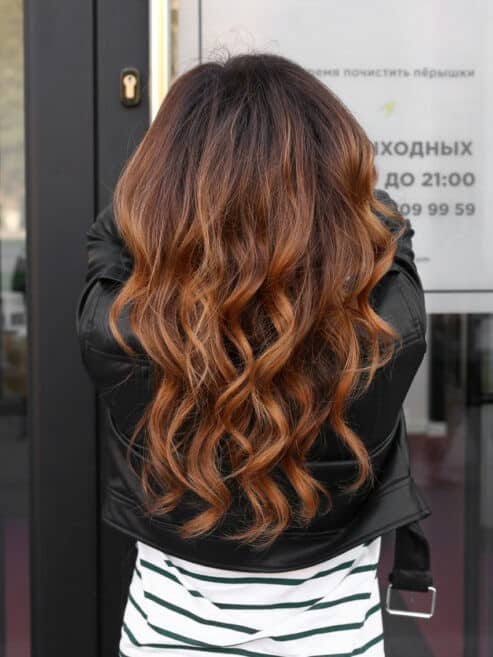
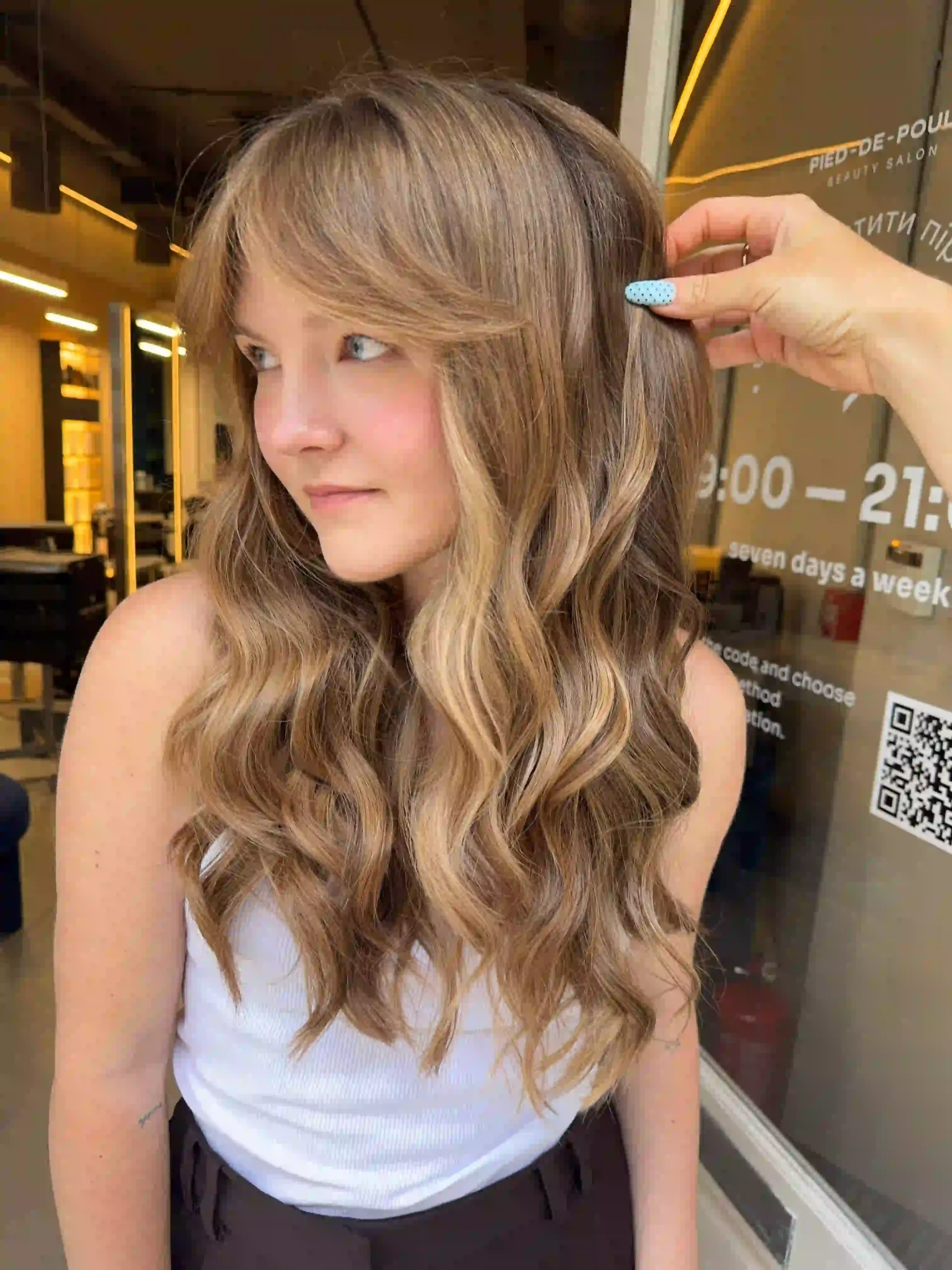
Balayage is a French word meaning “to sweep,” and that is exactly what your colourist does: paint lightener directly onto sections of hair with a brush, working freehand instead of through foils. Colour goes on where light naturally lands — mid-lengths and ends — so it grows in as a loose, soft graduation rather than a hard line at the root. Because nothing is sealed inside foil, the lightener processes more slowly, which is why balayage tends to feel less intense on the hair than a full head of foiled colour.
Balayage vs foiled colour
Foils lift hair to one consistent level in each section, which is what gives foiled colour that neat, defined stripe. Balayage skips the foil and blends the lightener by hand along the shaft, so colour fades rather than stops. Clients who want that classic multi-tonal foil finish usually ask about Hair Highlights instead, since the two techniques are built for different results — graphic contrast on one side, soft blending on the other.
Types of Balayage hair highlights
Placement and tone decide the result, and your colourist matches the approach to your base colour and how much change you want.
- Classic balayage — soft, hand-painted highlights blended from mid-length to ends, close to how hair lightens naturally in the sun
- Full balayage — colour placed through the whole head, top to underneath, for the most brightness and dimension
- Partial balayage — lightening stays within the top and outer layers, so the colour underneath keeps its depth and the change reads lighter
- Caramel or mocha balayage — warm, rich tones built for brunettes who want depth without lifting to blonde
- Face-framing balayage — lighter pieces placed around the hairline to brighten features without touching the rest of the head
- Reverse balayage — darker pieces woven back through ends that have grown too warm or too light, pulling depth back toward the root
On darker bases, caramel, chestnut and copper tones tend to work better than a straight lift toward blonde, since they add warmth rather than fighting the base colour. Grey coverage is a slightly different job — it needs colour woven through the roots rather than just the lengths, which is why clients with more silver through the temples often ask about Grey Hair Blending alongside their balayage rather than in place of it.
Not sure which variation suits you? Your specialist will recommend the right option during the consultation, based on your base colour, skin tone, and the result you want.
Session length, patch tests and what a booking includes
A full balayage service runs two and a half to four hours, with longer or thicker hair at the top end of that range.
- First colour appointment, or it’s been 6+ months since your last one — a strand test is done 48 hours before, so sensitivity shows up ahead of time
- Toning is built into every session, to settle the shade and avoid brassiness
- First appointments usually finish with a bond-strengthening treatment such as K18, since freshly lightened hair needs the extra reinforcement