Medical Pedicure

Medical Pedicure

A medical pedicure is a clinical foot care appointment conducted by a qualified podiatrist — not a nail technician. The podiatrist addresses problems that a standard pedicure cannot: ingrown nails, deep heel cracks, plantar warts, hyperkeratosis, fungal infections, and diabetic foot. At PIED-DE-POULE, the same specialist who assesses the foot performs the treatment, covering both the medical issue and the cosmetic result in one session. Both London locations — South Kensington and Oxford Circus — are open daily from 9am to 9pm.

Problems Properly Resolved

Ingrown nails, warts, cracks treated at the root cause

Pain-Free Walking

Pressure points and irritation relieved the same day

Early Issues Caught

Problems identified before symptoms become serious

Feet That Look Healthy

Nails shaped, skin smooth, everything properly treated

What is a Medical Pedicure?

A standard pedicure addresses what is on the surface. A medical pedicure addresses what is causing it. Thickened skin returns within weeks if the underlying pressure pattern is not corrected. An ingrown nail recurs if the nail edge is not managed correctly. A crack on the heel deepens if the source — whether improper care, nutritional deficiency, or fungal infection — is not identified. Medical pedicure treats the foot as a clinical case, not a cosmetic one.

The procedure requires a podiatrist with specialist knowledge across dermatology, orthopaedics, surgery, and endocrinology. That range of expertise is what makes the difference: the same condition can have different causes, and the treatment plan must reflect which one applies. After assessment, the podiatrist processes the feet individually — no standard sequence applied regardless of what is found. Where the problem requires a referral to another specialist or further examination, the podiatrist will advise accordingly. Clients who have been managing a chronic foot condition and want an assessment before committing to a longer care plan can also book the consultation as a standalone appointment.

Conditions Treated

The podiatrist at PIED-DE-POULE assesses and treats the full range of common foot complaints:

  • Ingrown toenails and nail plate deformation
  • Heel cracks and hyperkeratosis
  • Corns, calluses, and hard skin
  • Plantar, flat, and periungual warts
  • Fungal nail infections and thickened nails
  • Excessive perspiration
  • Diabetic foot
  • Foot pain of undetermined origin

Early-stage conditions are frequently identified before symptoms become apparent. For clients managing diabetes or circulatory conditions, the assessment also covers sensation and circulation to reduce the risk of complications from undetected changes. Where protective padding or offloading dressings can immediately reduce pressure and discomfort during walking, these are applied within the same session.

Wart Removal

Warts are infectious benign growths that spread through skin cracks and grow progressively larger without treatment. Self-treatment carries a high recurrence risk. The podiatrist selects the removal method based on wart type — flat, plantar, or periungual — and size. Some warts resolve after a single session; others require a course of treatment. Only proven techniques and disposable or sterilized instruments are used throughout.

Cracked Heel Treatment

Heel cracks begin as surface fissures and deepen if left untreated, eventually becoming painful and creating an entry point for infection. Treatment includes a hygienic medical pedicure using specialist equipment to soften and smooth the skin, combined with an individual care programme developed after the cause has been identified. For clients whose cracked heels are connected to a cosmetic maintenance routine, the Classic Pedicure or Machine Pedicure may be more appropriate for follow-up maintenance once the medical issue has been resolved.

Untreated foot problems affect more than the feet. Persistent pressure imbalances in the foot alter gait, which over time transfers strain to the ankles, knees, hips, and lower back.

Read More

How a Medical Pedicure Is Performed at PIED-DE-POULE

01
Consultation and Assessment

The podiatrist reviews the client's medical history, current complaints, lifestyle, and footwear habits before examining the nails, skin, pressure distribution, and — where relevant — circulation and sensation. This diagnostic stage determines what is treated and how.

02
Treatment Plan

Based on the assessment, the podiatrist selects the appropriate treatment sequence and explains what will be done, why, and what results to expect. If a wart removal, ingrown nail correction, or multi-session treatment course is needed, this is confirmed before any procedure begins.

03
Core Foot Treatment

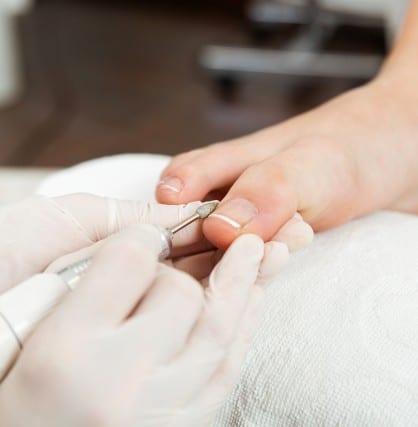
The feet are treated individually according to the clinical findings: hard skin, calluses, and corns are removed; nail plates are corrected and shaped; heel cracks are debrided and treated; fungal or thickened nails are reduced. Where protective padding or offloading dressings reduce immediate pressure and discomfort, these are applied at this stage.

04
Deep Exfoliation and Finishing

Following the clinical work, deep exfoliation is performed and antibacterial essential oils are applied to the nails and feet. A foot massage completes the session, addressing circulation and leaving the feet comfortable rather than just clinically treated.

05
Aftercare Guidance

The podiatrist provides specific instructions for home care — moisturizing routine, nail trimming technique, footwear recommendations — tailored to the conditions identified and treated. This advice directly affects how long the results hold and whether the condition returns.

06
Follow-Up and Referral

Where a single session is insufficient — warts requiring multiple procedures, ongoing fungal infection management, or diabetic foot monitoring — a course of treatment is scheduled. If the condition falls outside the scope of the session, the podiatrist arranges an appropriate referral to a specialist.

Time to preen your feathers

Book an appointment

Why Choose Medical Pedicure at PIED-DE-POULE

  • Podiatrist Training Across Multiple Medical Disciplines

    The specialist conducting the assessment has specific training in dermatology, orthopaedics, surgery, and endocrinology. This breadth of knowledge is what makes it possible to identify conditions like diabetic foot complications or nail deformations that a cosmetic pedicure specialist would not recognise.

  • Sterile and Disposable Instruments Throughout

    Only sterile or single-use instruments come into contact with the skin and nails. This is a clinical hygiene standard, not an optional upgrade — and it matters most for clients with open cracks, active infections, or compromised circulation.

  • Cosmetic and Medical in One Appointment

    The session combines clinical treatment with deep exfoliation, a foot massage, and nail finishing. Clients leave with feet that are both properly treated and visibly improved, without needing separate appointments for the medical and cosmetic components.

  • Central London, Open Daily Until 9pm

    Both locations — South Kensington and Oxford Circus — are open seven days a week, including evenings. Clients do not need to take time off work to access specialist podiatry care.

FAQ

  • What is a medical pedicure?

    A medical pedicure is a clinical foot care appointment where a qualified podiatrist assesses, diagnoses, and treats conditions such as ingrown nails, heel cracks, calluses, warts, and fungal infections using sterile instruments — combining medical treatment with a cosmetic finish in one session.

  • What is the difference between a pedicure and a medipedi?

    A standard pedicure is a cosmetic treatment — it cleans, shapes, and polishes. A medi-pedi is conducted by a trained podiatrist who diagnoses and treats the underlying cause of foot and nail conditions using sterile medical instruments.

  • Is a medi pedi the same as podiatry?

    A medi-pedi is one type of podiatry appointment focused on nail and skin care — it sits within the broader scope of podiatry, which also covers biomechanics, orthotics, and foot pain management.

  • What is the difference between the medical pedicure and the machine?

    The machine pedicure is a cosmetic foot care service using an e-file device — suitable for regular maintenance of healthy feet. The medical pedicure is a clinical appointment conducted by a trained podiatrist to diagnose and treat specific foot conditions. The two serve different purposes and different starting points.

  • How long does a medical pedicure appointment take?

    Session length varies with the complexity of what is found during assessment — a straightforward callus removal and nail correction takes less time than wart treatment or ingrown nail correction. Confirm the expected duration when booking.

  • How many sessions will I need?

    Some conditions resolve in a single appointment. Others — warts, fungal infections, recurring ingrown nails — require a treatment course. The podiatrist confirms the plan after the initial assessment.

  • Does a medical pedicure hurt?

    Clinical treatments such as wart removal or deep crack debridement involve some discomfort, though the podiatrist uses techniques and instruments calibrated for minimal trauma. Standard callus removal and nail work produce no more discomfort than a firm pedicure.

  • Is a medical pedicure suitable if I have diabetes?

    Yes, and for diabetic clients it is the preferred option over a cosmetic pedicure. The assessment covers circulation and sensation, and all instruments are sterile — reducing the infection risk that any foot treatment carries for someone with compromised healing.

  • Language:
  • Choose a location:
    Book Now