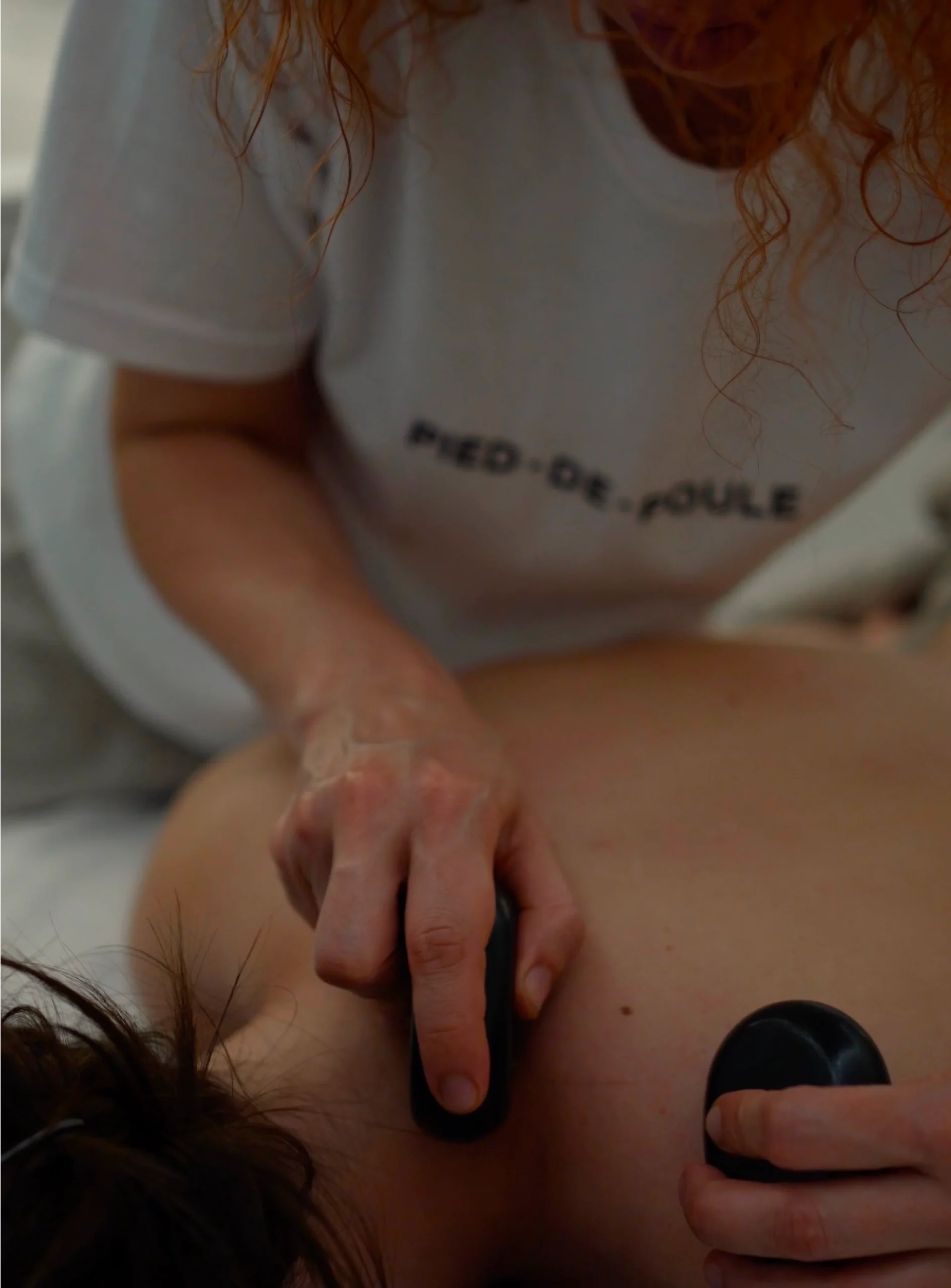
Back massage is hands-on therapy that works through the muscles, fascia, and connective tissue across your shoulders, upper back, and lower back. Pressure on the skin and underlying tissue increases blood and lymph flow, bringing more oxygen into the muscle and clearing out the waste products that build up around tight, overworked areas. Certain techniques also raise your pain threshold and lower muscle tone, which is part of why a sore back massage can leave you feeling looser within minutes, not just relaxed.
Who it’s for
This works well if any of the following sounds familiar:
- You spend long hours at a desk and feel screen fatigue settling into your neck and shoulders
- You drive frequently or sit in static positions for long stretches
- You’re a parent who’s constantly lifting and carrying
- You’re an athlete recovering from intense training or dealing with a recurring niggle
- You’re going through a stressful period and carrying it physically
Main types of back therapy
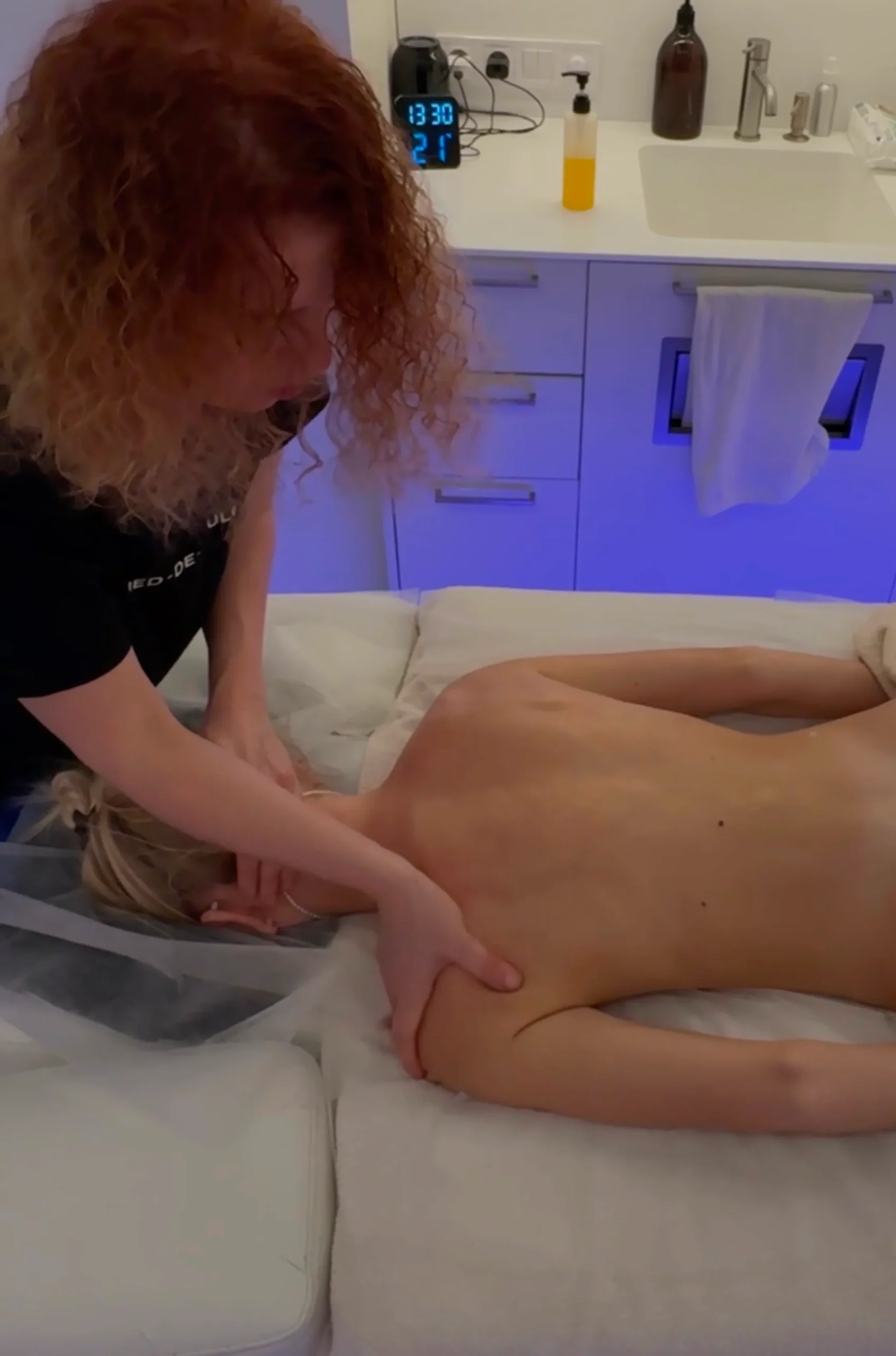
One approach focuses on relaxation, using lighter, broader strokes across the surface layers of muscle, combined with kneading and rhythmic movement. Pressure stays light to medium and adapts to your comfort level, which makes this a good entry point if you’re new to massage for back pain or simply want general stress relief and a Swedish back massage style session. Our therapist applies oil for smooth, continuous strokes from the upper back down through the lower back.
The other approach is more clinical, aimed at chronic tension or recovery from injury. A back deep tissue massage uses slower, more deliberate pressure that reaches into deeper muscle layers and fascia, sometimes using elbows and forearms to work into specific tight spots. This is the better option for massage for back problems that have built up over months, chronic muscular injuries, or ongoing myofascial tightness that lighter pressure doesn’t shift.
Effects on the upper and lower back
Work on the upper back eases muscle tension, improves circulation, and stimulates the lymphatic system to clear waste and toxins. It also improves posture, increases flexibility, and raises oxygen levels in the tissue, which reduces the dull ache that comes from fatigue.
Lower back work reduces pain by relaxing tight muscles and interrupting the pain signals travelling to the brain. It also breaks down scar tissue contributing to stiffness, and the rise in muscle temperature improves tissue elasticity, which is part of why massage for lower back pain tends to bring noticeable relief even after one session.
What to expect during a session
You’ll lie on a massage table, draped with a sheet that only uncovers the area being worked on. The session usually starts at the back and shoulders, moves into the neck, arms, and legs, and finishes with slower, calming strokes. There’s no need to overthink what to wear for back massage, loose, comfortable clothing is fine, and you’ll be given privacy to undress to your comfort level before the therapist begins.
After your session
Deep relaxation and a touch of drowsiness afterwards is completely normal, it’s a sign your body is shifting into a recovery state. Drinking plenty of water afterwards helps, since massage stimulates circulation and supports your body in releasing built-up tension.
Some mild soreness, a slight headache, tiredness, or increased thirst for a day or two after a back deep tissue massage is also normal. Staying hydrated, doing some gentle movement and stretching, and avoiding intense exercise for at least 24 hours all support recovery, and a warm bath with Epsom salts can help settle the muscles further.
Soreness lasting 24 to 48 hours is typical, and a smaller number of people feel it for up to 72 hours after intensive work on particularly tight areas. Pain that’s getting worse, significant swelling, spreading bruising, numbness, or anything lasting more than three days needs to be checked by a professional.
Session lengths and how often to book
At PIED-DE-POULE, back massage is available as 40-minute sessions, with longer sessions allowing time to also work the neck, shoulders, and legs as part of a more complete release, similar to what you’d get with a relaxing massage focused on overall tension relief. Office workers tend to benefit from a session every two to four weeks, while chronic pain often responds best to one or two sessions a week initially, dropping to a maintenance rhythm of every three to four weeks. Athletes training intensively often book weekly or every two weeks, and for general wellbeing, monthly sessions are enough to keep tension from building up. If you’re also dealing with tight hips or legs, a sports massage targets those areas with the same deep, focused approach used here, and if you’re not sure which option fits best, our full range of massage treatments breaks down what each session involves.