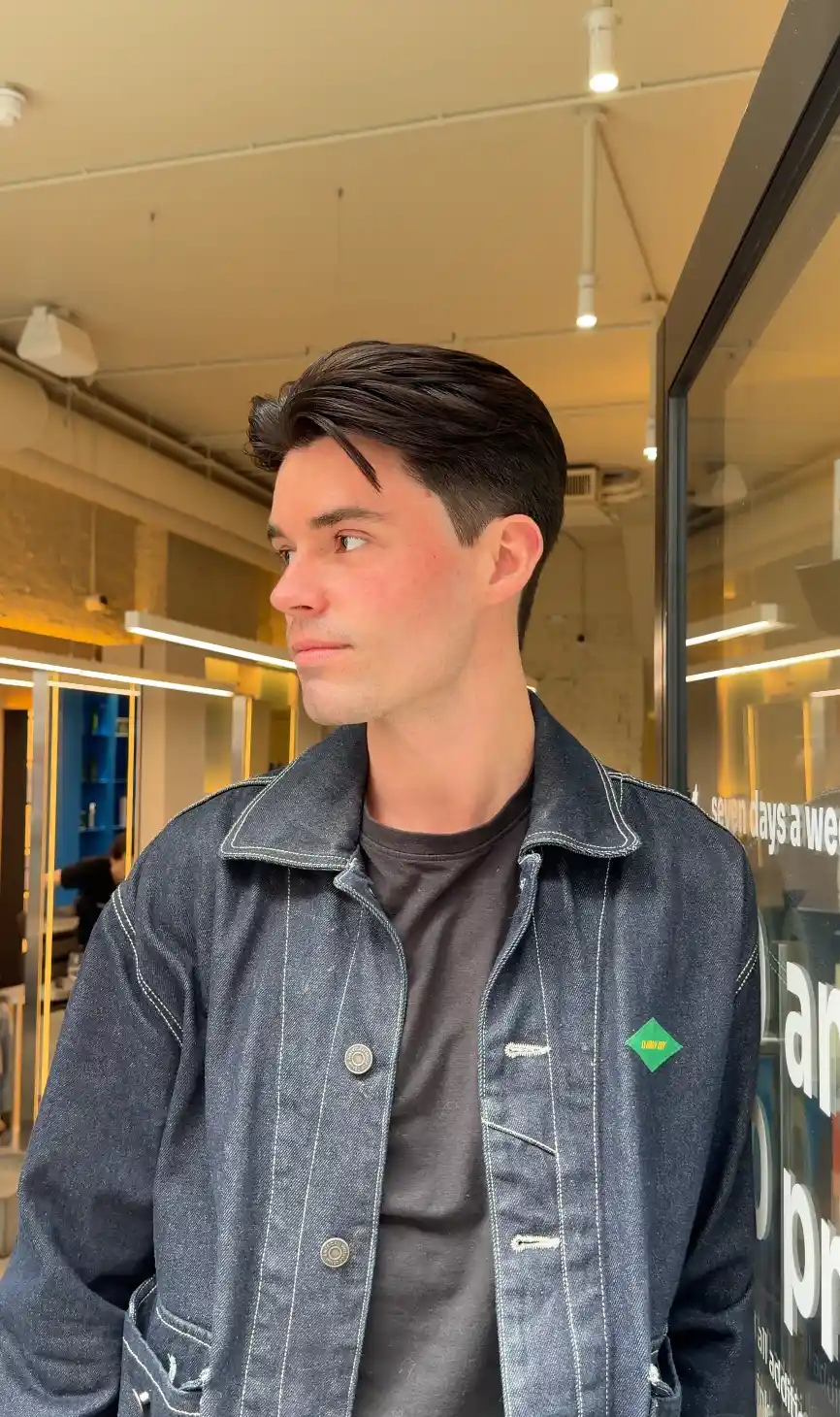
Hair has weight, and it grows in a direction. A men’s haircut works with both: bulk comes out of the interior so the hair sits down instead of pushing out at the sides, the perimeter gets cut to a defined line, and the sides are graduated so there’s no shelf where short meets long. Clippers set the length through the back and sides, scissors control texture and movement on top, and the two get blended until the join is invisible.
How it differs from a quick trim
A quick trim takes length off. A proper cut changes how the hair sits. Ten minutes with clippers gives you shorter hair in the same shape you walked in with, which is why it grows out looking heavy at the sides within a fortnight. The work that makes a cut last happens in the blend and in the interior, where weight is removed without changing the outline. That’s also the difference between a clipper-only finish and the scissor work behind most men’s hairstyles, where the shape is built in the top section and the sides support it.
Who gets the most out of it
- Thick hair that sits wide instead of flat by the end of the day
- Curly or wavy hair that’s never been cut by someone who understands curl pattern
- A fade at week five, when the line has softened and the neck has filled in
- A grown-out cut before a wedding, a job interview or a client meeting
- A receding or thinning hairline that needs a shape that works with it rather than against it
- Anyone who’s had the same cut for a decade and wants a second opinion
Grey coming through at the temples changes what a cut looks like on you, and some men pair the cut with grey blending to soften the contrast rather than remove it.
Types of Men’s Haircuts
Fade – The sides taken very short at the bottom and blended up into the length on top. Ask for a fade and your stylist will pick the height that suits you: low above the ear for something office-clean, mid at the temple for more contrast, high for a sharp silhouette, or a skin fade taken right down to the bare skin. It’s the shortest-lived option, so plan on coming back every two to three weeks.
Taper – The gentler version of the same idea, where only the hairline and the area around the ears and neck are graduated shorter. Nothing about the length changes, so it grows out quietly and suits men who want to look tidy rather than cut.
Short back and sides – The British default. Clippers or scissors through the back and sides, enough length left on top to part, push back or leave alone. Say the guard number if you know it, or just say how short you want the sides to feel.
Buzz cut – One length all over, done with a single clipper guard. The lowest-maintenance cut there is, and the sharpness comes from the hairline and how the beard connects into it.
Crew cut – A buzz with an inch or two kept on top and graduated into the sides. It reads more grown-up than an all-over clipper cut and holds its shape for four to six weeks.
Crop – Short choppy layers on top, a blunt fringe over the forehead, sides tapered or faded. The most requested short cut in UK barbershops because it takes one product and about a minute in the morning.
Undercut – Sides taken short with no blend, so the top sits as its own separate shape. Bold, high contrast, and it needs styling every day.
Side part or slick back – Scissor work on top with weight removed underneath, finished with a defined parting or swept straight back. Works best on straight to slightly wavy hair.
Scissor cut with texture – Mid-length, layered, deliberately loose. This is what to ask for if you want movement rather than structure, and it covers most of what’s trending now, from soft shags to grown-out mullets and heavier fringes.
Curtains and fringe shapes – Length kept at around the top of the ears at the front, point-cut so it falls open rather than sitting flat, usually over a taper. The cut most men mean when they describe hair that hangs forward.
Long layered cut – Grown past the ears with layers built in so the shape holds as it gets longer. Straight hair that wants more body through the top sometimes gets there with a perm for men.
Curly and afro cuts – Cut dry, so the curl pattern is visible while it’s being shaped and there are no surprises after washing. Sides faded, tapered or left full, with the hairline squared off at the temples.
Head shave – Everything taken to the skin with a foil shaver, finished with balm. Quick, clean, and easy to keep up.
Line-up and neck tidy – The hairline, temples and neck squared off with a trimmer or razor, no length taken off anywhere else. Fifteen minutes that buys another two weeks out of a cut you already like.
Haircuts for men Session lengths at PIED-DE-POULE
Thirty minutes covers a maintenance cut on a shape that’s already established, including the neck and hairline. Forty-five minutes is the standard booking for a full cut with consultation, wash and styling finish, and it’s the right slot for a fade or a change of shape. An hour covers a cut with a beard trim in the same visit, so the cheek line and the hairline are balanced against each other rather than done separately.
How often to come back
Short cuts and fades: every two to four weeks. Mid-length: every five to six. Longer hair: every eight to ten, mostly to keep the ends from splitting. Booking the next appointment before you leave keeps you in the sharp half of the cycle instead of the grown-out half.