Hair Perm for women

Hair Perm for women

A hair perm restructures the hair from within, so the curl or wave holds without daily heat styling. It's the right choice for anyone whose hair has lost its shape after years of straightening, or who's ready to stop restyling it flat and straight every morning. PIED-DE-POULE perm specialists work from two salons in central London — South Kensington and Oxford Circus — and every booking opens with a strand test and consultation before any solution is applied.

Volume That Lasts

Fuller roots that hold between washes

Wash-and-Go Mornings

Air-dry into shape, skip the tools

Texture With Grip

Pins and updos finally stay put

Movement in Flat Hair

Soft shape instead of flat and straight

What is a perm for hair?

A hair perm works by breaking the disulfide bonds inside each strand and reforming them around a new shape. Sections are wrapped around rods, treated with a perming solution that softens the internal structure, then set with a neutraliser that locks the new curl or wave pattern in place. Nothing is added from the outside — the change happens inside the strand itself, which is why the result holds through washing, swimming and humidity rather than dropping out by evening.

Men and women come in for different reasons, but the starting complaint is usually the same: flat, thin-looking hair that won’t hold a shape without heat every day. A perm for women most often solves length that hangs dead straight or drops out of a blow-dry by lunchtime, including strands that lost their natural wave to repeated hair colouring. Perm hair for men works differently — the goal is texture, enough movement to shape with the hands, without looking obviously “done.”

Types of Hair Perms for women

Rod size and wrapping direction decide the outcome; the solution does the same job every time. Everything here processes at room temperature apart from the digital perm, which uses heat.

Loose Perm

The largest rods and the softest result. The hair keeps its length and picks up a wide, slow bend with real lift at the root — volume without an obvious curl, which is what most people mean when they ask for a perm. It also grows out gradually instead of leaving a hard line at the root.

Curly Hair Perm

Small to medium rods, defined curl, plenty of spring. Chin length is the minimum for the curl to form properly, and it’s the closest thing to permanent curly hair on the list — the tighter pattern also gives hairstyling something to grip, so pins and twists hold where they’re placed.

Body Wave Perm

Wide rods wrapped with less tension, so the result reads as thick and moving rather than curled. Fine, flat hair gains body a blow-dry can’t give it, and longer lengths stop hanging dead straight at the ends.

Beach Wave Perm

Irregular wrapping produces an uneven S-bend, the texture you get after a day in salt water. Nothing about it looks set, and that’s the point.

Spiral Perm

Rods wrapped vertically down the strand instead of horizontally, giving corkscrew curls that fall in a column. Mid-length or longer only.

Digital Perm

Rods heated during processing, so the curl shows as it dries and drops when wet. It takes on coarse or resistant hair that won’t hold a cold perm.

Session Length and Aftercare

Hair perming runs 3 to 4 hours for spiral and digital patterns; a loose perm or body wave finishes closer to 2, with the haircut and finish built into the same appointment. Longer, thicker hair adds time at the sectioning stage rather than the processing one.

Anything coloured or bleached within the last six weeks takes a gentler solution and shorter processing time, and the strand test settles that before the full head is committed. Fine or previously processed hair usually needs a hair treatment worked into the same visit to keep the strand strong through processing. Clients growing out a perm come back for a root touch-up around the four-month mark rather than a full redo, which keeps the ends from taking unnecessary chemical damage.

Read More

How a Hair Perm Is Performed at PIED-DE-POULE

01
Consultation

Your stylist checks your history — colour, previous chemical treatments, current condition — and talks through the curl size and pattern you want. This decides which rods and which solution strength get used.

02
Strand Test

A small section is permed first to check how it reacts to the solution and timing. This step protects anything that's been coloured or is otherwise more fragile than average.

03
Sectioning and Rolling

Sections are divided and wrapped around rods in the chosen size and pattern. How tightly and in what direction they're wrapped shapes the final curl.

04
Solution Application and Processing

The perming solution is applied and left to process, softening the internal bonds so the new shape takes. Processing time is watched closely and adjusted to hair type.

05
Neutralising and Rinse

A neutraliser is applied to reform the bonds in their new curled position, then rinsed out. This is what makes the curl permanent rather than temporary.

06
Style and Aftercare

Hair is cut if needed and styled to show the finished curl, with product and homecare advice to keep it defined between washes. Clients with fine or coloured hair usually leave with a specific reconditioning plan.

Time to preen your feathers

Book an appointment

Benefits of perming hair

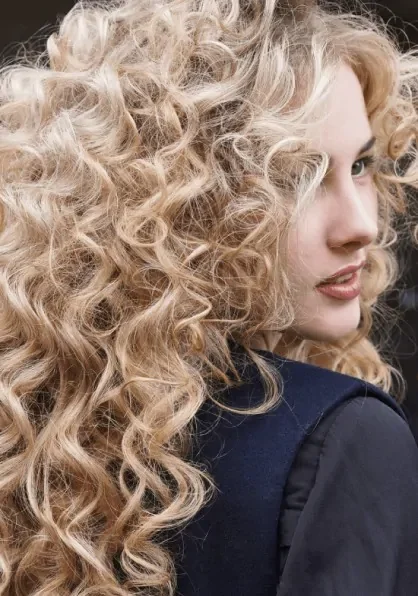
Hair Perm for women with long blonde spiral curls
  • Bond Restructuring

    The perm solution breaks and reforms the internal bonds, so the curl holds from the root without any styling tool.

  • Root Lift

    Wrapping under tension at the root lifts flat sections away from the scalp, giving visible volume that lasts between washes.

  • Reduced Heat Styling

    Once the curl pattern is set, everything dries into shape on its own, cutting the amount of heat applied week to week.

  • Improved Grip for Styling

    The altered surface texture holds pins, twists and updos far better than smooth, straight hair, which matters for anyone who struggles to make styles stay put.

FAQ

  • What is a perm for hair?

    A chemical service that reshapes the strand from the inside, so curl or wave stays put without heat tools every morning. Sections are wrapped on rods, softened with a solution, then locked into the new shape with a neutraliser.

  • How long does a perm last in hair?

    Three to six months in most cases — it doesn’t drop out, it grows out, so the root gives way before the ends do. Coloured or fine textures sit at the shorter end of that range, coarse virgin ones at the longer end.

  • Does a perm damage your hair?

    It changes the internal structure of the strand, so some dryness afterward is normal, especially on colour-treated lengths. A strand test and the right aftercare keep that manageable rather than severe.

  • Can you perm hair that's been bleached?

    Yes, but it needs a gentler solution and shorter processing time than virgin lengths. The strand test settles it, and your stylist will flag if a strengthening treatment should come first.

  • Can you perm hair extensions?

    No. Synthetic fibre melts or frizzes in the solution, and even human-hair extensions have already lost the bond structure a perm works on, while the solution weakens the keratin bonds, tape or weft holding them in.

  • What's the difference between a curly perm and a wave perm?

    Curl size comes down to the rod — smaller rods give tight, springy curls, larger rods give a loose wave. It’s decided in the consultation based on your length and the look you’re after.

  • When do you wash your hair after a perm?

    Most perms need 24 to 48 hours before the first wash so the curl fully sets. Your stylist gives exact timing and product advice based on the solution used.

  • Language:
  • Choose a location:
    Book Now