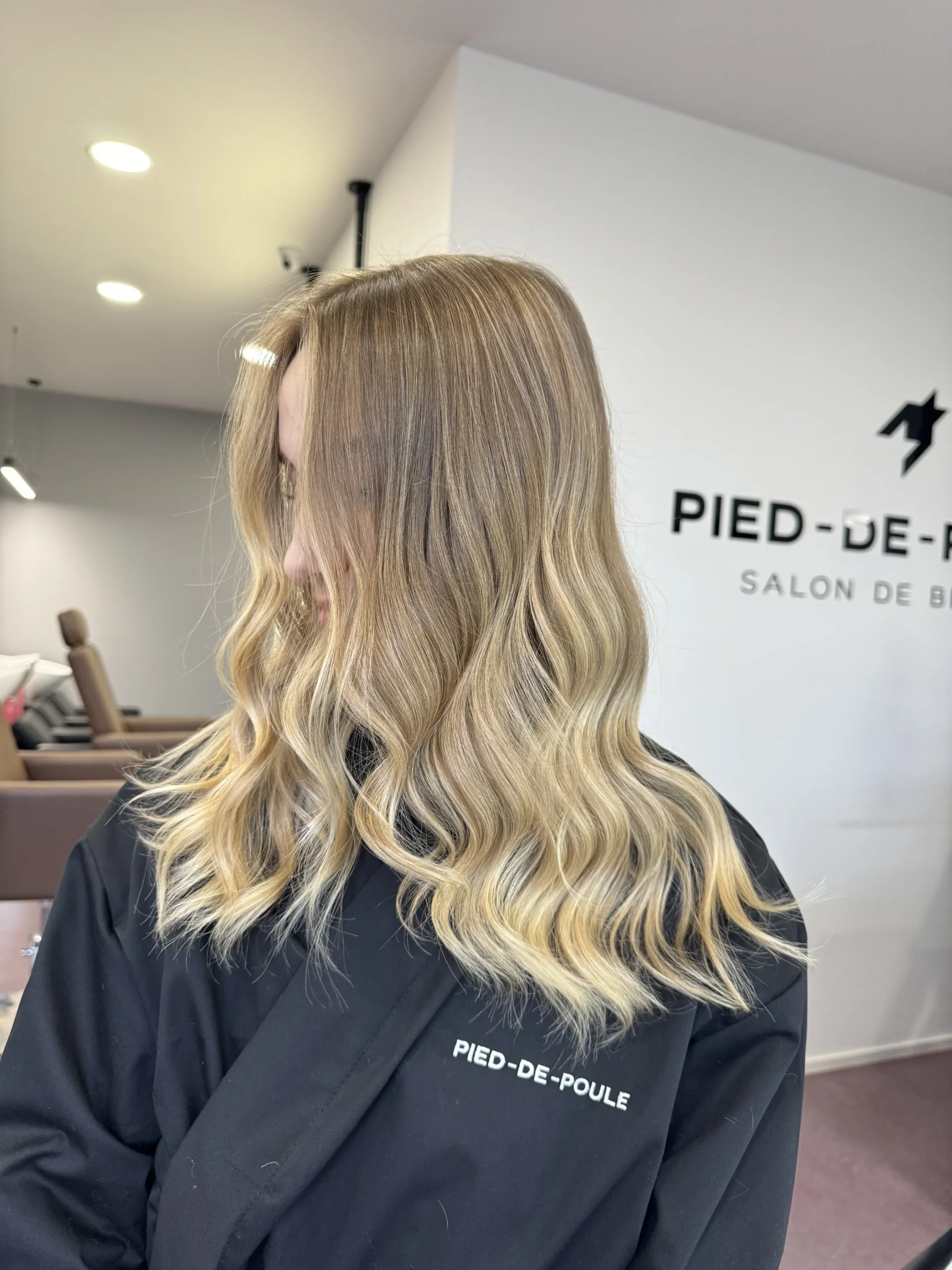
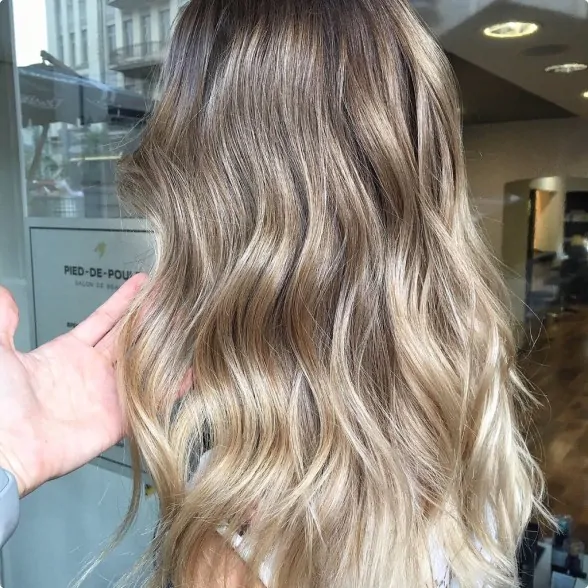
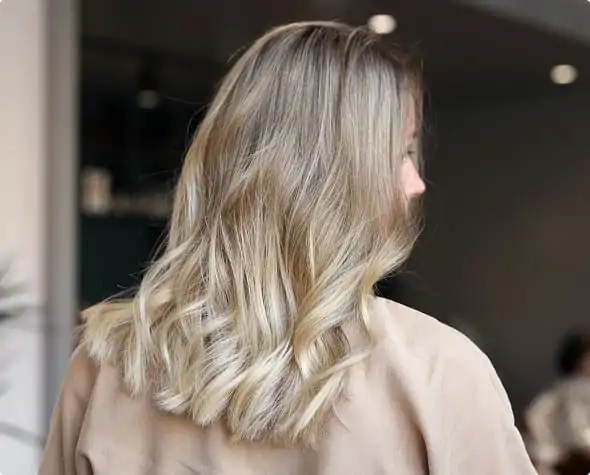
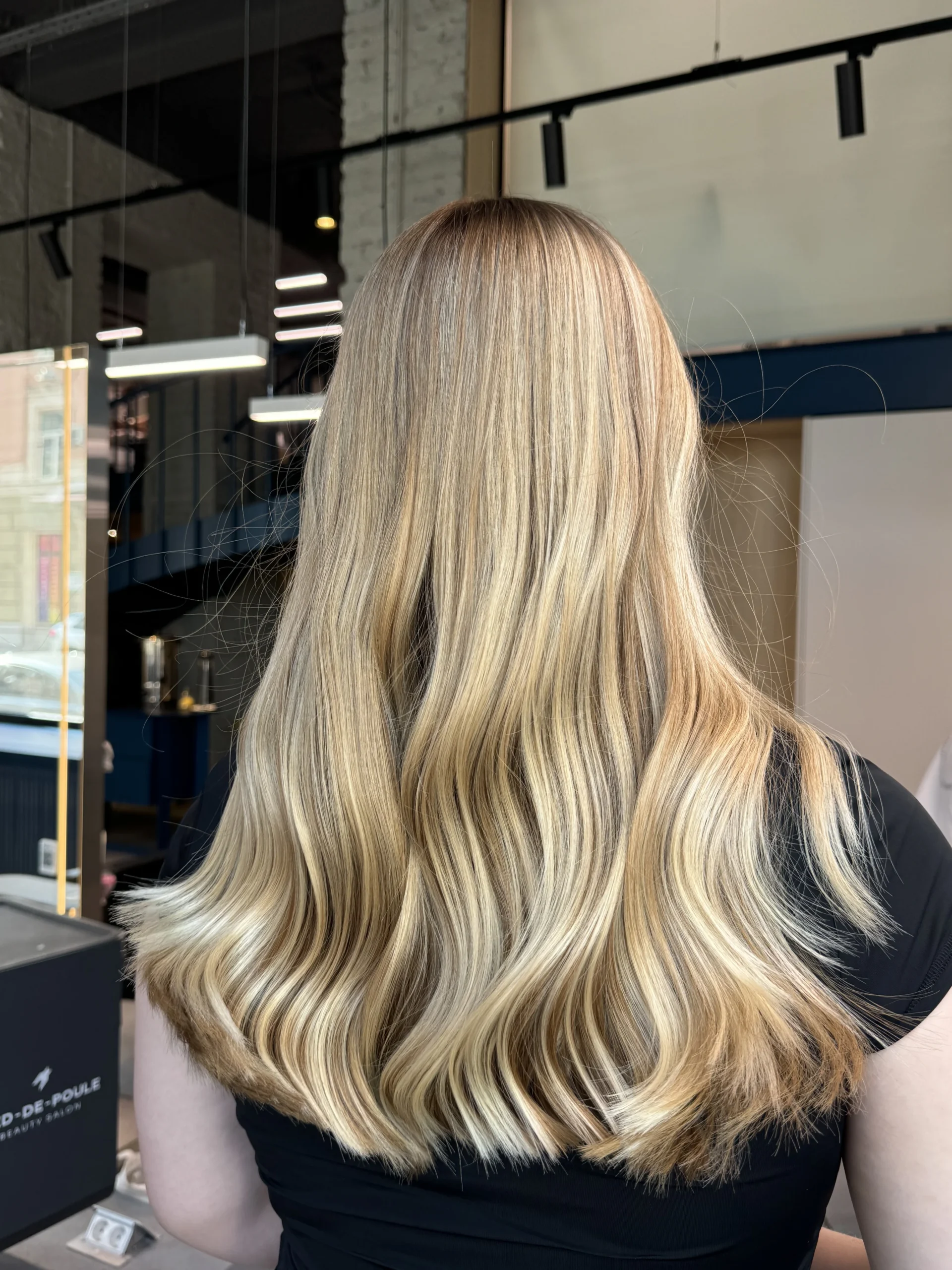
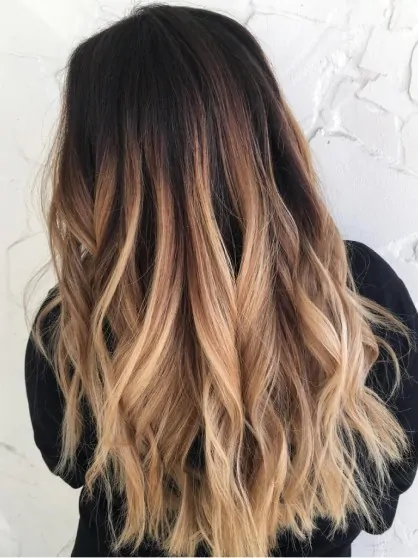
Highlighting is the process of lightening individual sections of hair — what’s often called highlights in hair — while the rest stays at its natural or coloured base, building contrast and dimension instead of covering the whole head. A good result starts with a proper look at your current colour, how much lift the hair can take, and how bold or soft you want the finish before any lightener goes near your head.
Choosing Your Technique
The amount of contrast you want decides the technique more than anything else.
- Foil highlights, often referred to as classic highlights hair — sections are wrapped individually, giving a consistent, repeatable pattern that suits clients who like a defined result they can ask for again.
- Hand-painted balayage — lightener is applied freehand with no foil, fading in gradually and growing out with less of a visible line.
- Fine babylights — close-set, delicate pieces for a barely-there lift rather than obvious streaks.
Half Head or Full Head
Coverage is a separate decision from technique.
- Half head or face-framing — highlights sit through the crown, parting, and pieces around the face, giving a lighter touch of brightness.
- Full head colour, what most clients mean by full highlights hair — the whole head is sectioned and lightened for the most noticeable change from your natural base.
Half Head Highlights for Men
Half head and low-key placement — the most often asked for — are the most requested options among male clients, since the goal is usually texture and brightness rather than an obvious colour change.
- Crown and side pieces — kept close to the scalp so the change reads as natural, not coloured.
- Textured highlights on a crop or fade — lightened tips or ends that pair well with a current men’s hairstyle rather than sitting as a separate colour service.
- Highlighting alongside grey hair blending — for clients easing into grey rather than covering it outright, softening the line between white regrowth and colour instead of hiding it.
How It’s Done and How Long It Takes
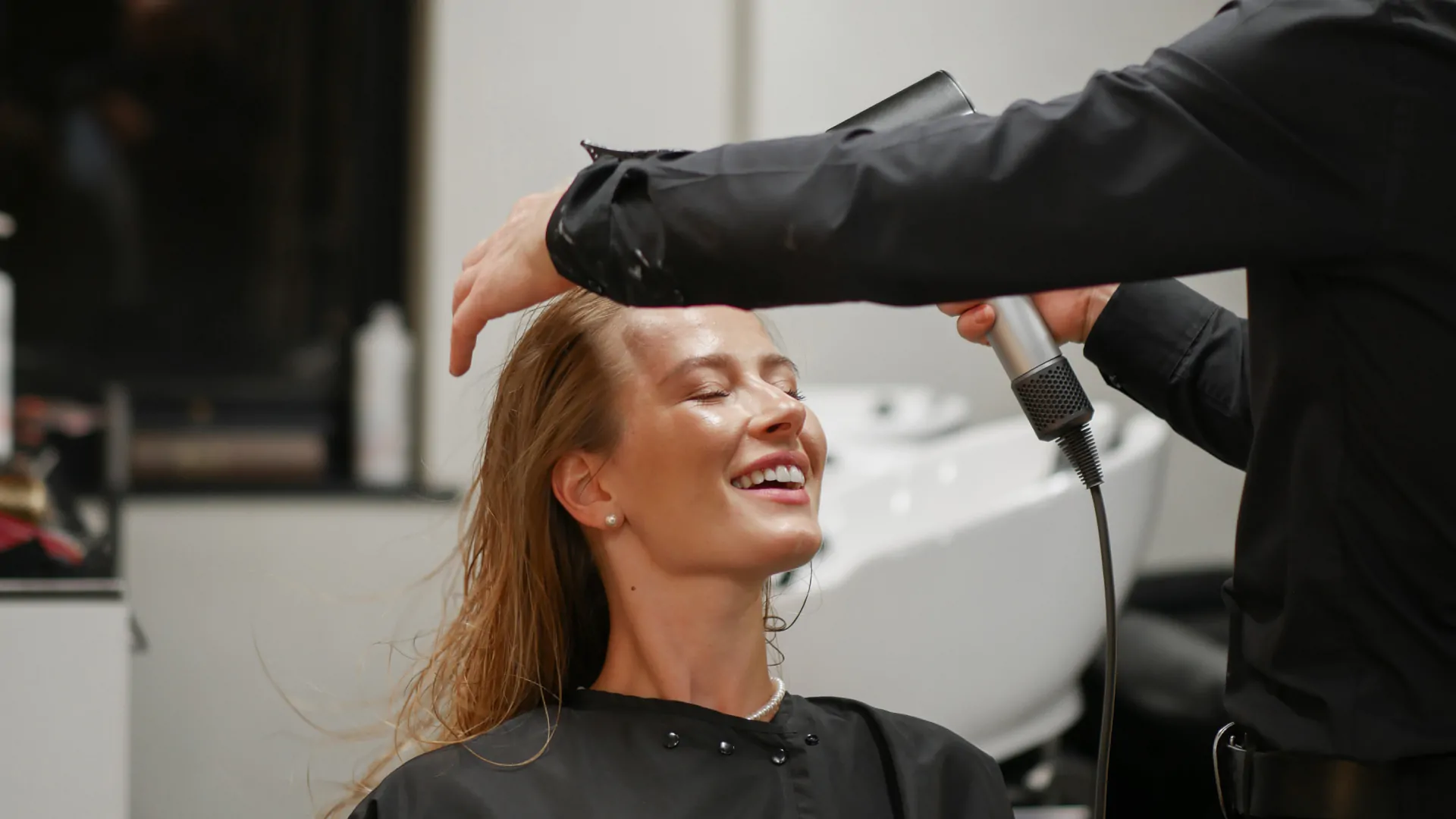
A half head or face-framing session usually takes 1.5 to 2 hours. A full head runs 2.5 to 3.5 hours, since more sections need lightening, developing, and toning before the colour is finished. First-time clients or anyone moving several shades lighter are usually better starting with a consultation visit or a strand test, so the colourist can judge how the hair responds before committing to the full pattern. Pricing follows the same variables — technique, coverage, and how much lightener the hair needs — which is why the cost of highlighting hair varies from client to client.
Who Highlighting Suits
Highlighting works on light and dark hair, short crops and long lengths, straight or curly textures — the technique adjusts to the hair, not the other way round.
Caring for Highlights Between Visits
The lightened strands themselves don’t wash out, so highlighting is best thought of as a look you top up rather than repeat from scratch — only the regrowth needs attention at each visit, typically every 8 to 12 weeks. Lightened hair also loses moisture and elasticity faster than untouched hair, so a bond-building treatment such as Olaplex straight after the service helps keep the strands from feeling brittle. At home, a shampoo and conditioner made for coloured hair slows down fading and keeps the tone from turning brassy between visits.