If you’ve been wondering how to get rid of cellulite and have already scrolled through pages of conflicting advice, you’re not alone. Cellulite affects an estimated 80–90% of women after puberty – and while less common in men, it affects them too. The problem isn’t a lack of willpower or fitness. It’s structural, and it requires a structural solution.
Modern hardware treatments go far deeper than creams or manual massage can reach. At PIED-DE-POULE, we work with three professional-grade body contouring technologies specifically designed to address cellulite at the tissue level. This guide explains how each one works, what you can realistically expect, and how to choose the right treatment for your goals.

Why Cellulite Is So Stubborn – and What Actually Causes It
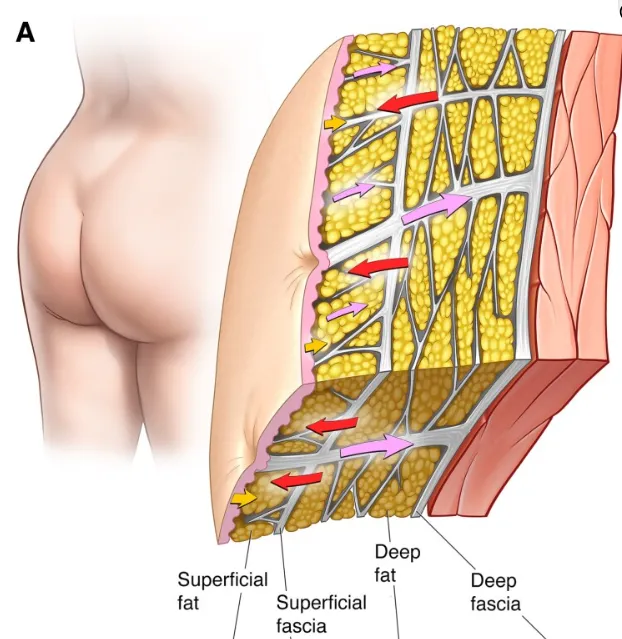
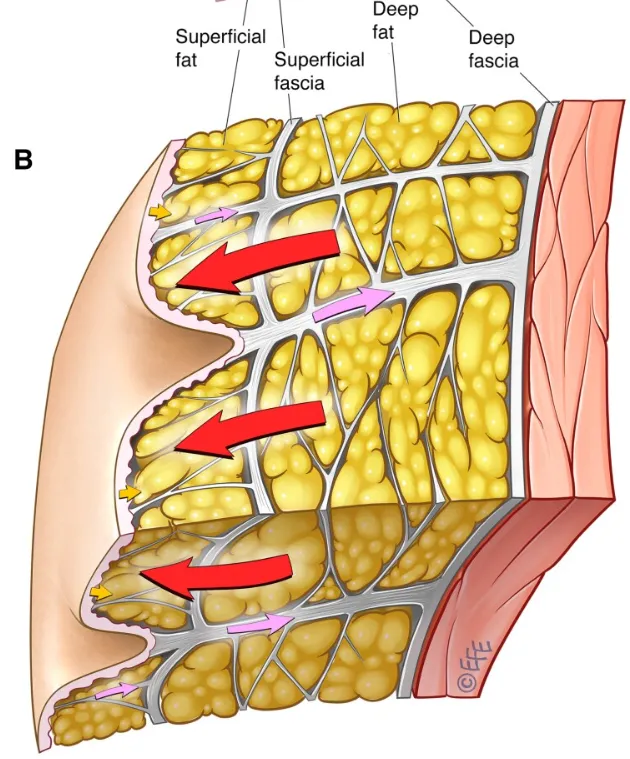
Cellulite is best understood not simply as trapped fat, but as an architectural disorder of the skin and subcutaneous tissue. In the areas most affected – thighs, buttocks, abdomen – the tissue beneath the skin consists of multiple layers of fat and fibrous collagen septa (bands) that connect the skin to deeper muscle. When the short, less stable septa weaken, fat lobules push upward through them while the thicker septa remain anchored, pulling the skin downward. The result is the characteristic dimpling – sometimes described as “orange peel” or “cottage cheese” – on the skin surface.
This is why cellulite is primarily a structural problem, not simply a weight issue. A landmark anatomical and clinical review confirmed that fat herniation through septa is a secondary event: the primary issue is the imbalance of biomechanical forces between the septal network, adipose layers, and dermis. Lean people develop cellulite too – and significant rapid weight loss can actually worsen its appearance by creating skin laxity without shrinking the stretched septal network.
Several interconnected factors drive cellulite development:
Hormones. Oestrogen plays a pivotal role. Women have vertically oriented connective tissue bands that allow fat to protrude more easily, while men have crisscrossed bands at roughly a 45° angle that resist outward fat pressure. This anatomical difference largely explains why cellulite affects over 80% of post-pubertal women, versus fewer than 10% of men.
Age. As collagen and elastin decline, the dermis thins and fat lobules enlarge, increasing the imbalance of forces at the skin-fat junction. Older women with higher BMI face the greatest cumulative risk.
Microcirculation and lymphatics. Impaired blood and lymph flow leads to fluid accumulation between fat lobules, tissue hypoxia, and gradual thickening and sclerosis of the fibrous bands – further deepening the dimpling over time.
Genetics, diet, and lifestyle. High-carbohydrate, high-fat diets and a sedentary lifestyle stimulate lipogenesis. Genetic factors influence fat cell distribution, skin elasticity, and septal structure.
The critical insight for treatment: methods that work only on the skin surface produce limited, temporary improvement. For meaningful and lasting results, the treatment must reach the deeper dermis and subcutaneous tissue – stimulating collagen remodelling, improving microcirculation, and addressing the fibrous septal network. That is exactly what professional hardware treatments are designed to do.
Tips: How Severe Is Your Cellulite
Before choosing a treatment, it helps to understand where you are on the widely used Nürnberger–Müller Scale, which clinicians use to classify cellulite severity:
| Grade | What you see |
|---|---|
| 0 | Skin is smooth in all positions |
| I | Skin is smooth at rest; dimpling appears only when you pinch it |
| II | Dimpling visible when standing, even without pinching |
| III | Deep dimpling visible both standing and lying down |
One practical tip: always assess cellulite while standing, not lying down. In a prone position, tension on the fibrous septa decreases and dimpling may partially disappear – giving a misleadingly optimistic picture. Grades I–II respond very well to non-invasive hardware treatments. Grade III may benefit from a combined programme.
Our therapists assess your grade and skin condition at the initial consultation before recommending a treatment plan.
The Three Hardware Treatments We Use at PIED-DE-POULE
Our body sculpting services include three complementary hardware approaches. Each works differently, which is why they are often combined or selected based on your specific skin condition and goals.

1. Multi-Micro Alveolar Stimulation with Laser
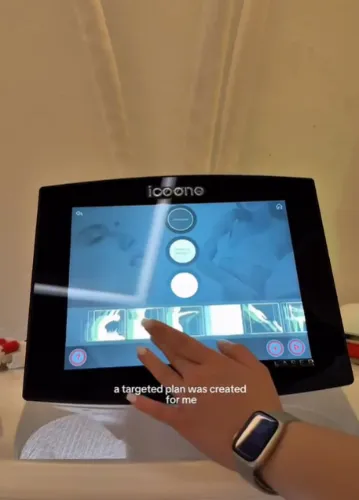
Icoone is the most technologically advanced treatment we offer for cellulite and skin remodelling. It uses patented Roboderm® technology – a vacuum roller combined with laser (915 nm diode) and LED (650 nm) energy – to deliver what’s called Multi Micro Alveolar Stimulation (MMAS).
The treatment head contains micro-perforated rollers that generate up to 21,600 microstimulations per minute without pulling, stretching, or damaging the skin. Rather than applying broad pressure, the device creates thousands of precise controlled impulses that penetrate deep into the connective tissue and fat layer simultaneously.
What Icoone targets at the tissue level:
- Lipolysis – stimulating breakdown of fat stored within adipocytes
- Collagen and elastin synthesis – via fibroblast activation, helping rebuild the dermis from within
- Microcirculation and lymphatic drainage – reducing oedema and fluid retention
- Fibrous septal remodelling – improving the structural architecture that underlies dimpling
- Tissue oxygenation – improving cellular metabolism in poorly perfused areas
The laser component accelerates fat cell metabolism, while the LED supports skin elasticity and tissue repair. Together, they create a synergistic effect that neither vacuum nor laser alone can achieve.
Icoone is suitable for all body areas – including the inner thighs, abdomen, upper arms, and the face. It is completely non-invasive, FDA-cleared, and most clients describe the sensation as a gentle rolling massage. Sessions run 45, 60, or 85 minutes for the body, with a 30-minute trial option for first-timers.
Typical course: 5–10 sessions, 2–3 times per week. Visible improvement from the first few sessions; full structural remodelling develops over 6–8 weeks.
Clinical note: A study in the British Journal of Dermatology found that mechanical stimulation significantly smooths the dermis-hypodermis junction – the exact structural boundary where cellulite forms – with measurable improvement after one month of regular treatment. (PubMed)
2. Compression and Vibration Massage
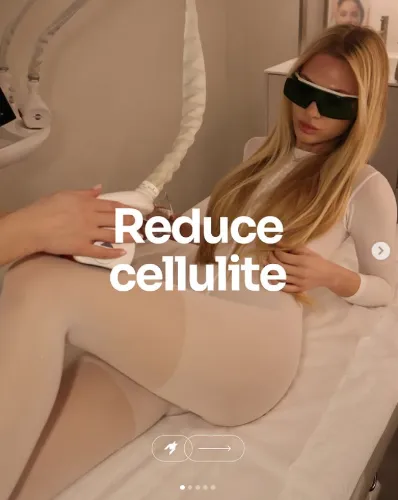
Stratosphere is a German-engineered hardware massage device that targets cellulite and localised fat through a precise combination of mechanical compression and vibration.
The device uses a cylindrical handpiece fitted with 10 rows of medical-grade silicone spheres. As the therapist moves the handpiece along the body following lymphatic drainage pathways, the spheres rotate at 600 revolutions per minute – generating micro-vibrations that penetrate the subcutaneous tissue. This is twice the rotational power of standard endosphere therapy.
The treatment operates in two phases. First, a lymphatic drainage phase activates the lymphatic system, moves excess fluid, reduces swelling, and prepares the tissue for deeper work. Then a deep sculpting phase uses compression and vibration to break down fibrotic bands within the subcutaneous fat layer – those tough fibrous bridges that anchor the skin downward, creating dimpling – while simultaneously stimulating fat cell metabolism and increasing blood oxygen levels.
Stratosphere is particularly effective for Grade I–II cellulite, post-pregnancy body recomposition, volume reduction on thighs, abdomen, and buttocks, and clients with early-stage varicose veins (using the appropriate handpiece and suit).
The treatment is painless and leaves no bruising. Suitable for both women and men.
Typical course: 6–12 sessions, 2–3 times per week.
3. Targeted Non-Surgical Contouring Therapy
Our Body Sculpting Therapy takes a comprehensive approach by combining multiple technologies in a single tailored session. This programme is designed for clients with more stubborn fat deposits, more advanced cellulite, or those looking to reshape specific areas after significant body changes.
Body sculpting targets localised fat cells resistant to diet and exercise. The body naturally processes and eliminates the disrupted fat cells over several weeks, producing lasting structural changes – improved skin tone, tighter contours, and reduced dimpling.
This treatment is especially effective as part of a combined programme with Icoone or Stratosphere. Our therapists design the right sequence at your consultation.
Comparing the Three Approaches
| Icoone | Stratosphere | Body Sculpting | |
|---|---|---|---|
| Technology | Roboderm® + Laser + LED | Compression + Vibration | Multi-technology |
| Primary action | Microstimulation, collagen remodelling, septal restructuring | Lymphatic drainage, fibrous bridge breakdown | Fat cell elimination, contouring |
| Best for | All grades, skin laxity, face & body | Grade I–II, fluid/soft cellulite | Stubborn fat, advanced remodelling |
| Sessions needed | 5–10 | 6–12 | Individual programme |
| Suitable for men | ✓ | ✓ | ✓ |
| Downtime | None | None | None |
| Sensation | Gentle rolling, suction | Warm vibration massage | Varies by modality |
What to Expect Across a Course of Treatment
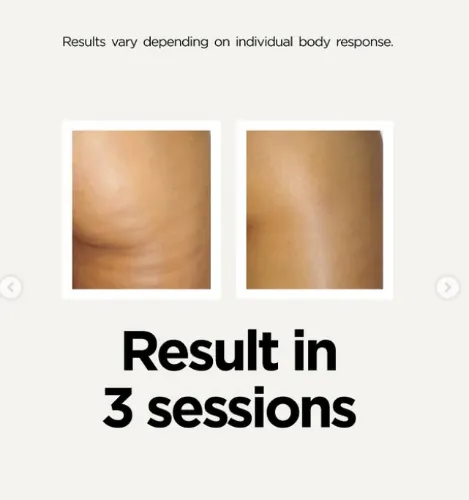
Results from hardware treatments build progressively. Most clients notice improved skin texture and reduced puffiness after 2–3 sessions. Visible cellulite reduction typically becomes clear around sessions 4–6, with full remodelling – firmer skin, smoother contour, reduced dimpling – emerging over 6–8 weeks as collagen regeneration completes.
One expectation worth setting clearly: non-invasive hardware treatments significantly improve cellulite appearance, but require maintenance to sustain results over time. A 2020 clinical study on vibrational massage confirmed that cellulite diminished substantially after 12 weeks of regular treatment – but began to return after sessions stopped, because the underlying structural and hormonal factors remain. (PMC source) This is true of all massage-based approaches, which is why we recommend monthly maintenance after completing a course.
We also advise combining treatments with supportive lifestyle habits: staying well-hydrated, avoiding a high-sodium high-fat diet, and regular movement – all of which help maintain the microcirculatory improvements that hardware treatments generate.
Which Treatment Is Right for You?
There’s no universal answer – and that’s exactly why a personalised assessment matters. As a general guide:
Choose Icoone if your priority is deep structural remodelling, skin laxity, or you want results that address both cellulite grade and overall skin quality simultaneously. Also the best option for treating the face, décolletage, or particularly sensitive areas.
Choose Stratosphere if your main concern is fluid retention, softer or earlier-stage cellulite, or you prefer a treatment that combines sculpting results with a deeply relaxing experience.
Choose Body Sculpting Therapy if you have stubborn localised fat that hasn’t responded to lifestyle changes, or want a structured programme targeting specific zones.
Combine treatments if your goals are more complex – our therapists regularly design programmes that pair Stratosphere for lymphatic preparation with Icoone for deep stimulation in the same week.
Ready to Start?
Cellulite doesn’t have a single solution – it has the right solution for you, depending on your skin grade, your goals, and your body. At PIED-DE-POULE London, our therapists take the time to understand all three before recommending anything.
Book a consultation at either of our London locations, or start with a 30-minute massage trial session to experience the treatment first-hand.
Sources:
- Gabriel, A. et al. (2023). Cellulite: Current Understanding and Treatment. PMC.
- Adcock, D. et al. (2016). Effectiveness of massage treatment on cellulite monitored by ultrasound.
- Kirsch, K. et al. (2020). Reduction of cellulite using localised vibrational massage.
- American Academy of Dermatology. Cellulite treatments: What really works. aad.org