Two women. Same shade of blonde. One looks like she’s just returned from a month in the South of France. The other looks tired before noon. The pigment is identical. The result is not. That gap – between blonde that illuminates and blonde that drains – is not a matter of luck. It’s a matter of understanding what’s actually happening between colour and skin.
The Alchemy of Light: Why Blonde Isn’t One Thing
Blonde hair colours work through light. Specifically, through the way pigment in the hair shaft interacts with the undertones sitting beneath the surface of your skin – the warm flush of haemoglobin, the cooler blue-violet cast of melanin distribution. When the two harmonise, the face reads as luminous. When they conflict, the result is flatness: skin that looks sallow, or eyes that lose their contrast.
This is why a single swatch from a colour palette tells you almost nothing. The same Iced Champagne that makes one complexion glow will pull another toward grey. The same Honey Blonde that warms one face will make another read yellow rather than golden.
At PIED-DE-POULE beauty salon, colour work begins with the complexion, not the palette. The shade is designed around what your skin already does – then calibrated to amplify it.
Decoding Your Canvas: The Undertone Equation
Undertone is the fixed quality beneath your skin’s surface – it doesn’t change with a tan, with seasons, or with age. It’s either cool, warm, or neutral, and it determines which blonde hair colours will work in your favour and which will work against you.
How to identify yours
Look at the veins on the inside of your wrist in natural light. Blue or purple veins suggest a cool undertone. Green veins indicate warm. A mix of both – or difficulty distinguishing – points to neutral. The metals you gravitate toward tend to confirm it: silver suits cool undertones, gold suits warm, and both work equally well for neutral.
Cool Undertones: The Silver Lining
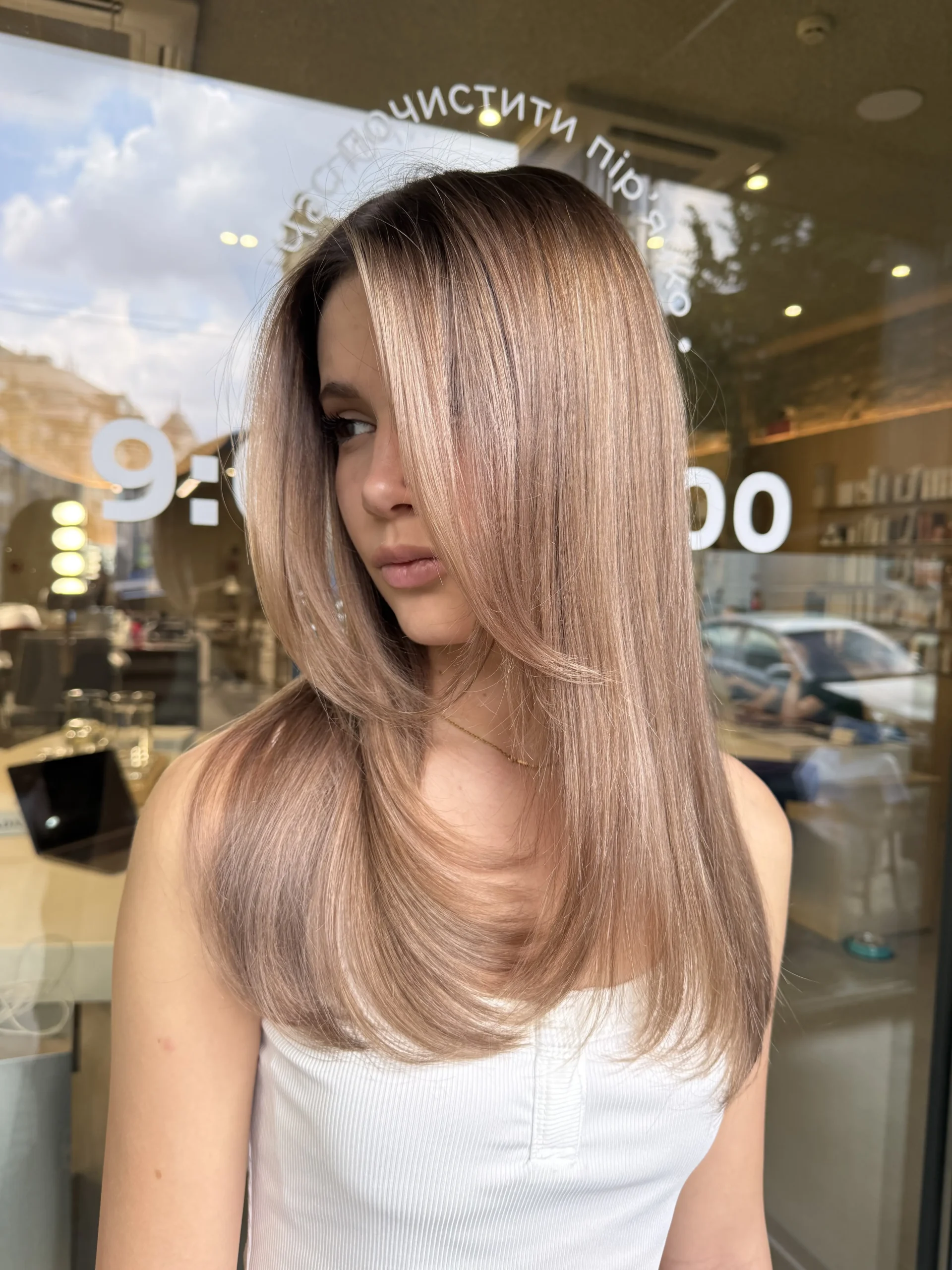
Cool-toned skin has blue and pink in its base – it sits beautifully against pigments in the ash, pearl, and iridescent spectrum. These shades echo the cool undertone rather than fighting it, which is why they make the complexion look clear and rested. Margot Robbie’s signature shade sits firmly in this register – a pale, near-luminous blonde with no warmth in it, which is precisely why it photographs the way it does against her complexion.
Blonde hair colors that work:
- Iced Champagne – a pale, luminous blonde with almost no warmth in it. Against cool skin, it reads like light itself.
- Pearl Blonde – opalescent, with faint silver and violet tones woven through. Elegant on fair complexions with pink undertones.
- Mushroom Blonde – a greige with cool ash depth. Particularly effective for cool-toned brunettes transitioning to blonde, as the grey-taupe tones keep the result looking intentional rather than faded.
What to avoid: golden, honey, or amber-heavy blondes. On cool skin, these pull warm in a way that reads as brassy rather than sun-kissed.
Placed at the face and crown, cool-toned highlights can lift the complexion and add dimension without a full colour commitment.
Warm Undertones: The Golden Hour
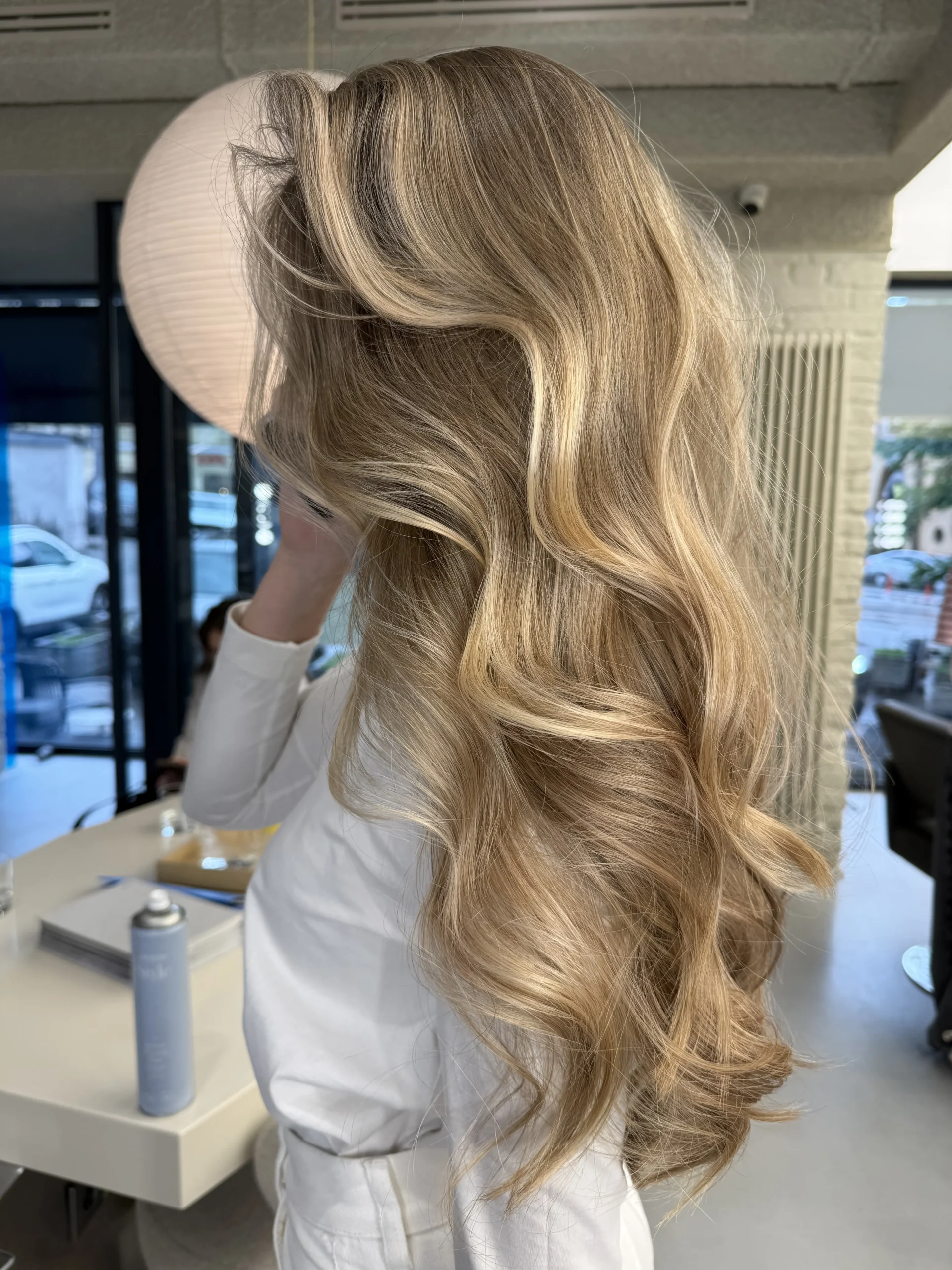
Warm-toned skin carries yellow, peach, or golden pigment in its base. Against a warm complexion, rich, sun-drenched blondes don’t compete – they amplify. The face reads as healthy, lit from within. Jennifer Aniston’s colour – that specific amber-gold that has barely shifted in twenty years – is the canonical example of warm blonde done in perfect alignment with skin: it doesn’t look like a choice, it looks like it grew that way.
Blonde hair colors that work:
- Honey-Dipped Blonde – a velvet, amber-infused shade with golden depth. On warm skin, it creates the kind of cohesion that makes the whole look feel expensive.
- Nectar Blonde – warmer and slightly deeper than honey, with copper undertones that catch light at the ends. Particularly effective on olive and medium complexions.
- Buttercream Blonde – creamy, soft, and diffuse in its warmth. Less golden than honey, more like the gentle warmth of afternoon light indoors.
What to avoid: stark platinum or heavily ashed blondes. On warm skin, these drain colour from the face rather than reflecting it back.
Hand-painted warm blonde through the mid-lengths and ends gives a sun-drenched result that works with the skin rather than against it – soft at the root, richer toward the tips.
Neutral Undertones: The Versatile Chic
Neutral undertones sit between warm and cool – neither dominates. This is the most accommodating complexion type for colour work, because it can carry pigments from both ends of the spectrum. The decision becomes less about what will work and more about what effect you want to create. Rosie Huntington-Whiteley operates in this range – her colour shifts between warm and cool depending on the light, which is exactly what well-executed neutral blonde does. It never quite settles into one register.
Blonde hair colors that work:
- Greige Blonde – a precise balance of grey-cool and beige-warm. Neither ash nor golden, it reads as sophisticated and deliberately understated.
- Sandy Beige – sun-warmed but not golden. The shade that looks most like naturally lightened hair, because it draws from both warm and cool registers.
- Cashmere Blonde – soft, dimensional, and slightly creamy. The texture of the name is accurate: it has depth without weight.
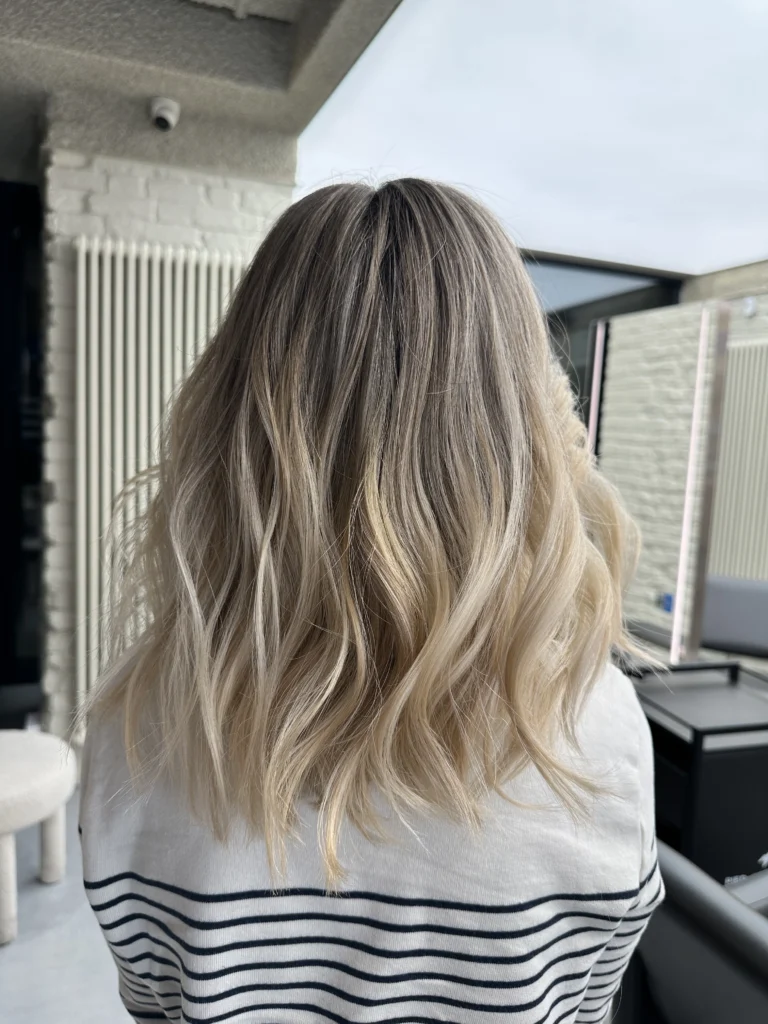
Neutral undertones also respond well to polychrome techniques – multi-tonal colour that mixes cool and warm pigments within the same application for genuine three-dimensional depth.
For neutral undertones, a blend of warm and cool highlights through the same application creates a natural, multi-dimensional result that moves between registers as the light changes.
2026 Trend Edit: The New “Expensive Blonde”
The blonde aesthetic that’s defining fashion circles in 2026 is not the high-contrast, uniform platinum of previous years. It’s richer, more dimensional, and deliberately imperfect in its brightness. Tracey Cunningham – colourist to Meghan Markle, Jennifer Lopez, and Reese Witherspoon, and one of the most closely watched names ahead of every awards season – has spoken about clients wanting colour that amplifies their natural qualities rather than overrides them. Jacob Schwartz, whose #SpunWithGold technique takes its name from the way Botticelli layered pigment in Renaissance painting to capture light, describes the direction simply: clients want a “classic, effortless look – not as highlighted, just a more overall colour.” The common thread across all three dominant shades this season: they look like they belong to the person wearing them, not like a service that was performed on them.
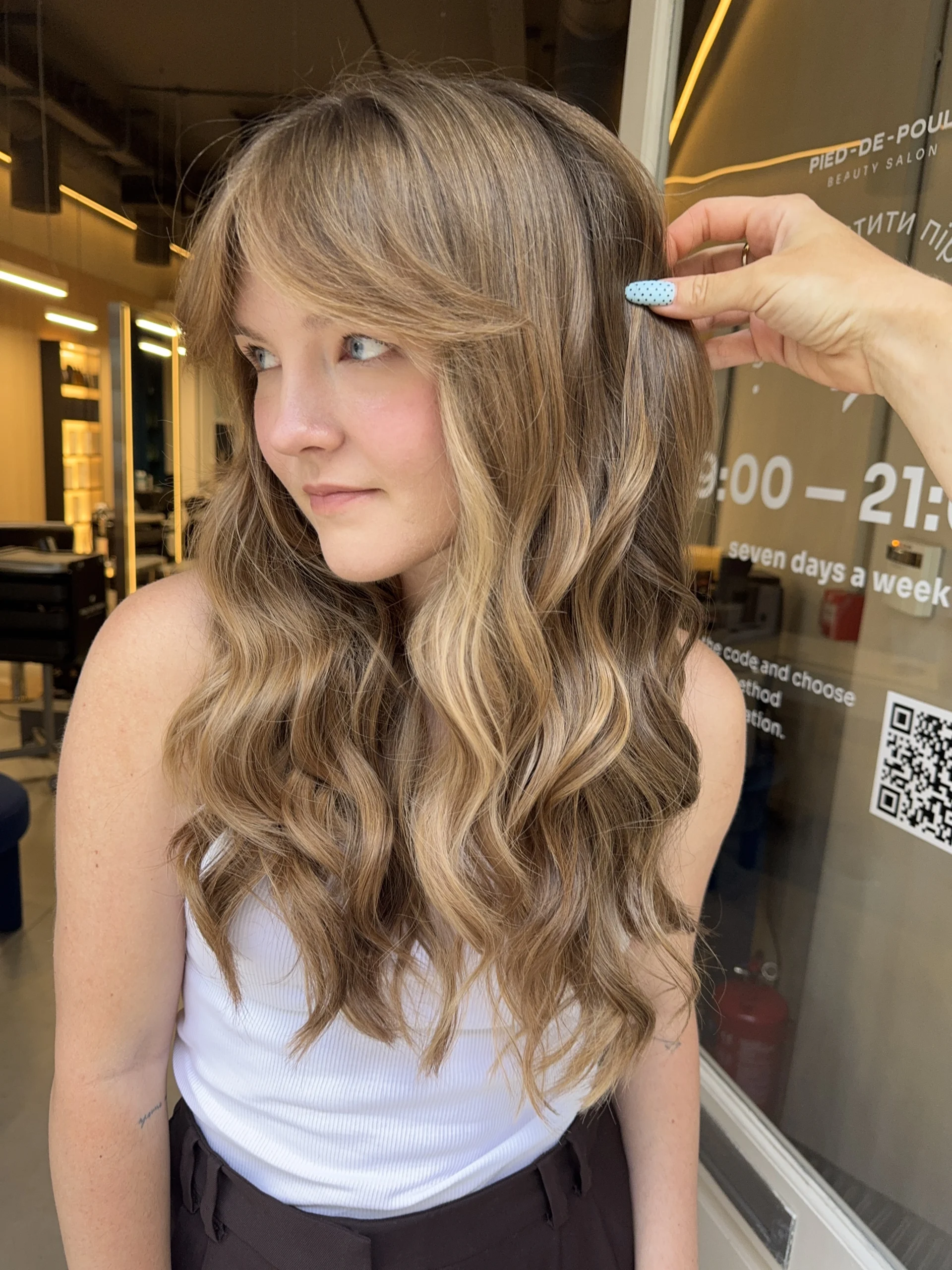
Teddy Bear Blonde
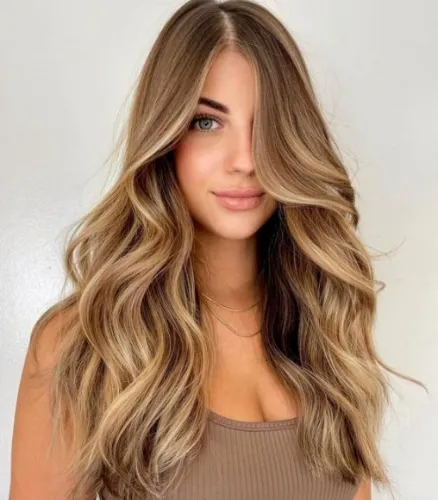
Caramel meets golden wheat. Teddy Bear Blonde sits in the warm-to-neutral spectrum with depth at the root that transitions into lighter, sun-warmed ends. The effect is richness – hair that looks nourished rather than processed. Hailey Bieber has worn this shade in various iterations over the past two years; what makes it work on her is the same thing that makes it work in general – the root depth is close enough to her natural base that the transition reads as growth rather than colour. In London, where the light is flat and cool for most of the year, this shade compensates by generating its own warmth. It reads as expensive because it requires genuine skill to blend: the root depth has to be placed precisely, and the golden ends calibrated to the complexion rather than applied uniformly. Get it wrong by even one level and it tips from “sun-kissed” into “grown out.”
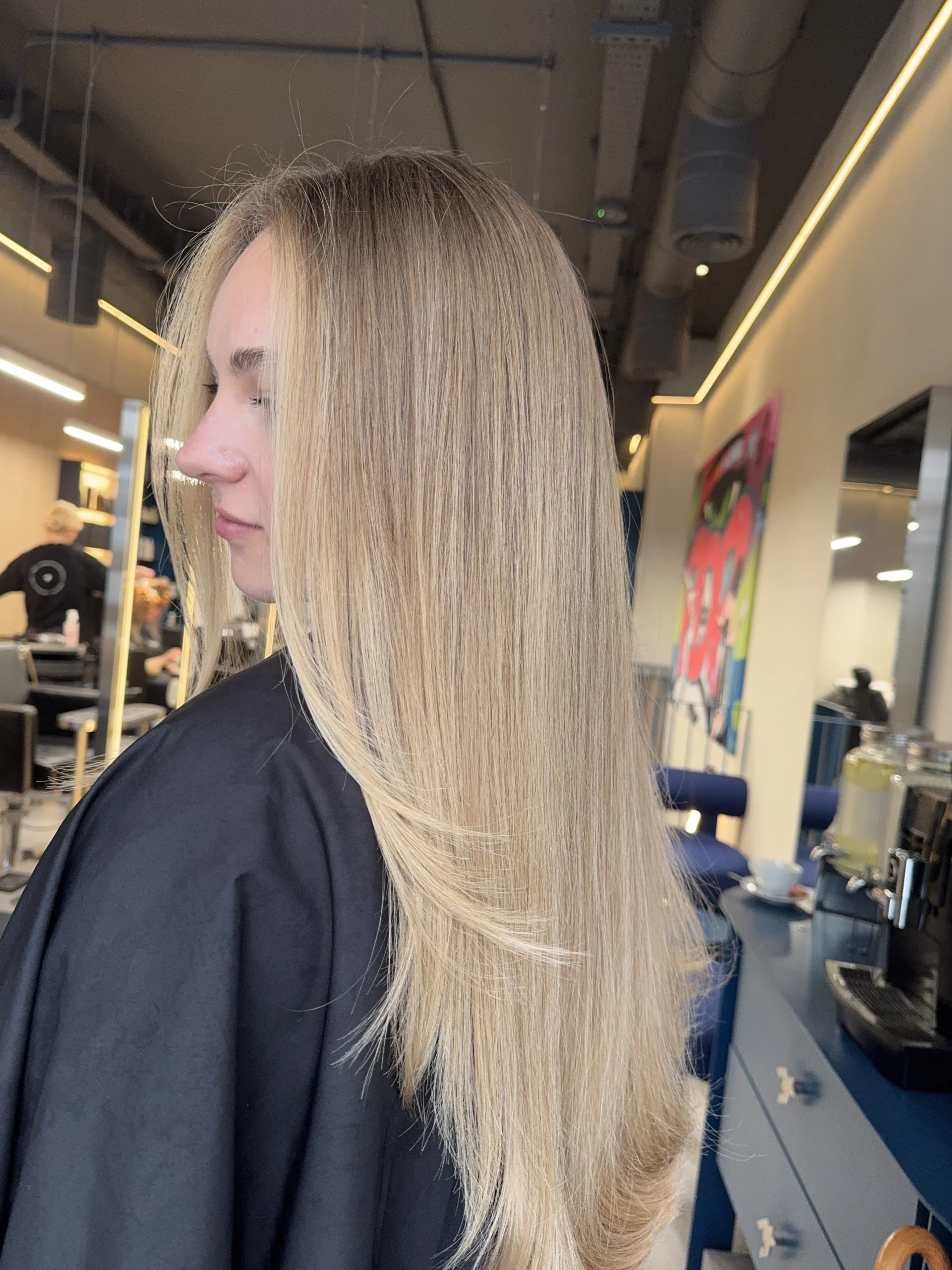
Bombshell Vanilla
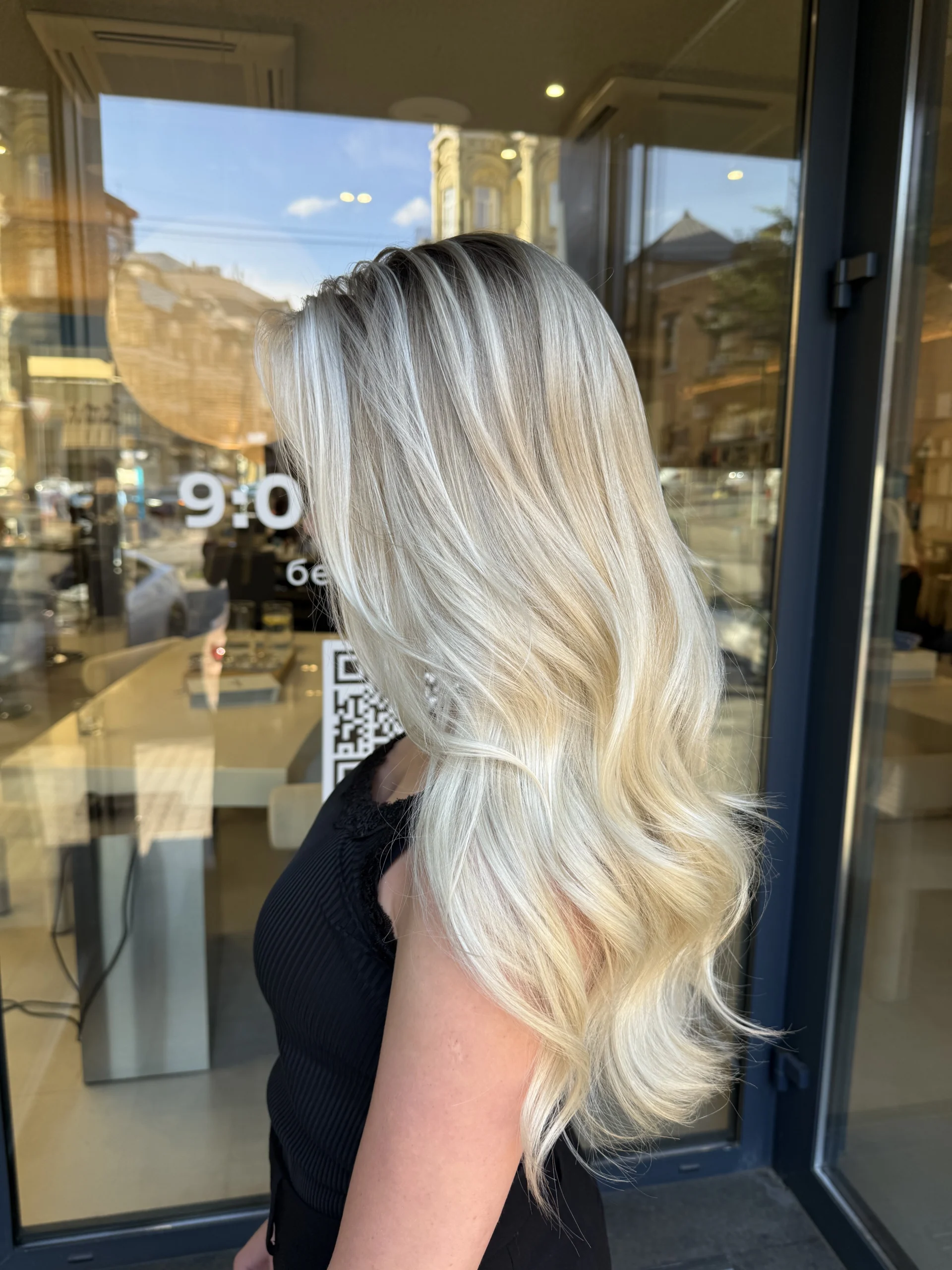
High brightness, soft root. Bombshell Vanilla is the answer to the question of how to wear very light blonde without the maintenance of solid platinum. The base at the root is kept several shades deeper – usually a warm beige or sandy blonde – and transitions into a creamy, almost white brightness at the ends. The grow-out is intentional, not a problem. It’s low-maintenance in the sense that it’s designed to look its best at week six, not week zero.
Sydney Sweeney is the most visible current reference for this shade – the creaminess of the ends, the deliberate root depth, the way it reads as effortless without being low-effort. This is the shade most associated with the “Old Money” aesthetic: the suggestion that the brightness is incidental rather than engineered.
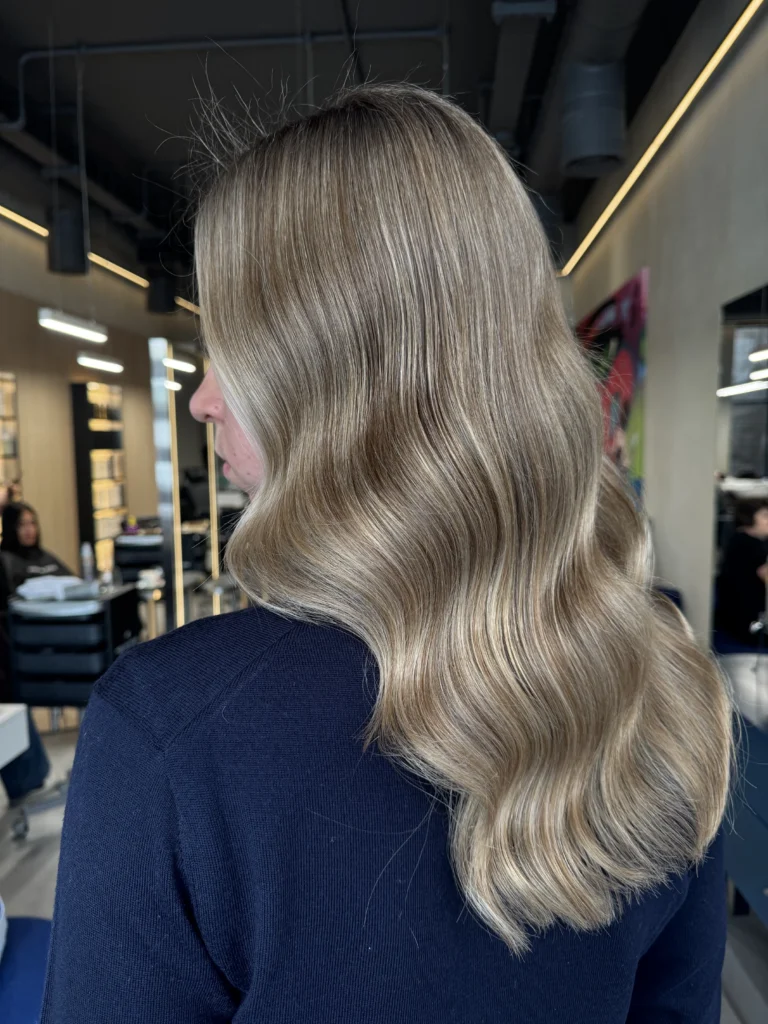
Polychrome Blonde
Where most colour techniques work in a single tonal register – all warm, or all cool – Polychrome Blonde layers multiple pigments to create genuine three-dimensional depth. Cool ash at the surface, warm honey in the mid-shaft, deeper golden-brown underneath. In natural light, the result shifts. Under artificial light, it shifts differently. Sienna Miller’s colour has operated in this space for years – photographed in London, it reads one way; on a red carpet under flash, it reads another. That tonal movement is not an accident.
It’s the closest thing to natural hair behaviour that colour can achieve, which is precisely why it reads as so convincing. This technique requires a colourist who can map the placement of each tonal layer against the structure of the cut and the specific undertone of the complexion. It’s not a formula – it’s a decision made fresh each time.
The Airtouch technique removes fine hair from the application zone before pigment is placed, creating a naturally diffused root and exceptional depth through the lengths – ideal for Bombshell Vanilla and Polychrome Blonde effects.
For a more defined transition from root depth to lighter ends, ombre placement gives Bombshell Vanilla its signature brightness without the flatness of a uniform application.
The Radiance Consultation: What to Ask Your Colourist
A colour consultation in a bespoke salon covers considerably more than shade selection. The palette is the starting point, not the destination.
What a thorough consultation addresses:
- Complexion mapping – identifying not just warm, cool, or neutral undertone, but the specific quality of the undertone: whether it’s pink-cool or blue-cool, yellow-warm or golden-warm. These distinctions change the pigment selection.
- Hair texture and porosity – porous hair absorbs pigment faster and releases it faster. Fine hair reflects colour differently than coarse hair. Both factors affect which formulation will produce the intended result.
- Lifestyle and maintenance appetite – a formulation designed for someone who washes daily and blow-dries four times a week needs to be fundamentally different from one designed for air-dry, once-a-week washing. The colour has to hold under the conditions it’ll actually live in.
- Face-framing placement – where the brightest pigment sits relative to your face changes everything. Highlights at the temples draw light toward the eyes. Brightness at the cheekbones widens the face. A skilled colourist maps this before placing a single foil.
The most useful thing you can bring to a consultation isn’t a photo – it’s an answer to the question: what do you want your skin to look like? The colour is a vehicle for that. Start there.
For clients moving into blonde from a darker base, a full head application with toning creates the foundation for dimensional colour work in subsequent appointments.
Toning after lightening is where the precise shade is set – the difference between a blonde that reads golden and one that reads platinum is almost always in the toner, not the bleach.
Post-Salon Science: Maintaining the Glow
The work done in the salon is only half of it. What you do in the weeks that follow determines whether the colour stays luminous or starts to dull – and the margin between the two is smaller than most people expect.
The case for sulphate-free
Lightened hair has a more open cuticle than virgin hair – pigment escapes faster, and the wrong shampoo accelerates that considerably. A sulphate-free formula at a slightly acidic pH works the way a good serum does on skin: it keeps the surface sealed, so what’s inside stays inside. The clients whose colour looks as dimensional at week seven as it did leaving the salon are almost always the ones who made this switch.
Hard water – a real factor
London’s tap water is mineral-heavy. Calcium and magnesium accumulate on the hair shaft over time, creating a dull, slightly brassy cast that has nothing to do with the formulation and everything to do with the water. A chelating shampoo once a week dissolves those deposits before they settle. For local-based clients especially, this is not an optional refinement – it’s the baseline.
The finishing details
The difference between blonde that photographs as luminous and blonde that merely reads as light often comes down to three habits:
- A silk pillowcase at night. Friction raises the cuticle and causes light to scatter rather than reflect – silk eliminates that friction entirely.
- A finishing oil over dry hair. It seals the cuticle surface and creates the kind of mirror reflection that makes colour look alive rather than flat.
- A UV protection mist before going outside. UV oxidises warm pigments first – it’s why blonde drifts brassy in summer without fading evenly. One step, applied like a fragrance, prevents weeks of tonal drift.
Used during the lightening appointment and continued at home, Olaplex rebuilds the bonds broken in the process – so the colour sits in structurally sound hair rather than hair that’s been compromised to receive it.
A single K18 application after lightening restores the keratin chains inside the shaft, returning the elasticity and surface smoothness that make blonde read as healthy rather than processed.
Your Signature Shade
The right blonde isn’t the one that’s trending, or the one on the person you saved to your phone. It’s the one that makes your skin look like it’s lit from underneath – the shade that renders foundation optional, that makes your eyes carry their own contrast, that looks like it couldn’t belong to anyone else.
That shade exists. Finding it is a matter of reading what your complexion is already doing and deciding to work with it rather than against it.Ready to find your light? Book a bespoke colour consultation at our South Kensington or Oxford Circus studio – and leave with a formula that’s yours alone.