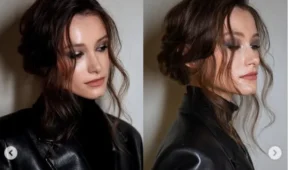
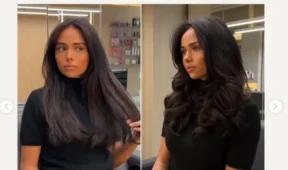
Are you familiar with the situation when your hair turns out to be nothing like you expected? Bleached strands going unexpectedly orange, a box dye coming out darker than planned, or old pigment refusing to lift evenly – there is a solution. It’s called colour correction, and it’s a very different process to a standard dye appointment. Let’s look at exactly what correction involves, why unwanted tones appear in the first place, and what a professional session actually means – so you can walk in with realistic expectations and the right questions.
What Exactly Is Colour Correction for hair?
Colour correction is the process of repairing or significantly adjusting previously treated or bleached hair to reach a desired shade. Unlike a standard appointment – where the stylist applies a new tone to virgin or grown-out roots – correction requires advanced formulation, often multiple steps, and a thorough understanding of how existing pigment will interact with whatever comes next.
A useful working definition: if your hair has been chemically treated before and achieving your target result requires more than one product or process in a single visit, that’s colour correction.
Common situations that call for it:
- Brassy or orange results after bleaching dark hair
- Uneven or patchy finish from previous applications
- Strands that have gone too dark from box dye and need lifting
- Existing highlights or balayage that need significant lightening, not just a refresh
- Fashion shades (blue, pink, green) being transitioned back to natural
- Several overlapping dye histories with different products and developers
What is not correction: a brassy brunette wanting to go a shade darker is simply a standard dye service – one formula, a predictable result. Correction is needed only when existing pigment actively complicates achieving the goal.

When Do You Actually Need It?
Recognising which situation applies to you saves time, money, and the risk of disappointment. Here are the most common scenarios:
Orange or brassy results after bleaching. The most frequent case. Dark hair contains red, orange, and yellow underlying pigments that are revealed progressively as bleach lifts the shaft. If the process stops too early – or if the hair resists lifting evenly – warm tones dominate the result. This is a predictable chemical outcome, not necessarily a mistake, and a skilled stylist can address it with targeted toning or further lightening.
Uneven or patchy finish. Often the result of overlapping applications, varying porosity, or DIY dye applied inconsistently. Different sections absorb pigment at different rates, creating a mottled appearance. Fixing this requires careful section-by-section analysis before any new product is applied.
Box dye that went too dark. Permanent box formulas are strong and opaque by design, which makes them difficult to lift. Going lighter from a very dark base is a multi-stage process that typically takes more than one session.
Faded or over-toned highlights. If your blonde has gradually shifted grey, green, or muddy – or existing highlights have been toned so many times they’ve lost brightness – a correction appointment reassesses the full history before lifting or refreshing.
Transitioning from a fashion shade. Vivid tones like blue, red, or green deposit heavily into the shaft. Removing them to return to natural or light blonde requires targeted removal and careful neutralisation of residual pigment.
The Science of Unwanted Tones – Why It Happens
This is where many stylists truly separate themselves – and where understanding the process makes you a more informed client.
Natural pigment and hair structure. Melanin in the cortex gives hair its natural shade. There are two types: eumelanin (responsible for brown and black tones) and pheomelanin (responsible for red and orange). When bleach lightens dark hair, it removes these pigments progressively – but not uniformly. Warm pheomelanin is the most resistant, which is why partially lifted dark hair almost always shows red, orange, or yellow before reaching a pale, cool result.
The underlying pigment ladder. As bleach lifts the hair from dark to light, it passes through a predictable sequence of warm tones: black → red-brown → red → orange → yellow-orange → yellow → pale yellow. This is why level 3 (dark brown) hair lifted partway ends up orange – and why achieving platinum from a very dark base requires multiple carefully managed sessions.
Colour Wheel Theory – the foundation of every correction. Professional colourists use the principle that opposite shades on the colour wheel neutralise each other. This underpins every toner and corrective formula:
- Orange tones are neutralised by blue
- Yellow tones are neutralised by violet/purple
- Red tones are neutralised by green (ash)
- Yellow-orange (brassy blonde) requires a blue-violet combination
This is why purple shampoo works on blonde hair, why ash toning cancels warmth in brunettes, and why applying warm dye over poorly lifted hair only deepens the problem.
Porosity and uneven absorption. Chemically treated or heat-damaged hair has a raised, open cuticle that grabs pigment faster and releases it faster too. This is why ends that have been dyed multiple times often behave differently to roots. Highly porous sections may need a protein filler applied first to create a more even surface before new pigment is laid down.
What Happens Step by Step
Every session is different – the steps below reflect the general process, adapted by your stylist based on your specific history and goal.
- Consultation and strand test. The appointment begins with a thorough discussion: every dye, bleach, toner, and product used, and when. Your stylist will assess the current level, tone, and porosity, and may test a small section to predict how the hair will respond before committing to a full application.
- Preparation. If the hair is significantly damaged or very porous, a preparatory deep conditioning or bond-building treatment may be recommended before any chemical work begins. Lifting already compromised strands risks breakage and uneven results.
- Pigment removal (where needed). Depending on the starting point, this may involve a colour remover (which shrinks artificial dye molecules so they rinse out without bleach), a bleach application, or a combination. This step creates a neutral base that accepts the target shade evenly.
- Colour filler. When transitioning from a lighter shade back to a darker one, a filler is applied first to deposit the missing mid-tones – typically red-orange when returning to warm brunette. Without this step, the final result looks flat, dull, or fades unevenly, because the underlying pigment structure is incomplete.
- Shade application. The target is applied in sections or stages to manage variation across the hair. Applying everything at once to strands with multiple dye histories typically produces an uneven result.
- Toning. Once the base is achieved, a toner fine-tunes the result – neutralising any remaining warmth, adding depth, and giving the finish a polished, intentional appearance. This is where the result truly becomes what the client imagined.
- Restorative treatment. After any chemical process, a finishing treatment closes the cuticle, restores moisture, and protects integrity. At PIED-DE-POULE we use Olaplex, K18, or Tokio Inkarami depending on the strand’s condition.
How to Prepare for Your Appointment
The more information you bring, the better the outcome.
Don’t wash 2–3 days before. Natural scalp oils coat the shaft and protect against irritation during processing. Freshly washed strands are more vulnerable.
Compile your full dye history. Write down every product used – box dyes, salon visits, toners, even toning shampoos – and approximately when. If you don’t know the brand or shade, describe what the result looked like. Your stylist needs this to predict how the hair will behave.
Bring reference photos. Images remove ambiguity; verbal descriptions of shades like “warm blonde” or “natural brown” mean very different things to different people.
Do a deep conditioning treatment the week before. Well-hydrated hair responds more evenly to processing and is better protected against damage. Our hair treatment services can help prepare your strands before a major change.
Block out the full day. A complex correction can take anywhere from three to eight hours. The process moves in stages with processing time between each, and cannot be rushed without compromising results.
Aftercare – How to Maintain Your Corrected Colour
Correction is an investment – protecting it starts the same day.
Switch to a sulphate-free shampoo. Sulphates strip pigment significantly faster. The right shampoo from day one preserves both tone and integrity.
Deep condition weekly. Corrected strands have typically undergone significant chemical processing. A weekly conditioning mask – or a regular bond-building treatment – maintains moisture, elasticity, and vibrancy.
Minimise heat styling for the first two weeks. Give the hair time to stabilise. When you do use heat, always apply a thermal protectant first.
Protect from UV. Sun exposure oxidises pigment and accelerates fading, particularly on lighter shades. UV-protective sprays and a hat in direct sun both help.Schedule regular toning top-ups. Toners last approximately 4-8 weeks before warmth begins to resurface. Regular toning appointments – much shorter and less intensive than the original session – keep the result looking fresh in between.
Ready to Restore Your Shade?
Correction is as much about expertise as it is about chemistry. Our colourists assess your hair’s history carefully before recommending any process, and use professional-grade products that protect your strands at every step.
Explore our hair colouring services or book a consultation at either of our London locations: 62 Old Brompton Road (South Kensington) or 67 Mortimer Street (Oxford Circus / Soho). We’d love to help you get the result you’ve been after.