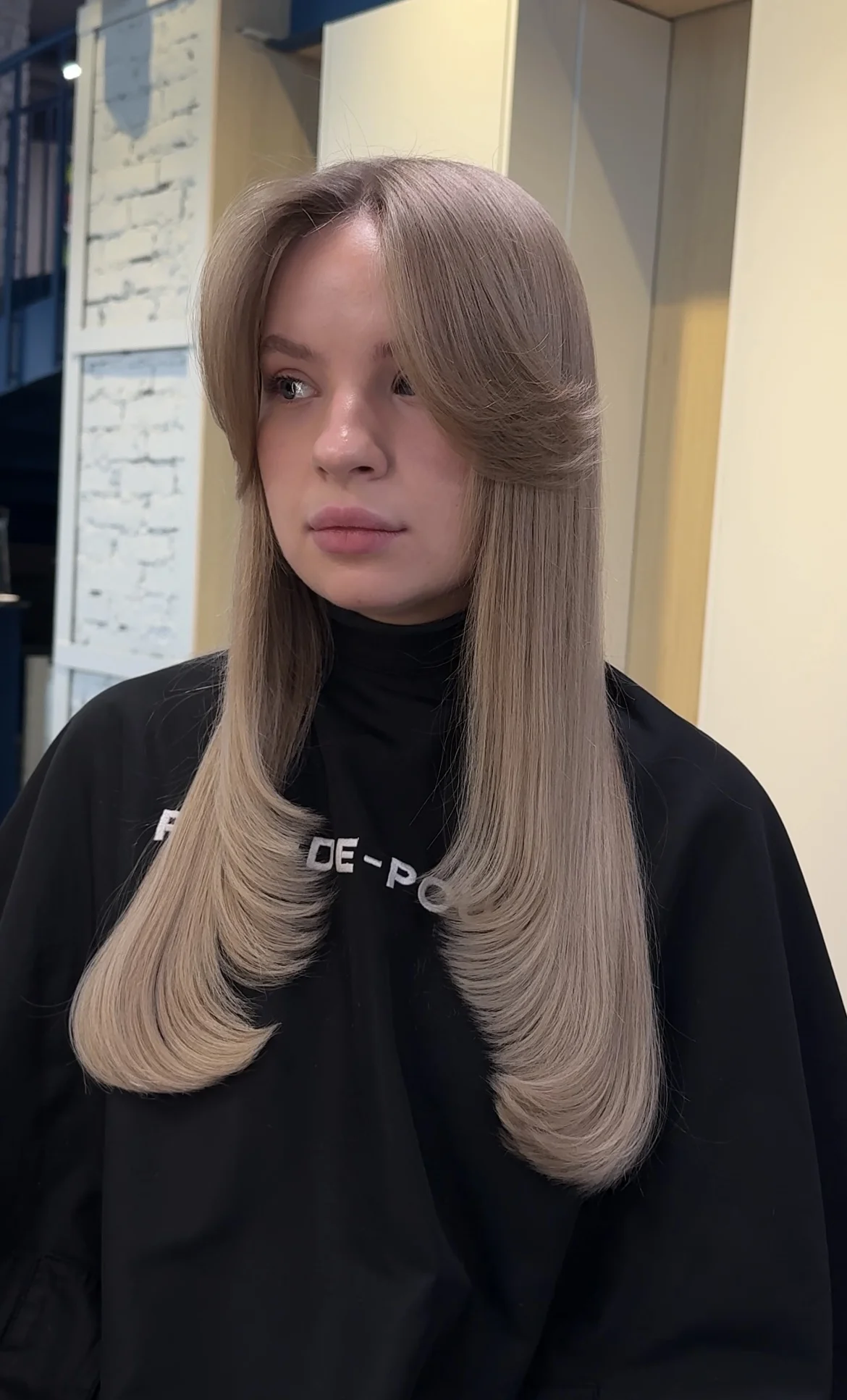
Not all curtain bangs are the same. The version that works on Selena Gomez does different things than the version Dakota Johnson is known for — and Nicole Kidman’s recent fluffy curtain fringe is a different conversation again. Getting the cut right starts with finding the right reference — and knowing why it works for your face.
Different Types of Curtain Bangs Inspired by Celebrities
The umbrella term covers a wide range of lengths, textures, and placements. Long curtain fringe bangs graze the cheekbones. Soft curtain bangs barely skim the brow. Some are blunt and bold; others are feathered and barely-there. The different types of curtain bangs create genuinely different outcomes — same name, very different results.
Worth knowing: curtain bangs are sometimes confused with Birkin bangs — the soft, wispy fringe named after actress and style icon Jane Birkin. The two are related but distinct. Birkin bangs tend to be softer and more undone, sitting forward on the face rather than swept cleanly to the sides. Curtain bangs have a more defined part and a cleaner sweep. Both are flattering; the choice depends on how structured you want the look to feel.
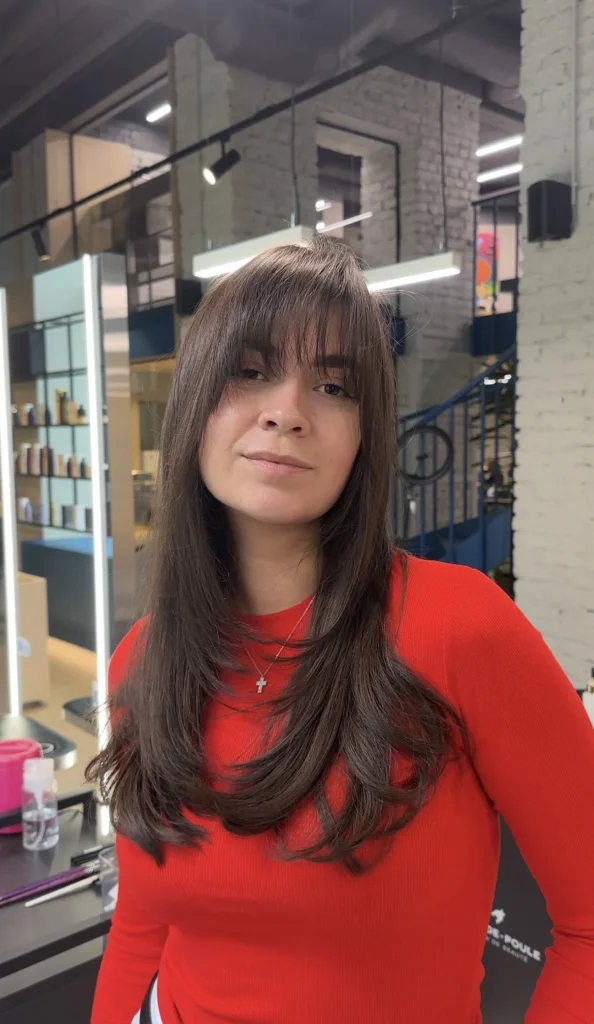
Hairstylist Mark Townsend, known for creating Dakota Johnson’s signature look, put it plainly: curtain bangs are “flattering on everyone — it’s a style that every face shape and every hair texture can have.”
Explore our Bangs haircut service to see what’s possible and get a sense of the cuts our stylists do every day.
What is the Best Face Shape for Curtain Bangs?
The honest answer: curtain bangs are one of the most face-shape-friendly fringes out there. The centre parting distributes weight evenly, which means the cut can be adjusted to lengthen, soften, or balance depending on what your face needs. Stylists adjust the layers around the fringe to slim a wider face or add fullness to a narrower one. The key is knowing which variation to ask for.
For Round Faces: Long Curtain Fringe Bangs
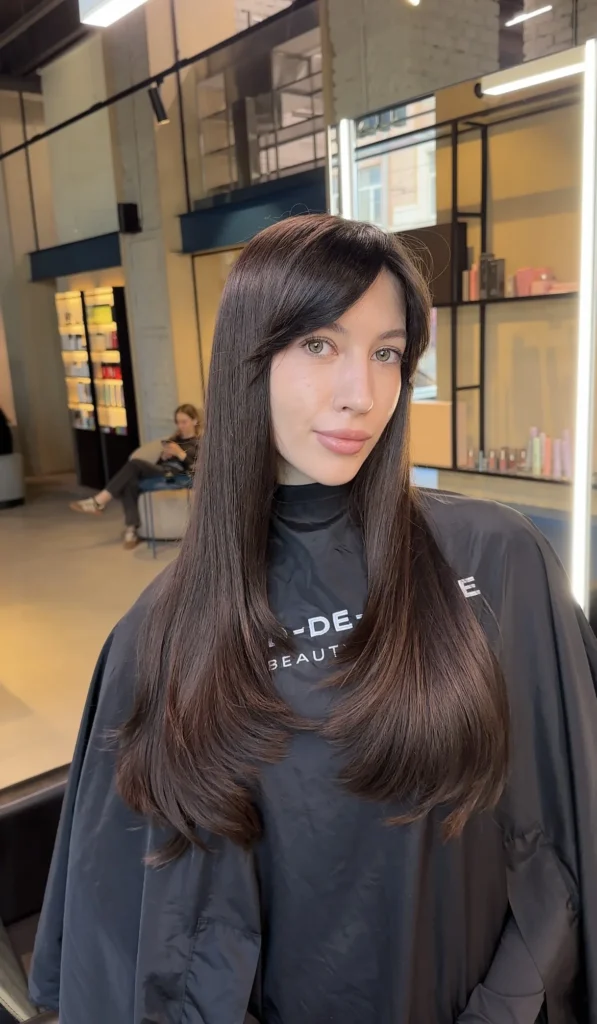
Round faces have beautiful, soft proportions — but a short, heavy fringe can make the face look wider than it is. Long curtain fringe bangs solve this by drawing the eye downward rather than outward. When the fringe falls past the cheekbones, it creates a vertical line through the centre of the face that adds the illusion of length.
The best version for this face shape has weight through the centre, with pieces that taper and thin toward the sides. Avoid blunt, across-the-forehead versions; instead, ask for fringe that parts deeply in the middle and sweeps long.
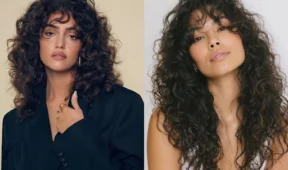
The Celebrity Muse: Selena Gomez Gomez is the curtain fringe reference. Her version is long enough to blend into face-framing layers, centre-parted, and always styled with some movement. The length is the crucial detail — it never sits above the cheekbone.
For Square & Heart Faces: Soft Curtain Bangs
Square faces have strong jaw and forehead lines. Heart-shaped faces carry width at the temples that tapers toward the chin. Both face shapes benefit from something that introduces softness at the top without adding bulk.
Soft curtain bangs — wispy, lightly textured, parted gently in the centre — do exactly this. They diffuse the forehead line without drawing attention to it. The weight of the fringe sits above the brow, with pieces feathered out to blend seamlessly into the rest of the hair.
For heart-shaped faces, this variation also works to balance a narrower chin by keeping the visual focus at eye level. Ask your stylist to keep the ends light and piece-y rather than dense.
The Celebrity Muse: Dakota Johnson Johnson’s fringe is textbook soft curtain bangs — romantic, slightly undone, and never overdone. She wears them straight down or swept slightly to one side, and either way they soften her features without ever looking styled within an inch of their life.
Pair with a face-framing haircut for a result that works as a complete look rather than an add-on.
For Oval Faces: Choosing Between Different Types
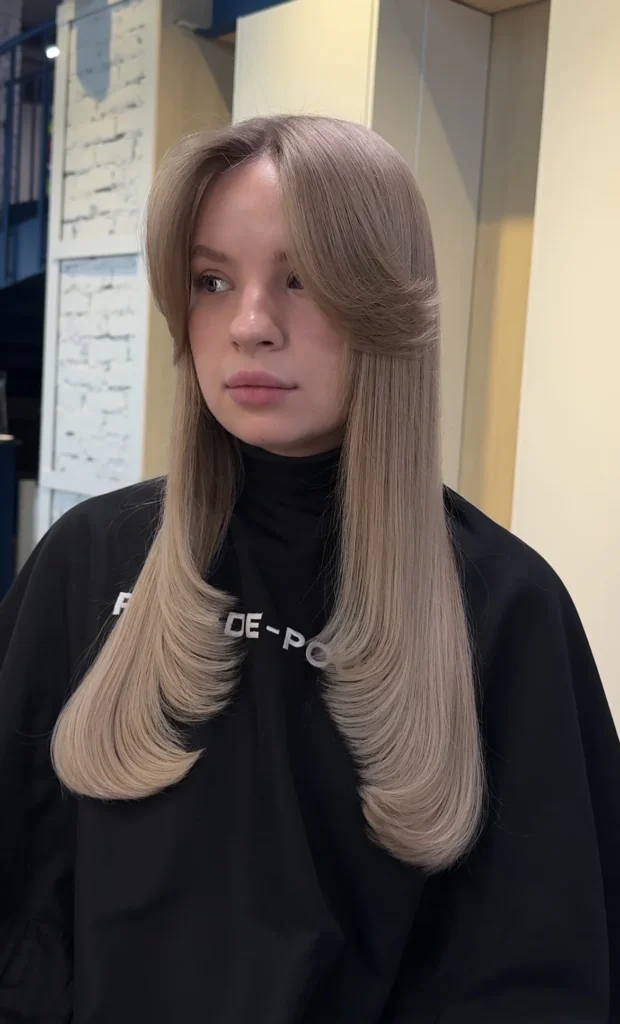
Oval faces are the one face shape with no real restrictions here. The proportions are naturally balanced, which means almost any version of curtain bangs will work. The decision comes down to the rest of your hair rather than your face shape.
Short curtain bangs draw attention to the eyes — good if that’s your preference. Long curtain fringe bangs add movement and blend easily into layers. Dense, full curtain bangs make a statement; feathered ones stay subtle. The only rule is that you get to choose based on the effect you want, not the shape you’re working with.
The Celebrity Muse: Jennifer Aniston & Nicole Kidman Aniston has worn curtain bangs in one form or another since the 1990s, typically paired with long, cascading layers. Her version is never heavy — it’s always slightly piece-y, blending into the rest of the hair so naturally it looks grown-in rather than cut. Kidman is a more recent example: her fluffy curtain fringe, created by longtime stylist Adir Abergel, shows how well the style reads on oval proportions across different hair textures and lengths.
Trendy Combinations: Curtain Bangs with Layers and Accessories
Maximum Volume: Shaggy Curtain Bangs with Layers
The shaggy variation — multiple layers cut throughout the length, with the fringe sitting as part of the same textured system — creates movement at every point, not just at the face. Layers remove weight without removing length on fine hair; on thick hair, they prevent the style from becoming heavy. Either way, the fringe and the cut read as one shape rather than two separate decisions.
Ask your stylist for:
- Curtain bangs cut to graze the cheekbone
- Layers starting from the chin or collarbone downward
- Razored or point-cut ends throughout to keep the texture consistent
The Celebrity Muse: Billie Eilish Eilish has worn shaggy, layered hair in various incarnations and consistently demonstrates how a textured fringe and layered body work together as a single silhouette. The fringe is never isolated — it’s part of the whole shape.
Book a consultation for a women’s haircut to discuss which layer variation suits your hair type and thickness.
Chic & Practical: Rocking Curtain Bangs with Glasses
Curtain bangs and glasses are frequently treated as incompatible. They are not. The key is understanding the relationship between your frame shape and where the fringe sits.
Curtain bangs with glasses work best when the fringe length allows the frame to be seen clearly rather than competing with the hair. A fringe that lands above the top of the frame creates a clean break. One that grazes the top of the glasses blends into them, which can work well with thinner, delicate frames. A fringe that lands below the frame line is usually too long and fights the glasses for attention.
For round or oversized frames, a slightly shorter, airier curtain bang adds structure. For rectangular frames, something softer and longer balances the geometry.
What to tell your stylist:
- Bring your glasses to the appointment
- Ask for the fringe to be cut with the glasses on, not just in theory
- Request lighter density through the sides so the fringe doesn’t overpower the frame
The Celebrity Muse: Rihanna Rihanna has paired fringe with frames on multiple occasions and wears both with the same confidence. The common thread: the fringe is always intentional, never accidental — placed and cut to work with the glasses rather than be hidden by them.
How to Style Curtain Bangs at Home
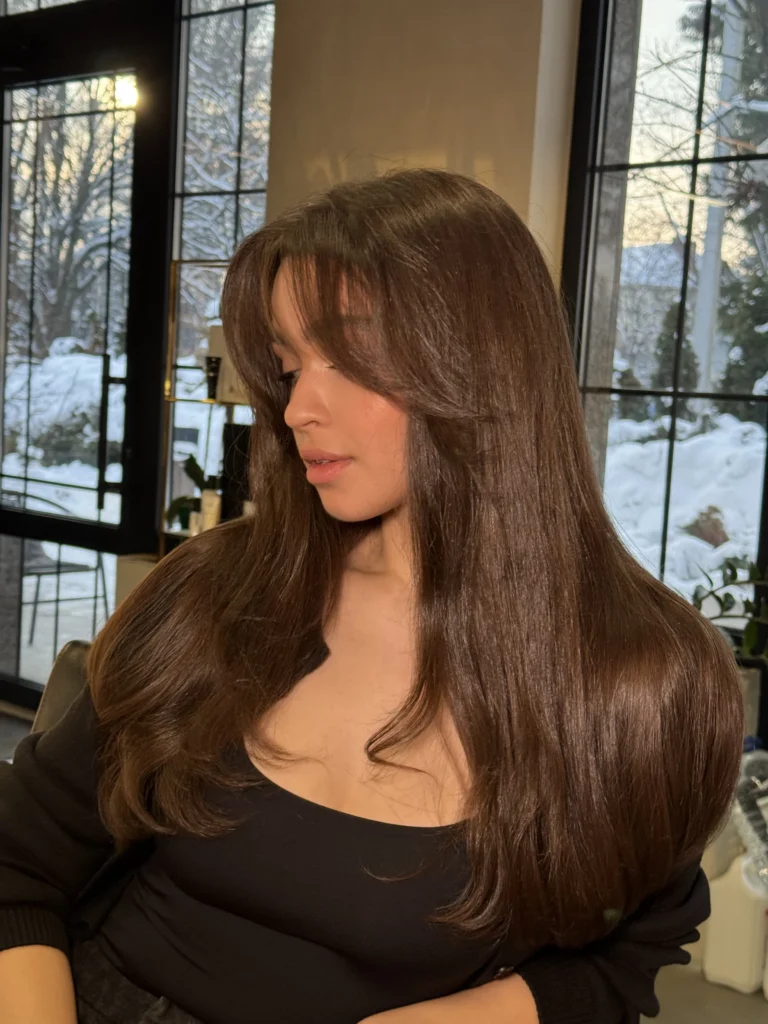
Step-by-Step: How to Blow Dry Curtain Bangs with a Round Brush
How to blow dry curtain bangs is one of the most-popular questions once the cut is done — and it’s simpler than it looks once you understand the mechanics.
What you need:
- A medium or small round brush (the smaller the barrel, the more curl; 32–38mm is the sweet spot for most)
- A concentrator nozzle on your dryer
- A light heat protectant
The process:
- Start with hair around 80% dry. Completely wet hair is too heavy to hold shape; completely dry hair won’t respond to the brush.
- Section the fringe from the rest of your hair with a clip. Working on the fringe alone stops the rest of your hair from getting tangled into it.
- Brush the fringe forward and blow dry it forward — directly toward the face, not swept to the sides yet. This is the step most people skip, and it’s why their fringe ends up flat. Drying forward first builds volume at the root.
- Direct the dryer’s concentrator nozzle downward along the brush. This smooths the cuticle and reduces frizz.
- Once the fringe is fully dry, part it in the centre and let each side fall naturally. The curtain shape appears on its own — you’re not pushing it to the sides, you’re releasing it.
- Finish with cool air to lock in the style.
Daily Maintenance: Pro Tips for Curtain Bangs Styling
For morning resets: Dampen just the fringe with a light mist of water, reshape by hand, and dry with a hairdryer on medium heat for 60–90 seconds. This removes sleep creases without a full wash.
For oil and the second day: Dry shampoo at the roots does two things — absorbs oil and adds texture. Spray, wait 30 seconds, then brush through with a fine-tooth comb. Don’t skip the brushing; dry shampoo left unbrushed looks chalky.
For humidity: A light hold spray — not a stiff lacquer — applied before you go outside creates a barrier against moisture without making the fringe feel hard.
Explore our range of hair care treatments to keep your fringe in good condition between appointments.
Evening Glam: How to Get Romantic Curled Curtain Bangs
Curled curtain bangs shift the whole mood of the look — from everyday to occasion-ready in under five minutes. Sabrina Carpenter has made this variation her signature, and the technique is worth learning.
With a curling wand or tong (recommended):
- Start with a completely dry, styled fringe. Curling damp hair causes frizz.
- Take a small section — no thicker than 2cm — from one side of the fringe.
- Wrap it away from the face (outward) around the barrel. Hold for 8–10 seconds.
- Release, do not touch immediately. Let the curl cool completely in your palm before releasing it.
- Repeat on the other side.
- Once both sides are done, break the curls up very gently with the tips of your fingers. The goal is a wave, not a ringlet.
With a flat iron: Grip the fringe at the root, rotate the iron away from the face, and slowly pull it downward and outward simultaneously. The diagonal motion creates a bend rather than a curl, which reads as softer and more natural.
The Celebrity Muse: Sabrina Carpenter Carpenter’s curtain bangs are almost always curled — voluminous, face-framing, and slightly retro. The curl doesn’t overwhelm the fringe; it adds dimension and keeps the look from feeling flat.
Summary Checklist: How to Blow Dry Curtain Bangs to Last All Day
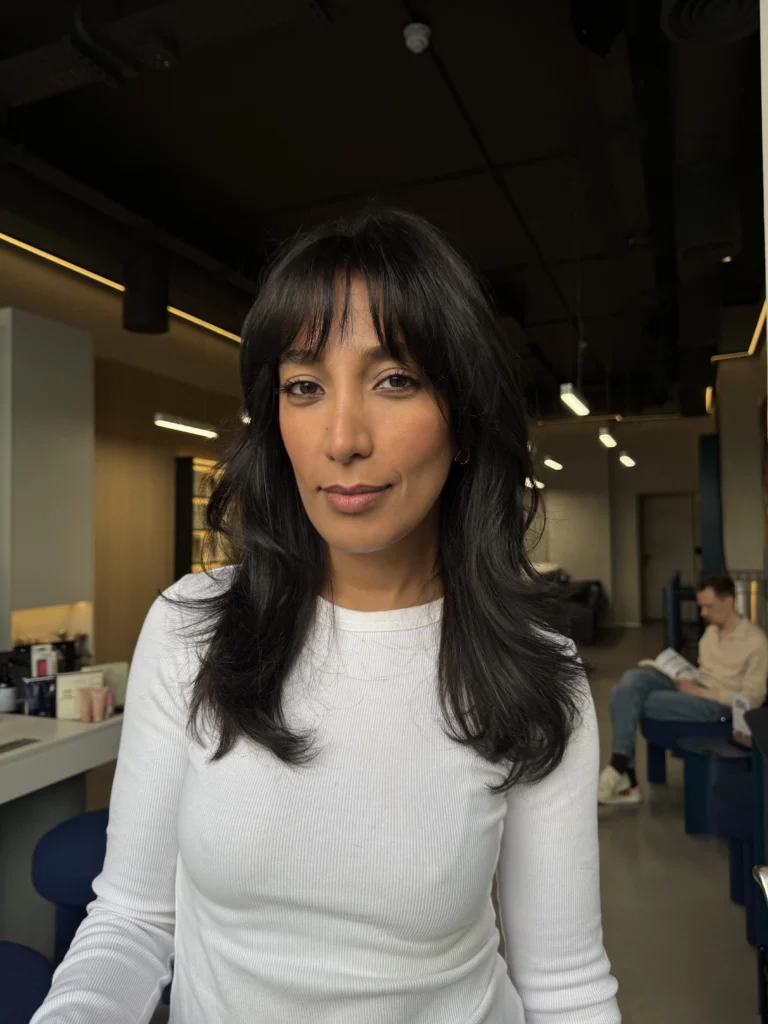
A good blow dry curtain bangs routine should hold even in UK weather — which means humidity, rain, and the occasional cold wind.
Before you start:
- Apply heat protectant to damp fringe
- Separate the fringe from the rest of your hair
During styling:
- Use a round brush and concentrate the dryer nozzle downward
- Brush forward and dry forward first — this builds root volume
- Part in the centre once dry and let the curtain shape fall naturally
- Hold in position for 10 seconds after heat is applied
To set the style:
- Hit with cool air to lock in shape
- For extra hold, use a light-hold spray — not a stiff lacquer
- Large velcro rollers placed in the fringe for 10 minutes after blow drying increase volume and lasting power significantly
For humid days specifically:
- Apply a humidity-blocking serum or spray before going outside
- Carry dry shampoo for mid-day lifts
- Avoid touching the fringe throughout the day — contact transfers oil and breaks down the style faster than anything else
Chosen Your Perfect Look?
Found the perfect look among these different types of curtain bangs? Save your favourite celebrity image and let our professional stylists create a bespoke cut tailored to your features.
Explore our Curtain Bangs Service and Book Your Stylist Today