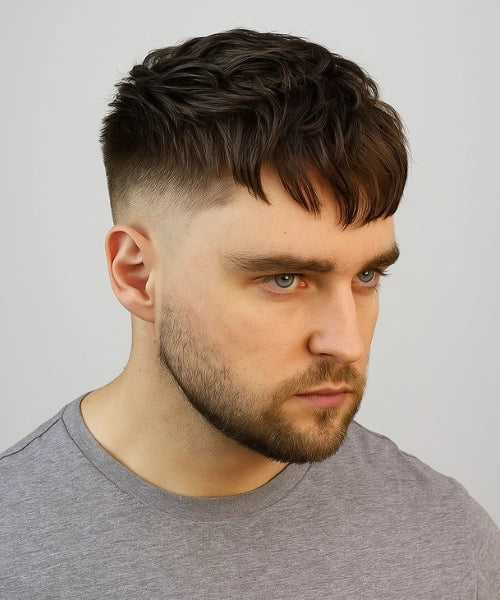
There’s a shift happening in men’s grooming. The era of aggressive, high-contrast fades – all sharp lines and exposed scalp – is giving way to something quieter and considerably more refined. The Low Taper Fade is the haircut at the centre of that shift. It’s not the loudest cut in the room. That’s exactly why it works.
What Is a Low Taper Fade – and How Is It Different?
The Low Taper Fade is a men’s haircut where the hair on top stays at your chosen length and gradually shortens toward the neckline and ears, blending out low – just above the hairline, rather than high up the sides. The transition is subtle. You see the shape, not the technique.
This is what separates it from a standard fade. A regular fade can start anywhere from mid-ear to the temple and often ends at the skin, creating a dramatic contrast. The Low Taper keeps more length, fades lower, and blends out more gradually – the result reads as polished rather than fresh-out-of-the-barber-chair.
In plain terms:
- Regular fade – higher, more contrast, more visible transition
- Skin fade – goes all the way to bare skin, bolder, higher maintenance
- Low Taper Fade – subtle gradient, starts just above the ears, stays closer to the natural hairline
The Low Taper is the most versatile of the three. It works in a boardroom on Monday and at a restaurant in Soho on Saturday without requiring a rethink of the rest of your wardrobe.
Is the Low Taper Fade Right for 2026 – and Right for You?
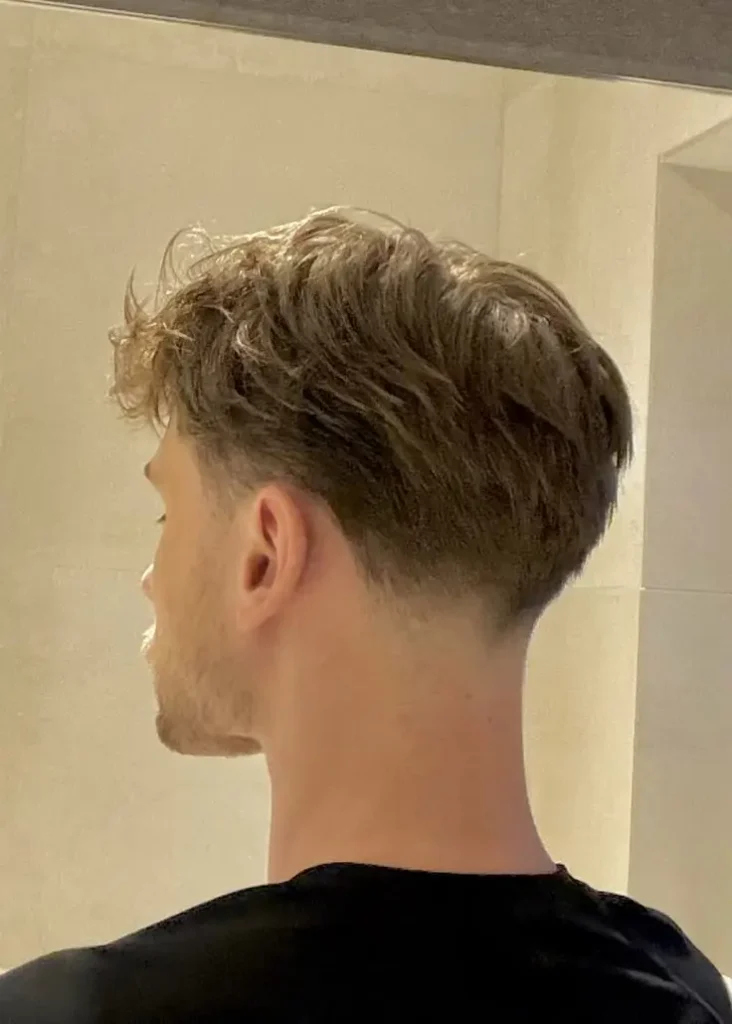
The Low Taper Fade has moved past the point where you need to ask whether it’s in style. It’s become the default choice for men who want a haircut that works consistently – across occasions, across seasons, however their hair happens to be behaving that week.
What’s shifted in 2026 is where it’s being worn. This cut has outgrown the barbershop-only context and become the foundation for bespoke men’s styling in premium London salons. The reason is straightforward: everything on top can be personalized to your face, your hair type, and the image you want to project. The taper provides the structure. What sits above it is decided in conversation with your stylist – and that conversation is where the real difference is made.
If you’re considering it for the first time, the honest answer is: it will almost certainly suit you. The Low Taper is one of the few cuts that adapts rather than dictates – to your face shape, your texture, your lifestyle. The section below breaks down exactly how.
Who Is It For? Does It Suit Every Face and Hair Type?
Almost everyone. That’s not marketing language – it’s the practical reality of how this cut works.
By face shape:
- Oval – the natural proportions carry the cut without any adjustment. Drake’s clean, minimal version is a good reference: no drama on the sides, the structure does the work quietly.
- Square – the gradual blend softens the jawline without removing the sharpness. Zac Efron’s slicked-back variation shows how well a square face carries it when there’s length on top to balance the strong jaw.
- Round – 2–3 inches of volume on top elongates the face; keeping the sides clean prevents any added width. Jack Harlow wears this balance consistently – texture and volume high, clean blend low.
- Diamond – the subtle sides reduce emphasis on the cheekbones and create a softer overall silhouette. Adam Levine’s pompadour variation demonstrates this well: volume redirected upward, sides kept disciplined.
- Triangle – extra volume at the temples adds width to balance a stronger jaw. A textured top, as Zayn Malik wears it with the crop variation, provides exactly that width without looking constructed.
By hair type:
- Straight and fine – the graduated sides create definition and structure. Without them, fine hair sits flat and reads as unstyled regardless of what product you use.
- Wavy – the sides become controlled while natural movement on top is preserved and framed. The cut does the containing; the wave does the rest.
- Curly and coiled – volume stays where it belongs (on top) while bulk at the sides is reduced. Jude Bellingham’s curly-top variation is the clearest example: shape rather than width, bounce rather than puff.
One important note: this style is more forgiving than higher fades for men with lower hair density, because it doesn’t expose the scalp. High fades can show too much scalp if your hair isn’t dense – the Low Taper avoids that entirely. It’s why our clients book a men’s haircut consultation first, where face shape, density, and growth direction are assessed before placement is decided.
The Four Variations Worth Knowing
The Low Taper Fade has a roster that spans sport, music, and film – which tells you something about its range.
The Executive Classic
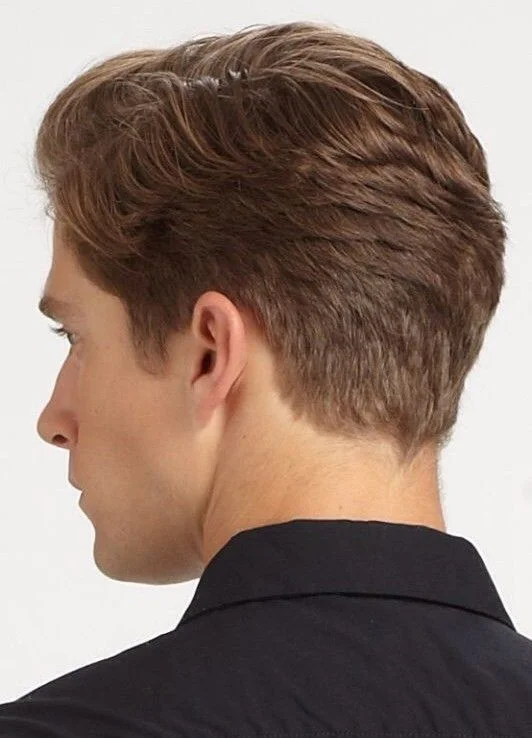
Crew cut or side part on top, clean blend at the sides and nape. This is the most professional variation – precise, understated, and immediately credible in any setting from a Canary Wharf meeting to a client dinner. The sides stay close, the top stays proportional, and the overall shape reads as groomed without reading as “just had a haircut.”
Best for: straight or slightly wavy hair, oval and square face shapes, men who prefer low daily styling effort.
The Modern Pompadour
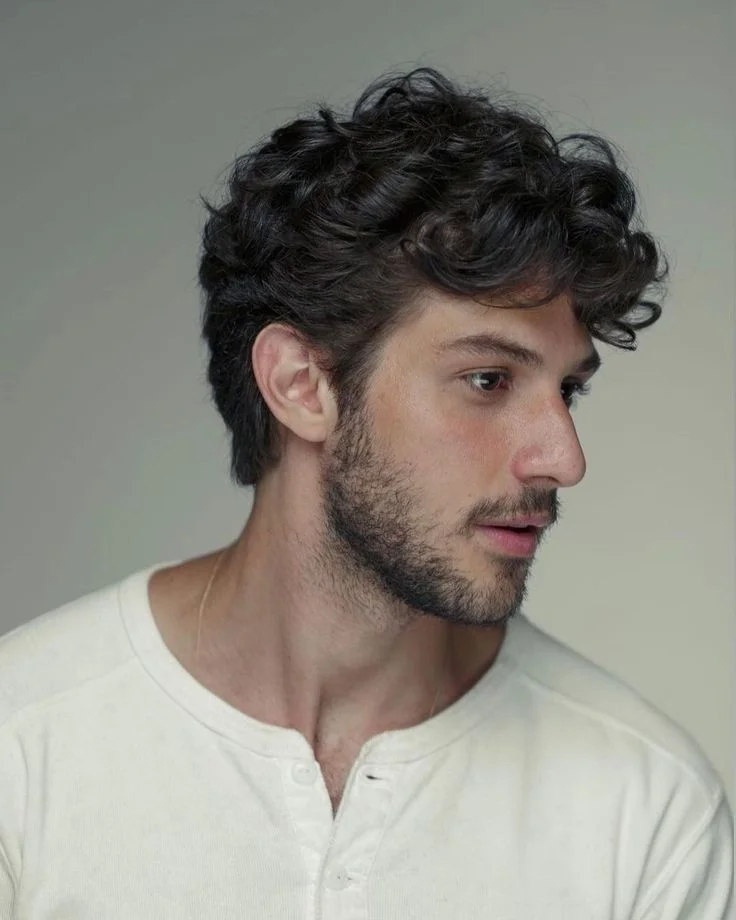
Volume swept back from the forehead, sides kept disciplined. This variation takes its cue from 50s classicism but wears considerably lighter – modern pomades and clays replace the heavy hold of the original, so the shape has movement rather than sitting rigid. The clean sides are what stop this from looking theatrical; the volume on top reads as intention, not excess.
Best for: hair with natural thickness or body, men who want presence without aggression.
Textured Refinement
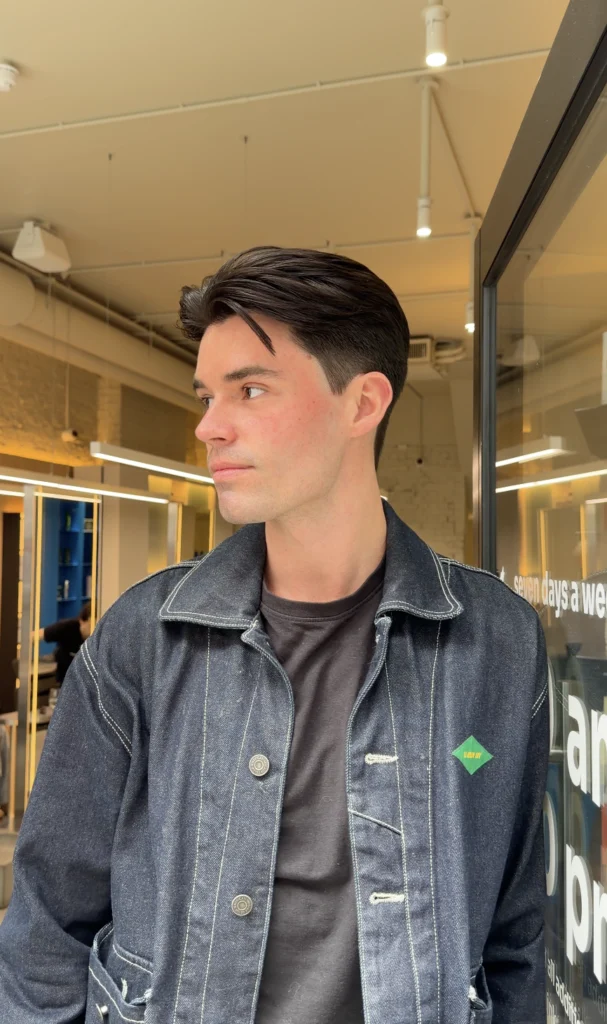
Natural texture – waves, curls, or a deliberate choppy finish – on top with the sides framing the shape. This is the most relaxed interpretation of the cut, and the most popular in London right now. It doesn’t fight the hair’s natural behaviour; it contains it. The result is hair that looks good air-dried, which for most men is the real luxury.
Best for: wavy and curly textures, men who air-dry, everyday wearability.
The Buzz and Taper
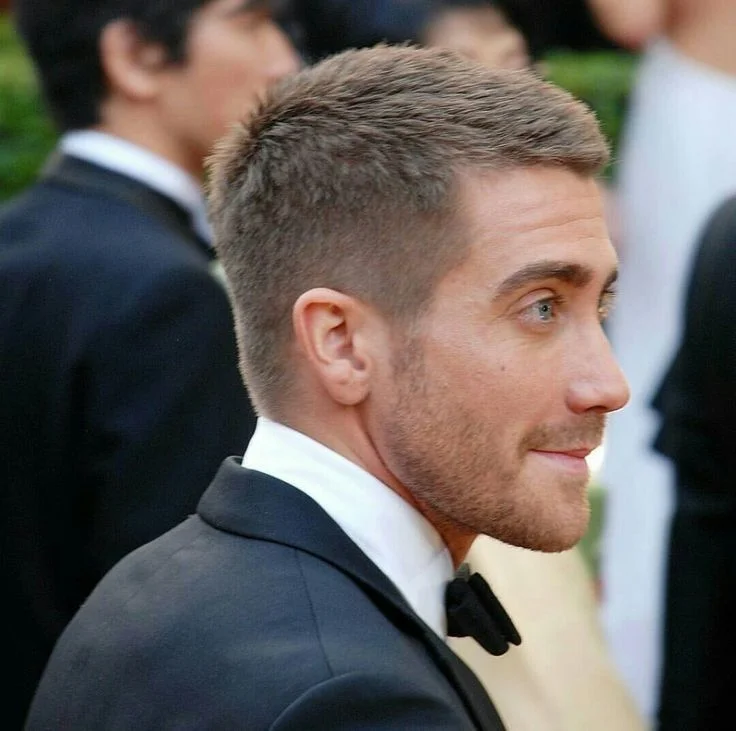
Uniform short length on top with the gradient fading into the neckline. Minimal, clean, and considerably smarter than a standard buzz cut. The blend is what elevates it – without it, the cut is functional. With it, it’s structured. Channing Tatum has worn this variation, demonstrating that short doesn’t have to mean effortless-looking.
Best for: men with strong skull shape, those who want maximum ease with minimum upkeep.
The common thread is control. Each of these wears the Low Taper Fade not as a statement but as a frame – the thing that makes everything else on top work better.
Maintaining the Look at Home
Wash correctly
It stays sharp when the scalp is in good condition. Irritation, dryness, or product build-up dulls the finish faster than anything. A sulphate-free shampoo used two to three times a week keeps the scalp balanced – this matters especially for men with sensitive skin or those who train regularly. Think of it the same way you’d think about skincare: the foundation has to be healthy for the finish to hold.
Style with the right product
Matte clays and pastes over gels – always. Gel creates a hard, wet finish that dates quickly and flakes as it dries. A matte clay gives definition, separation, and texture that looks like your hair, just better. For straight hair, a light paste adds shape without weight. For curly or wavy textures, a curl cream applied to damp hair before air-drying is enough – the structure has already done the work.
Know your maintenance window
This cut looks its best for three to four weeks. After that, the blend starts to grow out and the contrast between the top and the sides softens in a way that reads as grown-out rather than relaxed. Unlike a skin fade that demands weekly barber visits, it stays sharp for up to three weeks – which is precisely why premium clients prefer it. Four visits a year is the minimum to keep the shape. Six is the standard for men who wear it as part of a considered overall image.
Scalp health directly affects how clean the finish looks and how long the cut holds its shape – our Hair Treatments maintain the condition of the hair between appointments. A well-maintained Beard Trim and a polished low taper are one of the most considered combinations in men’s grooming – both services are available together in a single appointment. For those thinking beyond the haircut, our men’s manicure rounds out a complete grooming appointment: hands that match the standard of the cut.
Is the Low Taper Fade Right for You?
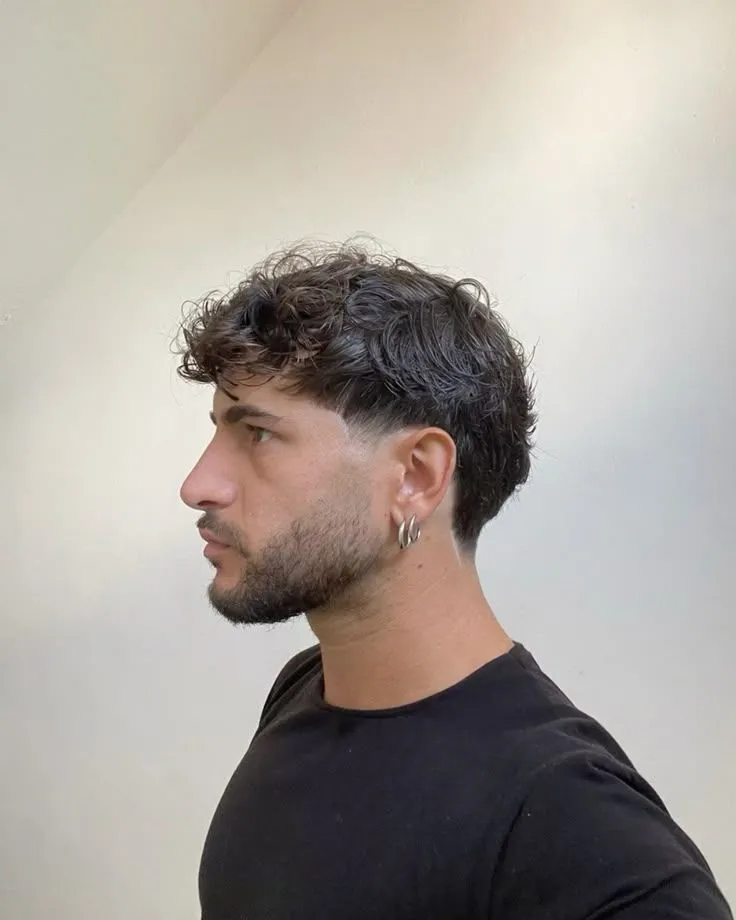
If you’re asking whether it suits you – it almost certainly does. The Low Taper Fade works on all hair types and adapts to personal preferences across all age groups, which is why it holds its position regardless of what else is trending.
What it requires is context. The variation that works for you depends on your face shape, your hair’s natural behaviour, and honestly, how much time you’re willing to spend in front of a mirror in the morning. The sections above give you the framework. The conversation with your stylist fills in the rest.
The men who wear this cut well don’t wear it because it’s trending. They wear it because it makes everything else they put on look more considered. That’s the case for any bespoke grooming decision – the payoff isn’t just in the mirror, it’s in the consistency of the impression. If you’d like to explore the full range of men’s services we offer, visit our beauty salon to see what a complete grooming appointment looks like.
Not sure which variation of the Low Taper suits you? Browse our men’s styling gallery and bring the reference that feels closest to what you’re after.