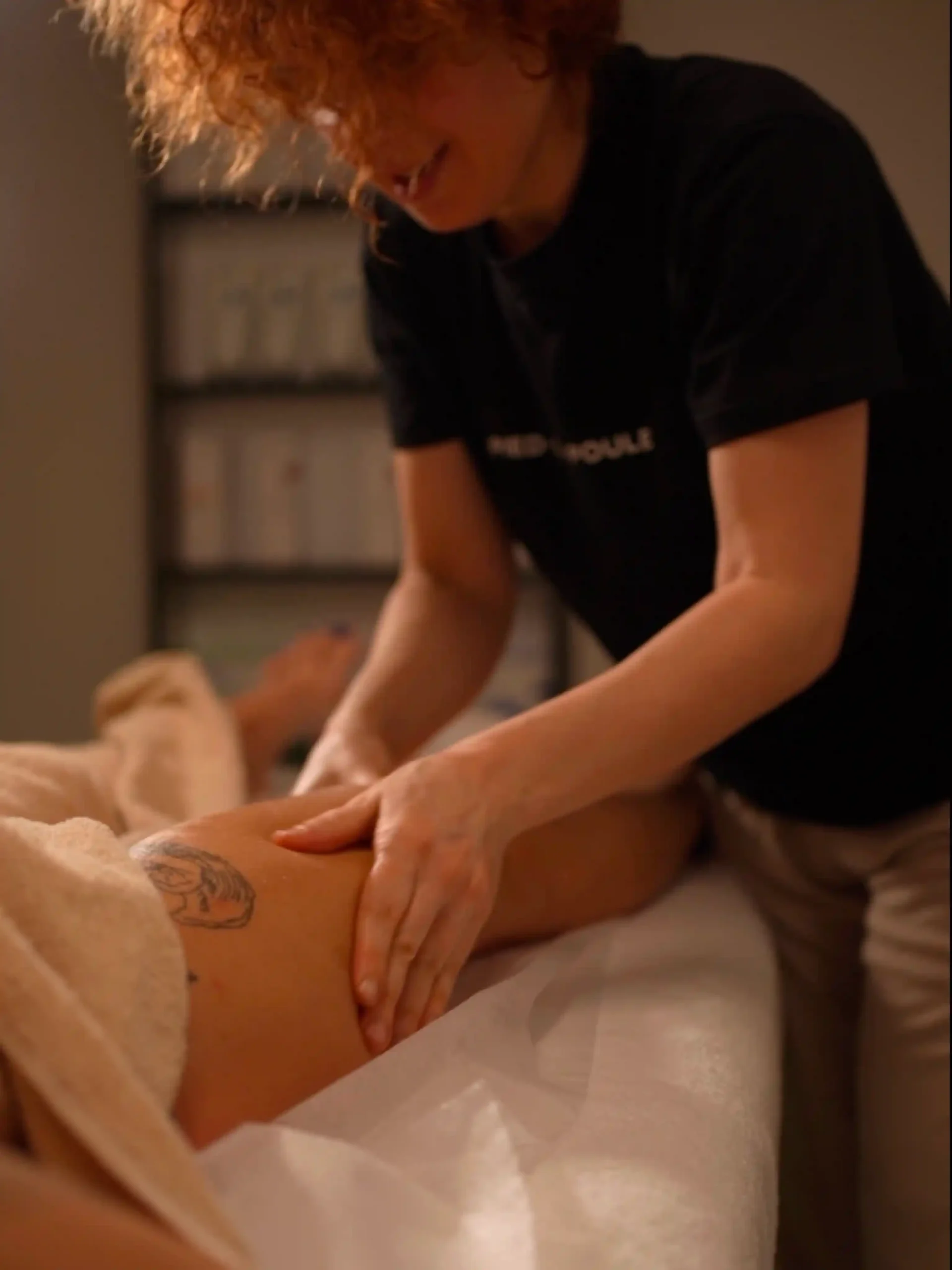
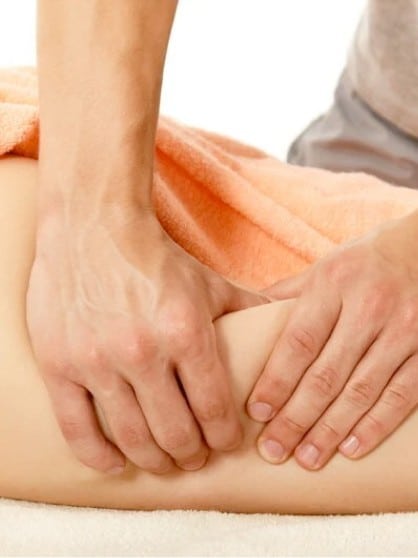
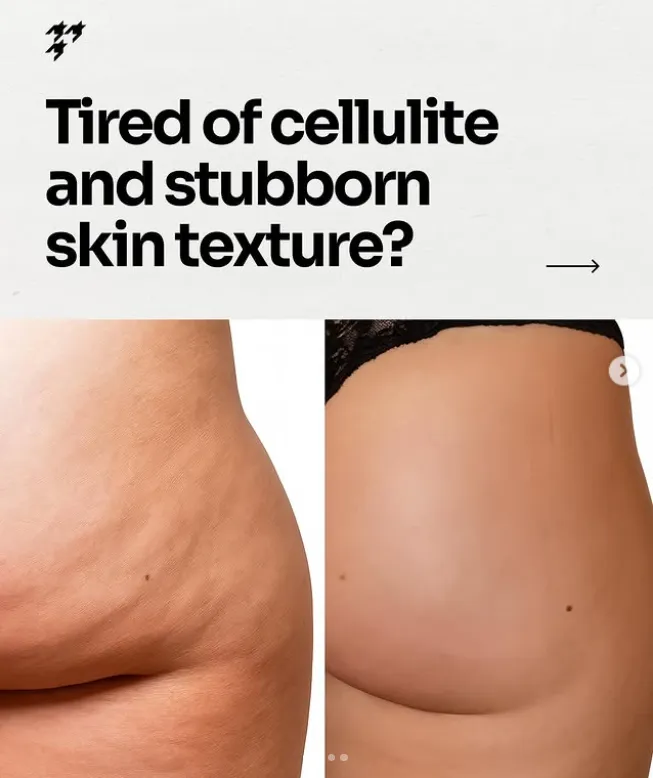
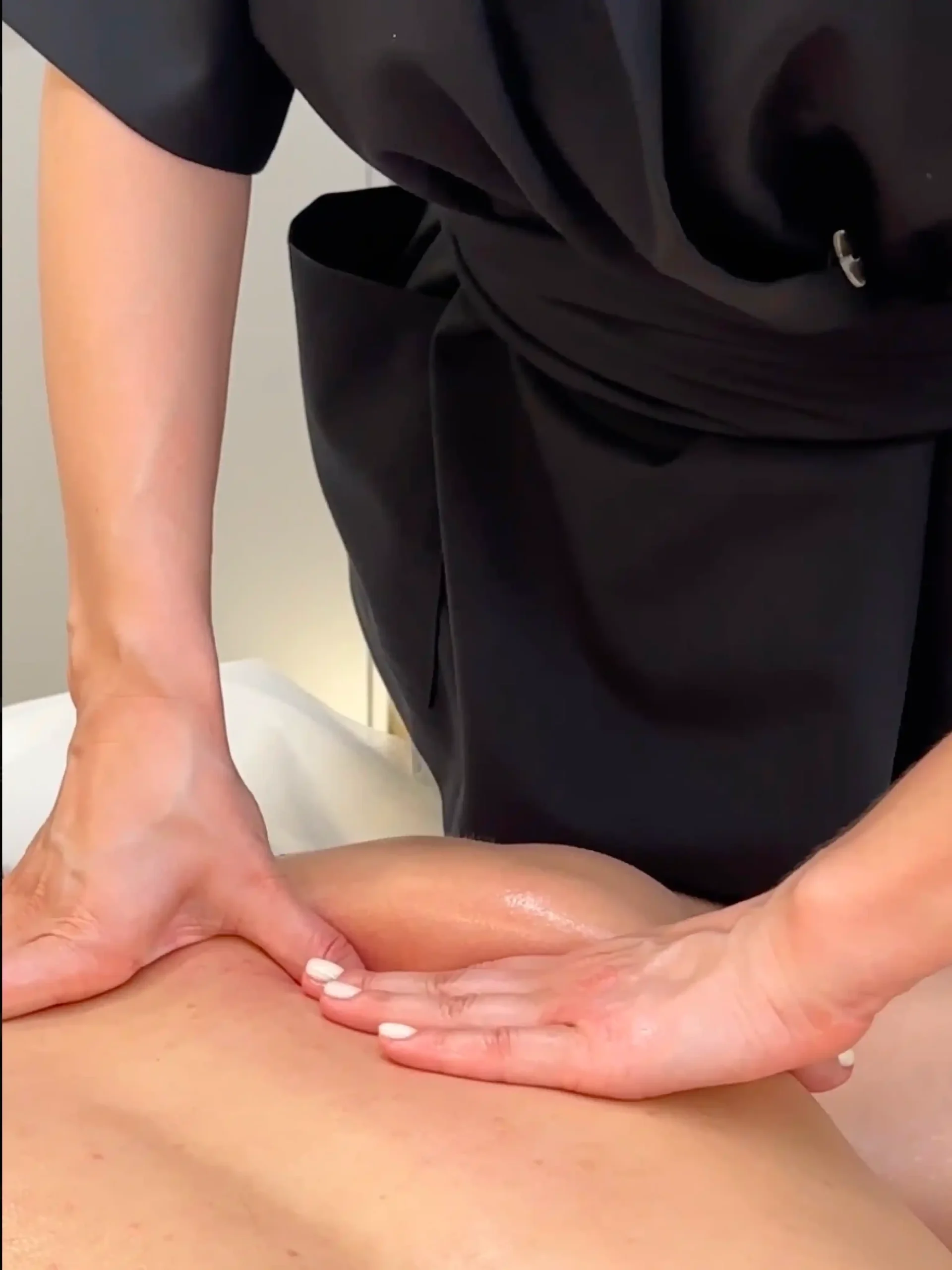
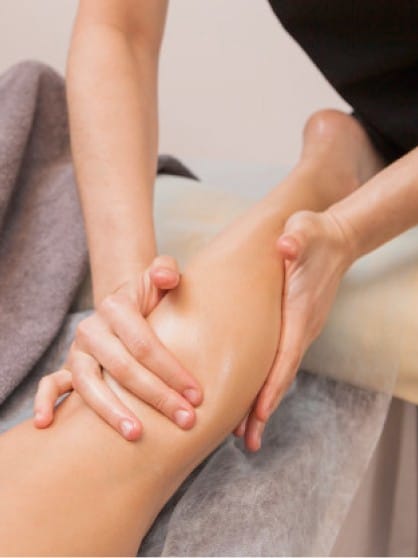
Anti-cellulite massage is a deep manual body treatment that works the subcutaneous layer — applying sustained pressure, friction, and rhythmic compression to break up fluid congestion, soften the fibrous tissue that pulls skin into dimples, and restore circulation to areas where it has stalled. It is more intensive than standard body massage and produces cumulative results: skin texture improves, puffiness reduces, and the treated areas feel noticeably firmer over a course of sessions.
If you want to understand why cellulite forms and what drives it, our guide How to Get Rid of Cellulite covers the full picture.
How Anti-Cellulite Massage Works
The lymphatic system clears waste and excess fluid only when movement or external pressure forces it through. Anti-cellulite massage techniques — kneading, skin rolling, cupping strokes, deep effleurage along drainage pathways — provide exactly that mechanical stimulus. Each session mobilises stagnant fluid, breaks down congestion in the connective tissue, and drives oxygenated blood back into areas that have been sitting underserved. The skin responds by becoming more pliable, more even in texture, and visibly less dimpled.
The pressure is significantly higher than in relaxation work. Clients who add lymphatic drainage massage to their course often see faster progression — drainage sessions clear the pathways that anti-cellulite work relies on to move fluid out.
When The Treatment Helps
Anti-cellulite massage treatment produces the clearest results for:
- Persistent dimpling on the thighs, hips, buttocks, or stomach that exercise alone does not shift
- Legs that feel heavy or puffy by the end of the day
- Skin that has lost firmness after hormonal changes, pregnancy, or significant weight fluctuation
- Skin that has sagged or lost density following rapid weight loss
- Localised swelling or chronic fluid retention that makes limbs feel congested
- Clients using body-firming topicals who want manual work to deepen absorption and compound the effect
This is not a weight-loss treatment. It reshapes skin texture and improves tissue quality — measurable changes that build over a course, not a single session. Clients carrying more than 5 kg of excess weight tend to see stronger results if they address that first; the massage works on skin structure, not on underlying volume.
How It Differs from Other Body Massage
Standard body massage works the muscles. Anti-cellulite massage works the layer beneath the skin — targeting the fat deposits and connective tissue that create surface irregularity. The strokes are slower, more deliberate, and applied with significantly more friction. Clients familiar with deep tissue massage will recognise the pressure level, but the direction of the work is different: deep tissue follows muscle fibres, anti-cellulite techniques follow lymphatic pathways and connective tissue planes.
The sensation is more intense and more localised. Mild warmth and temporary redness in the treated area are normal and indicate the tissue is responding.
Types of Anti-Cellulite Massage
Anti-cellulite massage is performed either manually or with specialist equipment. The two approaches differ in how pressure is delivered and how deep the effect reaches.
Manual techniques:
- Hands-on massage without product — the therapist works directly on the skin, using pressure and friction to mobilise tissue and stimulate drainage
- Massage with anti-cellulite cream or oil — the same manual work with an added topical component; active ingredients penetrate deeper because the tissue is already warm and receptive
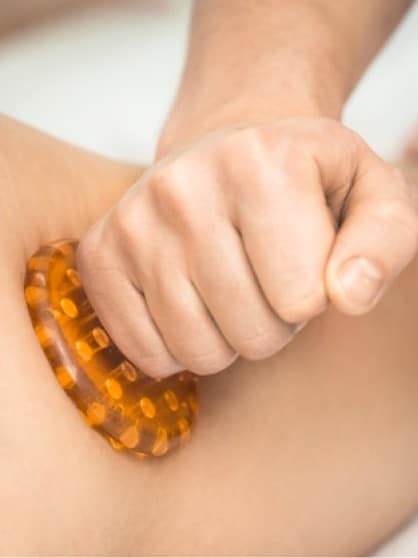
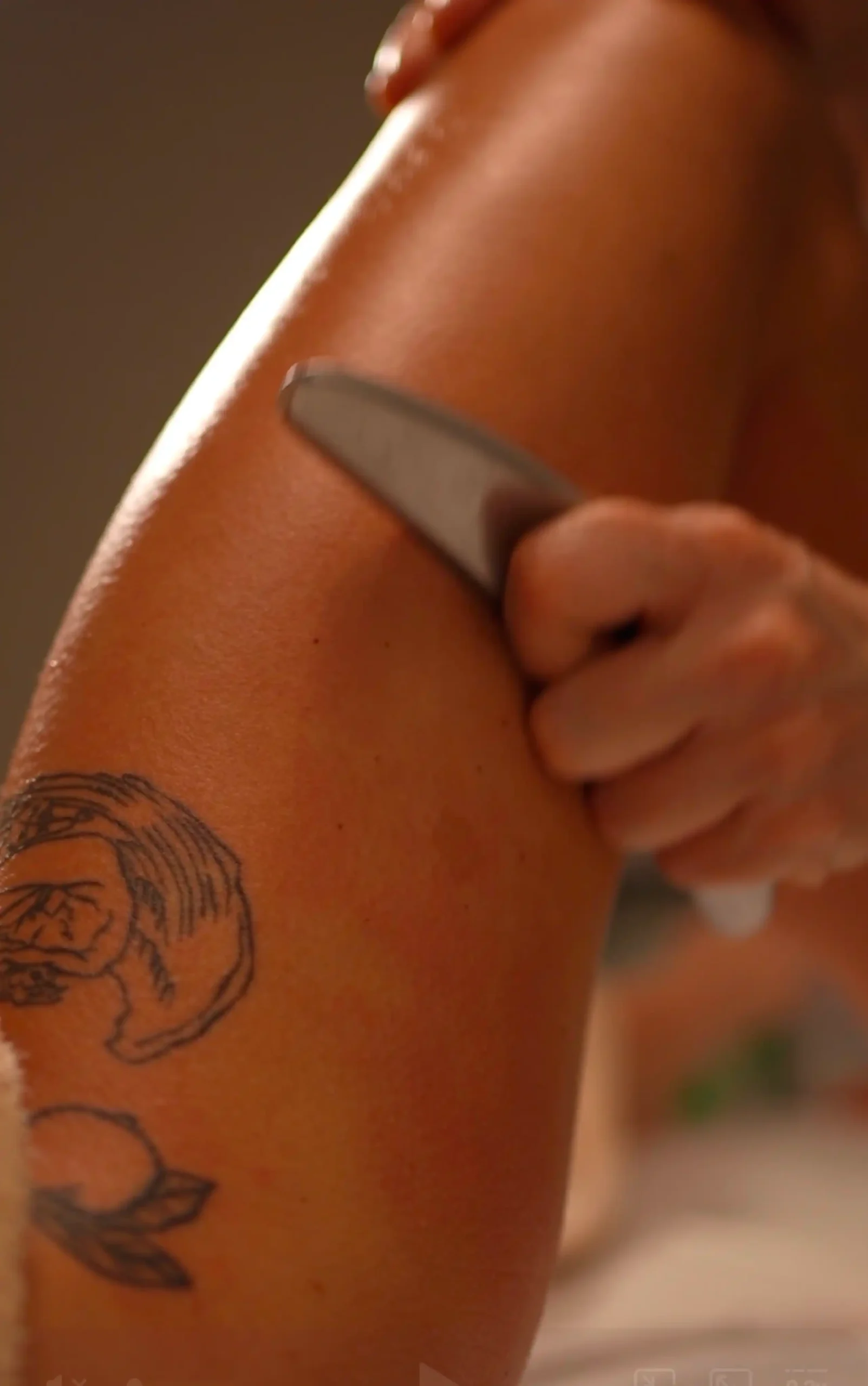
- Vacuum cup massage — cups are placed on the skin to create suction, lifting the tissue from below and increasing pressure in congested areas without direct hand pressure
Machine-based techniques:
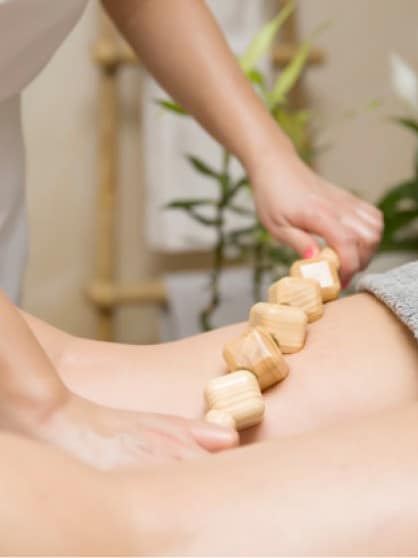
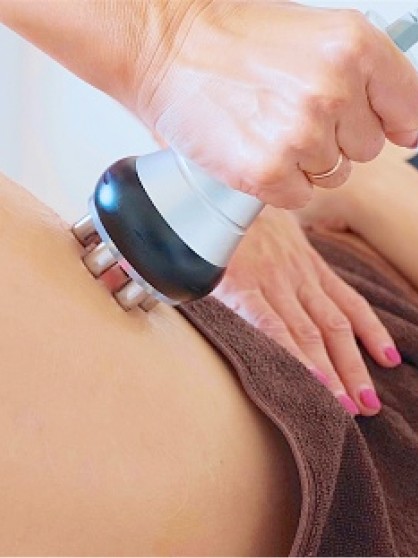
- Roller massage — mechanical rollers move across the body to knead and compress the subcutaneous layer across larger surface areas
- Pneumatic compression — inflatable garments apply rhythmic pressure in a set sequence to push fluid through the lymphatic system
- Mechanical vacuum — device-driven suction applied across broader zones, similar in principle to cup work but operated at fixed intensity
Generally, anti-cellulite massage is performed manually. The therapist selects techniques — including cup work where appropriate — based on what the tissue needs in that session, rather than following a fixed mechanical sequence.
Results and Timeframe
The treated area feels warmer, softer, and less congested after a single session. Visible improvement in skin texture accumulates over a course — most clients see meaningful change after six to eight sessions spaced one week apart, then maintain with two to four sessions per month.
Sessions run at 60 minutes for one or two focused zones, and 90 minutes for full coverage of the legs, hips, and abdomen. A course of six sessions is the standard recommendation. The 90-minute format suits clients already working on body composition with a body contouring treatment who want to fold targeted anti-cellulite work into the same appointment.