Nail infills

Nail infills

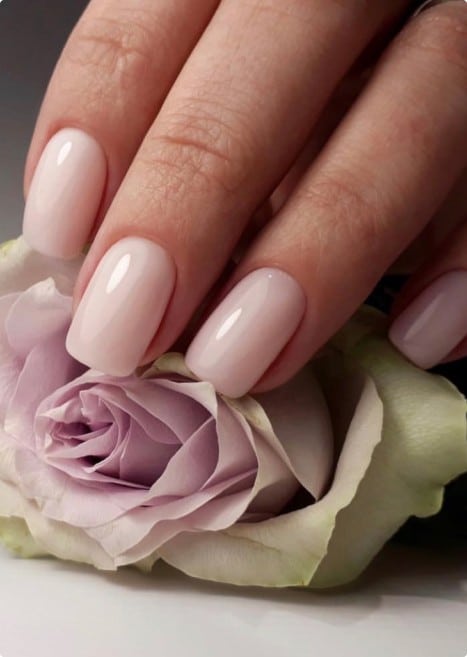
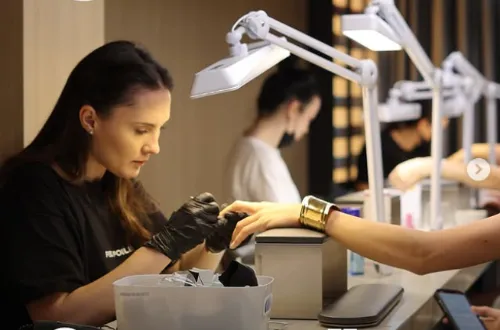
Nail infills are an essential part of maintaining a flawless manicure after nail extensions. Over time, as natural nails grow, the space between the nail plate and the artificial coating increases, making the manicure look less tidy. Regular gel polish infills and builder gel infills help restore the smooth and polished look of your nails while preventing the coating from lifting or breaking. At PIED-DE-POULE, nail infills are performed by experienced technicians who assess the condition of each nail individually and restore the structure and finish to where it was on day one.

Extensions That Last Longer

Weeks more wear before full removal is needed

No Lifting or Breakage

Stress zone corrected before damage sets in

Same Finish as Day

One Colour, shape, and surface restored completely

Less Downtime Between Sets

Shorter appointment than a full removal and redo

What are Nail Infills?

As natural nails grow, the gap between the cuticle and the artificial coating increases by roughly 3–4mm every two to three weeks. The load-bearing point on the extension shifts forward, weakening the bond between the natural nail and the artificial material — leading to lifting, air pockets, and breakage. Nail infills restore the grown-out area, re-level the surface, and refresh the colour finish before any of that happens.

Gel coating also acts as a physical barrier against everyday contact, so many clients notice faster nail growth after extensions — the natural nail breaks less and retains more length. That makes the infill interval more important, not less.

Recommended schedule:

  • First follow-up: within 2 weeks of the initial extension
  • Ongoing: every 2–3 weeks

Types of Nail Infills

Routine Infills — 1 to 2 hours Standard planned maintenance for a gap of around 2–3mm with coating otherwise intact. Covers cuticle and side-roll preparation, filing the boundary between the natural and artificial nail, reapplying modelling material, reshaping, and finishing with colour. Design changes — including switching to a French finish — can be done within the same appointment.

Minor Corrections — 30 to 90 minutes Unscheduled visits for small imperfections: a micro-pocket, a hairline crack, or a design update. Biogel is used to seal small pockets cleanly.

Complex Infills — comparable to a full extension Required when the coating is severely damaged — peeling, large chips, or a broken nail. The existing coating is fully removed with a milling machine before fresh material is applied. If the original Nail Extension is beyond repair, the process restarts from scratch.

Gel or Acrylic?

Gel is lighter and more flexible, with a finish that sits closer to a natural nail. Acrylic is harder and holds its shape under more physical stress — better suited to clients who are rough on their hands.

The material used for each infill always matches the original extension. Switching from one to the other is discussed at consultation, not during the appointment itself. Clients starting with a Shellac Nail Treatment sometimes move to extensions later — the infill schedule that follows works on the same principle.

Read More

How Nail Infills Are Performed at PIED-DE-POULE

01
Consultation

The technician assesses the current state of each nail: gap size, any lifting or pocketing, the condition of the existing coating, and whether the nail plate underneath shows any damage. This determines which type of infill is needed and whether any repairs are required before the main procedure begins.

02
Cuticle and Surface

Preparation Cuticles and side rolls are treated to clear the margin around the nail. The old decorative coating is removed from the surface, and the boundary between the natural nail and the artificial layer is filed to create a clean, even edge for the new material to meet.

03
Filing and Damage

Repair The full surface of the nail is filed and levelled. Any lifted sections are milled back. If a nail is broken or a pocket has developed, that area is repaired or rebuilt before the infill material is applied — skipping this step is what causes fresh infill product to lift prematurely.

04
Primer and Material

Application A primer is applied to the exposed natural nail area to prepare the surface for bonding. The modelling material — gel or acrylic, matching the original extension — is then applied to fill the grown-out gap, shaped to restore the original length and curve, and cured where required.

05
Finishing and Colour

The nails are polished smooth and the decorative finish is applied: gel colour, French, ombre, or design work if requested. The shape is checked across all ten nails for consistency before the final coat is cured.

06
Aftercare Guidance

The technician advises on the next appointment window based on how much growth was present at this visit. Avoid applying oil-based hand or cuticle products on the day of each appointment — surface oils on the exposed natural nail area reduce primer adhesion and shorten how long the infill holds. Protective gloves for cleaning and dishwashing extend the life of the coating between visits.

Why Choose Nail Infills

BIAB Nails
  • Individual Assessmen

    Every Visit Each infill appointment begins with a review of how the nails have grown and worn since the last session. Growth rate varies between clients — and in the same client between seasons — so the frequency and approach are set based on what is actually in front of the technician, not a fixed schedule.

  • Both Gel and Acrylic Infills

    Available Technicians at PIED-DE-POULE work with both gel and acrylic systems, so the material used for your infill always matches your original extension. Clients do not need to change products or adapt to a different technician's preferred system.

  • Central London, Seven Days a Week Both salons

    South Kensington and Oxford Circus — are open from 9am to 9pm daily, including weekends. Infill appointments fit around work and travel schedules without requiring advance planning weeks out.

  • Minor and Emergency Repairs on the Same Visit

    If a nail breaks or lifts between scheduled appointments, the repair is handled within the infill session rather than as a separate booking. This keeps the full set consistent and avoids leaving a damaged nail unaddressed until the next planned visit.

FAQ

  • How do I know it's time for an infill?

    Three signs to look for: a visible gap between the cuticle and the artificial coating, lifting at the edges of the nail, or a noticeable change in the nail’s structural firmness. Any one of these means the appointment is overdue. 

  • How often do I need nail infills?

    Most clients come in every two to three weeks. After your first extension, a follow-up within two weeks is recommended so the technician can assess how quickly your nails grow and set the right interval for you.

  • How long does a nail infill appointment take?

    A standard infill takes one to two hours. Minor corrections for small chips or pockets run 30 to 90 minutes. Complex repairs involving full coating removal take longer and are treated as a separate service category.

  • What is the difference between a mini infill and a standard infill?

    A mini infill addresses a specific imperfection — a small crack, a pocket, or a design change — rather than a full grown-out gap. A standard infill is the regular scheduled maintenance that covers the complete nail, from cuticle work through to colour.

  • What happens if I leave infills too long?

    The gap between the natural nail and the extension grows beyond the point where the bond is stable. The stress zone shifts, lifting starts, and moisture can get trapped under the coating. At that point, full removal is often the only option rather than a straightforward infill.

  • Can I change my nail colour or design at an infill appointment?

    Yes. The finish is refreshed at every infill, so a colour change, switch to French, or updated design is done within the same session without adding significant time.

  • Do infills damage natural nails?

    When done at the right interval with proper preparation, infills do not damage the nail plate. Damage occurs when product is peeled rather than properly filed or soaked off, or when appointments are stretched too far and the nail structure is compromised before the technician sees it.

  • What should I avoid before a nail infill appointment?

    Avoid applying oil-based hand or cuticle products on the day of your appointment. Surface oils reduce how well the primer bonds to the natural nail in the grown-out area, which shortens how long the infill holds.

  • Language:
  • Choose a location:
    Book Now