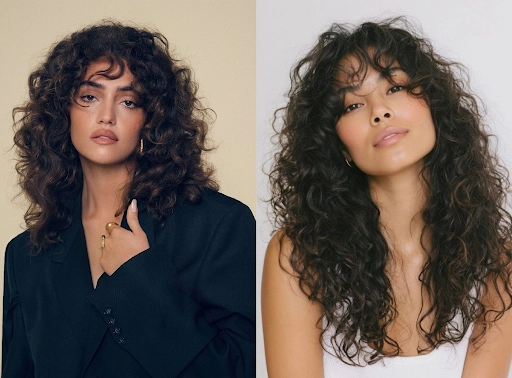
Frizzy hair shouldn’t be considered bad or unruly. Frizz usually appears when the surface of the hair fibre is rougher or more porous, allowing strands to absorb moisture from the air unevenly. Humidity can make the effect much more obvious, but heat styling, colouring, friction, dryness and your natural hair texture all matter too.
The good news is that frizz can usually be reduced. The realistic goal is to stop forcing every hair type into pin-straight perfection, and to make the hair smoother, softer, easier to style and more predictable from wash to wash.
What causes frizzy hair?
Each hair fibre is covered by an outer layer called the cuticle. When this surface is relatively smooth, the strands reflect light evenly and glide past one another more easily. When the cuticle becomes raised or worn, hair can feel rough, tangle more readily and react strongly to moisture in the air.
Cosmetic-science research describes conditioners as useful for reducing friction, improving combability and minimising frizz by lubricating and smoothing the hair surface.
Common reasons for frizzy hair include:
- Naturally curly or wavy texture. The shape of the fibre and distribution of natural oils can make textured hair more prone to dryness and visible frizz.
- Humidity. Porous hair absorbs atmospheric water more readily, which can change the way individual fibres swell and sit.
- Bleaching and colouring. Repeated chemical processing can make hair more porous.
- Frequent heat styling. High temperatures, especially without heat protection, can contribute to surface damage and breakage.
- Mechanical friction. Vigorous towel drying, rough brushing and sleeping on coarse fabrics can encourage flyaways.
- Dryness. Hair lacking sufficient conditioning often feels rougher and is harder to control.
- New short hairs or breakage. Not every flyaway is technically frizz; sometimes you are seeing regrowth or broken strands.
This also explains why hair may become frizzier with age. Hormonal changes can affect hair density and texture, and the NHS lists hair thinning or hair loss among possible changes during perimenopause and menopause. Hair can also accumulate years of heat, colour exposure or environmental conditions, so the lengths may become increasingly porous.
Can frizzy hair become smooth?
A short answer is yes, but smooth does not have to mean changing your natural texture.
Good hair care for frizzy hair can help the cuticle lie more neatly, reduce friction between strands, improve softness and give the hair better protection from humidity. Styling can then create a sleeker finish or more defined curls, depending on the result you prefer.
Before and after: what is realistic?
Before: hair may feel dry or coarse, expand in damp weather, tangle easily, look dull and develop a halo of flyaways soon after styling.
With a consistent routine: hair can become easier to detangle, noticeably softer and less reactive to everyday humidity. Styling may hold more reliably, and the surface can look glossier because smoother fibres reflect light more evenly.
What home care cannot do is permanently restore severely damaged hair to its untouched state. Split ends also cannot genuinely be fused back together indefinitely. Sometimes the most useful step is a trim combined with better conditioning and gentler styling. A well-planned haircut can remove compromised ends and create a shape that works with the hair’s natural texture rather than fighting it.
Daily hair routine for frizzy hair
A good routine does not need a numerous list of never-ending products. Consistency in care matters more.
Morning routine
- Do not automatically brush dry textured hair. For curls and waves, this can separate the pattern and create more volume and frizz.
- Refresh only where needed. Lightly dampen flattened or fluffy sections rather than soaking the whole head.
- Add a small amount of leave-in conditioner or smoothing cream, concentrating on the mid-lengths and ends.
- Seal with serum or a light oil if your hair benefits from it.
- Use heat protection before dryers, straighteners or curling tools.
- Finish with controlled styling, using the lowest effective heat rather than the highest setting.
A professional blow dry can also show you how direction, section size, brush tension and airflow affect smoothness — useful information to copy at home later.
Evening routine
- Detangle gently, starting at the ends and gradually moving upwards.
- Apply a small amount of leave-in product to particularly dry ends if necessary.
- Put long hair into a loose braid or low, soft style rather than a tight elastic.
- Avoid going to bed with soaking-wet hair, as wet fibres are more vulnerable to mechanical stress.
- Consider a smooth pillowcase or bonnet if friction is a persistent problem.
Loose hair braiding can be especially useful for long hair overnight because it keeps the lengths contained without repeatedly rubbing them against clothing and bedding.
Seasonal tips for frizzy hair
In summer: humidity is often the bigger issue. Use lightweight conditioning plus a serum or styling product that creates a protective film around the fibre. UV exposure, swimming and frequent washing can also leave lengths drier.
In winter: indoor heating, cold air and scarves can increase dryness and static. Condition thoroughly and watch the friction around the nape and ends where hair repeatedly touches coats and knitwear.
Best products that help reduce frizz
There is no single recommended shampoo for frizzy hair that suits everyone. Shampoo mainly cleans the scalp and hair; much of the smoothing work happens through conditioner, leave-in care and styling products.
Look at the complete formula rather than choosing a bottle because it says anti-frizz.
| Active ingredient | How it works | Best suited to |
| Keratin / hydrolysed proteins | Protein-derived ingredients can temporarily improve the feel of porous or damaged hair and reduce surface roughness | Coloured, bleached or heat-styled hair |
| Argan oil | Adds lubrication, softness and shine while helping reduce friction | Dry, medium-to-thick hair; dry ends |
| Coconut oil | Has an affinity for the hair fibre and can be useful as a pre-wash or conditioning oil | Dry or porous hair that tolerates richer products |
| Glycerin | A humectant that attracts water and supports hydration | Dry hair, particularly in moderate conditions |
| Silicones | Form a smooth film that reduces friction, improves shine and can help limit humidity-related frizz | Most hair types when matched to the right formula |
| Amino acids | Small protein components commonly used in conditioning formulas to support softness and manageability | Processed, dry or fragile hair |
| Ceramides | Lipid-like ingredients support the barrier properties of the cuticle and help reduce excessive water movement | Porous, dry, chemically treated hair |
Silicones are sometimes treated as ingredients to avoid, but this is too simplistic. Reviews of hair cosmetics describe them as useful conditioning agents, while more recent research notes their role in reducing friction, improving texture and forming a protective film around the strand.
Ceramides are also relevant because lipids within the cuticle contribute to the fibre’s water barrier and help control excessive water absorption.
One ingredient also needs context: glycerin. Humectants can be helpful for dry hair, but extremely humid conditions may require more attention to film-forming or smoothing products on top. The entire formulation matters more than the presence of glycerin alone.
Common mistakes that make hair more frizzy
Sometimes how to avoid frizzy hair is less about buying something new and more about stopping habits that keep roughening the fibre.
Common mistakes include:
- rubbing wet hair aggressively with a towel;
- repeatedly straightening the same section at very high heat;
- skipping conditioner because the roots become oily;
- applying heavy oils from roots to ends on fine hair;
- brushing curly or wavy hair when completely dry;
- using clarifying shampoo far more often than the scalp actually needs;
- colouring or lightening already fragile lengths without adjusting home care;
- expecting oil alone to repair damaged hair;
- ignoring split, breaking ends for months.
Hair oil can make the surface feel smoother, but it is better considered a finishing or conditioning step than a complete anti-frizzy hair treatment.
Best styling tips for frizzy hair
Good hair styling for frizzy hair starts while the hair is still damp.
Apply styling products evenly rather than waiting until the hair is almost dry and then coating the surface. Work in sections, especially with dense hair, so the underneath receives the same attention as the top layer.
For a smooth result, direct dryer airflow down the hair shaft and avoid moving the dryer randomly around the head. For curly hair, use a diffuser at controlled heat and minimise unnecessary touching while the curls are drying.
When curling frizzy hair, smooth and protect the strand first. Repeatedly passing a curling iron over fluffy sections at higher and higher temperatures usually creates a short-term polished effect at the expense of more dryness later.
For occasions when you want a finish that is more structured than your everyday routine, professional hairstyling can be built around the hair’s density, texture and natural movement rather than simply adding more hairspray.
Professional salon treatments for frizzy hair
Home care is usually the foundation. Professional treatment becomes useful when frizz is combined with significant dryness, colour damage, breakage or a texture that has become difficult to manage.
A stylist can first distinguish between hair that mainly needs better moisture and styling, hair that is highly porous from chemical processing, and hair that would benefit more from cutting compromised ends.
Professional hair care treatments can then be selected according to the condition of the fibre rather than the word frizz alone.
For heavily processed lengths, Tokio Inkarami is one of the salon options available for hair affected by colouring, heat styling and dryness; the service is designed to improve strength, elasticity, texture and manageability.
For hair that mainly feels dry, dull or depleted after regular styling or colour, a Kevin Murphy hair treatment can be selected according to its current condition, with different options for dryness, damage, fine hair and colour-treated hair.
Signs it is time to see a professional
Book a consultation when:
- your texture has changed noticeably without an obvious reason;
- the hair breaks easily during brushing;
- ends remain rough immediately after conditioning;
- you have extensive bleaching or chemical damage;
- tangling has suddenly become much worse;
- your normal products no longer make the hair manageable;
- you are unsure whether you are seeing frizz, breakage, thinning or new growth;
- the scalp is also itchy, sore, inflamed or shedding has increased.
A salon can assess the fibre and styling routine. Sudden or significant hair loss, scalp symptoms or unexplained changes should be discussed with a GP or dermatologist rather than treated as a cosmetic frizz problem.
How long does It take to see results?
Some changes are immediate. A good conditioner, leave-in product and more controlled drying technique can make hair feel smoother after the first wash. A more reliable change in everyday manageability usually takes several wash cycles, because you need time to see how the routine performs in different weather and on different styling days.
For damaged hair, think in terms of management rather than an overnight cure. Existing fibres cannot biologically regenerate in the way living skin does. You can reduce friction, condition porous areas, prevent further unnecessary damage and gradually remove compromised lengths through regular trims.
That is often what successful treatment for frizzy hair looks like: less daily effort, fewer unpredictable hair days and a texture that feels like your own, just easier to work with.
FAQ
How do I stop my hair from becoming frizzy?
Condition consistently, reduce friction, use heat protection and apply smoothing or humidity-resistant styling products to damp hair. The best routine depends on whether your main problem is dryness, damage, natural texture or humidity.
Why has my hair gone frizzy as I get older?
Hair texture and density can change with age and hormonal shifts, while accumulated colouring and heat damage may make the lengths more porous. A sudden major change is worth discussing with a professional.
What is frizzy hair?
Frizzy hair describes strands that do not lie smoothly with the surrounding hair, often because of natural texture, raised cuticles, humidity, dryness, damage or breakage.
Why is my hair always frizzy?
Persistent frizz may be part of your natural texture, particularly with waves and curls. Porosity, humidity, chemical processing and an unsuitable washing or styling routine can make it more noticeable.
Can frizzy hair become silky?
It can become considerably smoother, softer and shinier with suitable conditioning, styling and damage prevention. Silky effect should not require eliminating your natural wave or curl pattern.
What is the best treatment for frizzy hair?
There is no universal treatment. Dry hair may need better conditioning, chemically damaged hair may benefit from restorative salon care, and humidity-related frizz often needs an effective styling barrier.
How do I stop frizz naturally?
Reduce rough towel drying and excessive heat, condition properly and protect the hair from friction. Plant oils can add softness, but staying natural does not automatically mean more effective for every hair type.
Does hair oil reduce frizz?
Yes, oil can reduce friction and make the surface appear smoother and shinier. Use a small amount, mainly through the lengths and ends; oil alone will not reverse structural damage.
Is frizzy hair damaged?
Not necessarily. Healthy curly and wavy hair can naturally have frizz. Damage is more likely when frizz appears alongside roughness, excessive tangling, breakage, split ends or a sudden loss of elasticity.
What shampoo is best for frizzy hair?
Choose a shampoo that cleans the scalp without leaving your lengths excessively dry, then pay equal attention to conditioner and leave-in care. Very dry or processed hair often does better with gentler cleansing than with frequent strong clarifying shampoos.