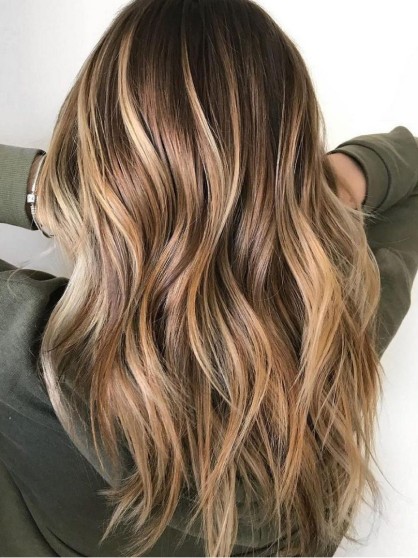
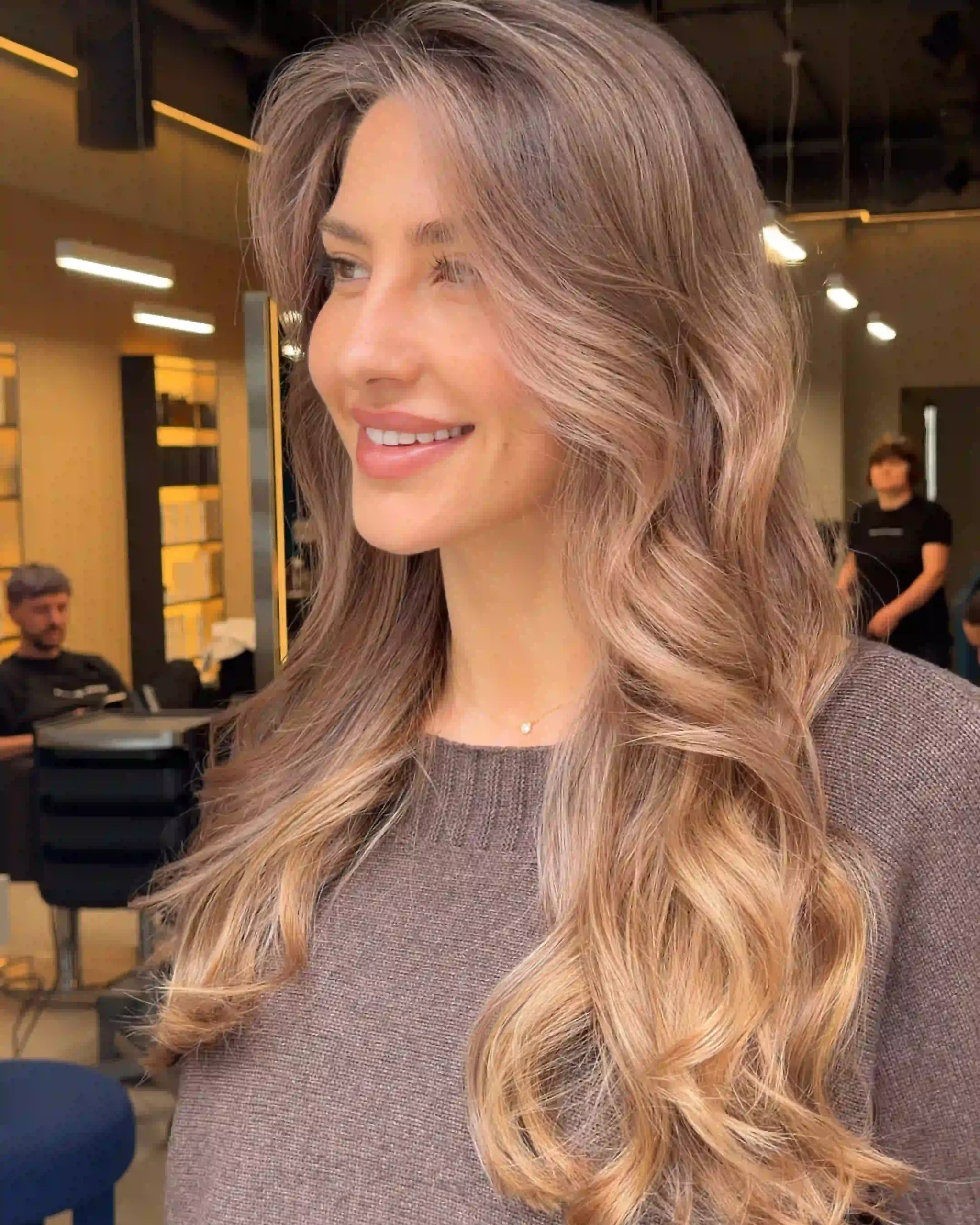
California highlights are fine vertical strands lightened off the root and brightened toward the ends, so your hair looks as if sun and sea did the work. Your hair already knows the pattern: the longer it spends outdoors, the lighter it gets, with the ends bleaching first, the top catching the light and the root staying your own colour. Think of the golden shades your hair had as a child after whole summers outside. The look began with Southern California hairdressers in the 1970s, travelled from the Hollywood red carpet into salons everywhere, and the name stuck: people still ask for California hair.
How the Technique Works
California highlighting is based on the classic lightening technique and is considered relatively gentle as it minimizes contact with the hair roots and scalp. However, it requires special training, experience, and the talent of a skilled stylist. The focus is on natural shades and a soft color gradient, making it suitable for all types of appearances and both light and dark hair.
The end result of Californian highlights is strands that resemble a partial sunburn, as if you’ve been enjoying the beaches of Los Angeles for the past month.
Due to the high level of skill required, only the most experienced and talented stylists at PIED-DE-POULE perform this technique. Achieving a similar “Hollywood” effect at home can be quite challenging.
Your colourist starts with the dimension already in your hair and builds on it:
- Fine, vertical strands through the crown and sides get lightener placed off the root
- Saturation builds toward the ends, so most of the brightness concentrates through the lower lengths
- The lightener develops in open air or under thin thermal paper, which keeps the lift soft
- Extra brightness around the face is optional and suits naturally lighter hair or anyone who wants a brighter result
- A toner sets the final shade, anywhere from honey and caramel to cool beige
How It Differs From Other Highlighting
Foils give you defined, uniform stripes. Ombré draws a horizontal line where dark turns light. Freehand painting such as Balayage sweeps lightener across the surface of the hair for a broad wash of brightness. California highlights sit between these: thin, vertical, off-root gradients that read as natural sun lightening rather than salon colour. Low contrast at the root matters. Jump too many shades and a California hairstyle starts to look like overdue regrowth.
Who It Suits
- Your hair is brown or dark blonde and you want caramel or honey brightness without becoming a full blonde
- Your hair is black and you want lift that still looks like it happened on its own
- You want brighter hair that doesn’t announce a salon visit
- Fine or flat hair needs more visible depth and movement
- Your hair is chin length or longer; from shoulder length down, California highlights hair shows the full gradient
Brunette or Blonde: Two Ways to Wear California Style Hair
The first decision is how you want to describe your hair when you leave: still a brunette, or now a blonde.
- A brunette finish lifts the strands one or two shades and keeps your natural depth in charge, landing in toffee and caramel tones on darker bases.
- A blonde finish lifts three or four shades through more strands, pushes the ends close to pale blonde and usually adds brightness around the face. Blondes and light browns reach it in one appointment; very dark hair gets there over two, so the lengths keep their strength.
Products and Colour Selection
The means that we use during coloring can be considered effective and at the same time gentle premium products of world brands, many of which are exclusively supplied for us.
The master will select a combination of colors, tints, and care products for colored strands based on the individual characteristics of the style, condition, and length of the hair. This will allow you to enjoy your new look for a long time.
How Much Do California Highlights Cost?
Our policy is to make high-end services affordable so that you can enjoy a stylish look similar to Jennifer Aniston or Brad Pitt.
We follow a transparent price list, but the final cost of the service depends on several factors.
- Firstly, it depends on the need for additional procedures (which will be explained by the master).
- Secondly, it depends on the length of the hair. And thirdly, it depends on the amount of consumables required for coloring.
You can find out the exact cost after visiting the salon.
Results and Timeframe
You see the full result the same day. Smoothed straight, the gradient looks softer and more blended, while curls and waves break the light into more visible ribbons. Regrowth never forms a harsh line, so the timing of a touch-up is up to you: many clients refresh every six months, others leave it for a year. Toner fades first, usually within six to eight weeks, when yellow or brassy warmth starts to show, and a short Hair Toning appointment brings the shade back without any new lightener.
Session Length and Refresh Plan
Since the procedure is relatively complex, it may require more time compared to classic coloring techniques.
Plan for around 2.5 hours on shoulder-length hair and up to 4 hours on long or thick hair, including consultation, toner, conditioning treatment and blow-dry. Lightened ends lose moisture faster than the rest of the hair, and a course of Hair Care Treatments between visits keeps them soft enough to show the colour properly.