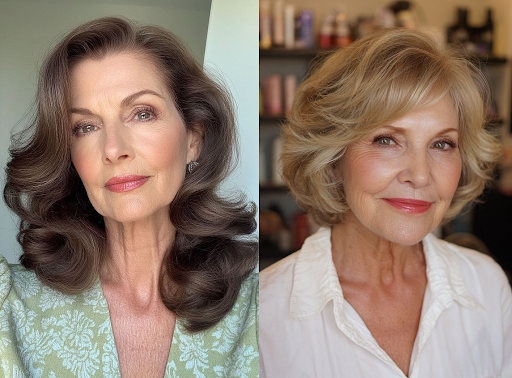
The best hairstyles for women over 60 are not defined by age – there should be no limits in creative expression. However, hair density, texture, face shape and the amount of styling a person genuinely wants to do each morning can define a certain direction as to what type of style to choose.
Hair often changes with age. Research has linked the postmenopausal period with reduced hair-fibre diameter, lower density around the frontal scalp and changes in the growth cycle. Texture may also become drier, finer or less predictable than it was before.
A successful haircut works with those changes rather than trying to disguise them. Strategic layers can support movement, a stronger outline can make fine ends look fuller, and a softer fringe can draw attention towards the eyes.
The Best Hairstyles for Women Over 60
Soft-layered pixie cut
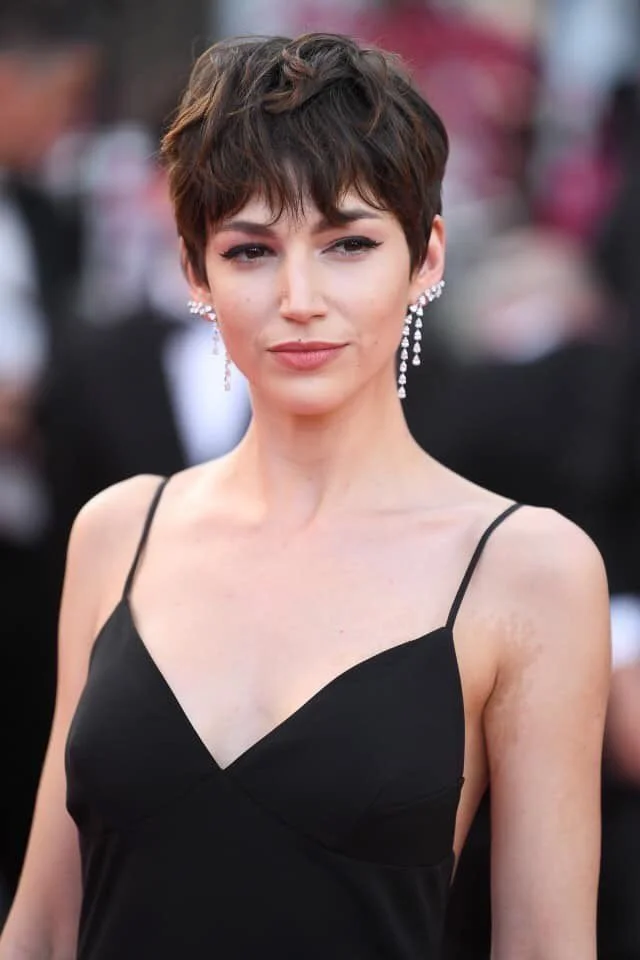
A pixie cut for fine hair over 60 works best when the top is left long enough to create lift. Very short, heavily thinned layers can expose the scalp, while a softly graduated crown gives the impression of greater density.
Ask for:
- volume through the crown;
- a soft, side-swept fringe;
- neat but not severe edges;
- enough length to style with the fingers.
This is one of the most practical wash-and-wear haircuts for over 60, especially for straight or slightly wavy hair.
Textured crop
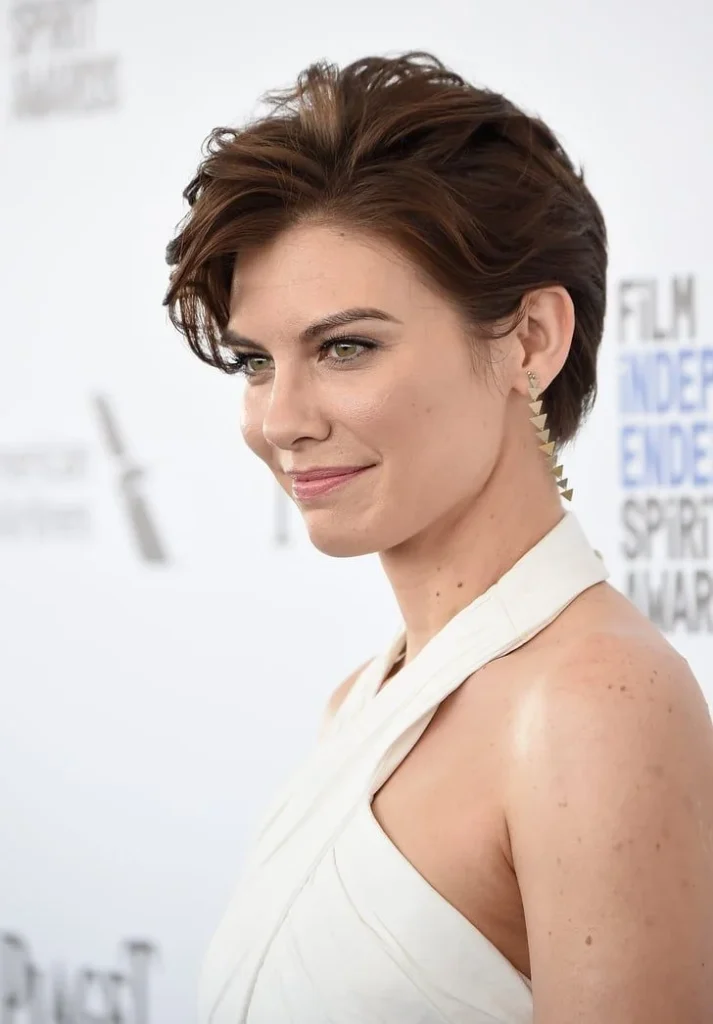
Short choppy hairstyles for over 60 can make straight hair look more energetic, but “choppy” should not mean randomly thinned. The stylist should place texture where movement is needed while protecting fullness around the hairline and ends.
A textured crop is particularly useful for coarse grey hair, as the natural structure helps hold the shape. A small amount of styling cream can define individual pieces without making the hair stiff.
Rounded bob
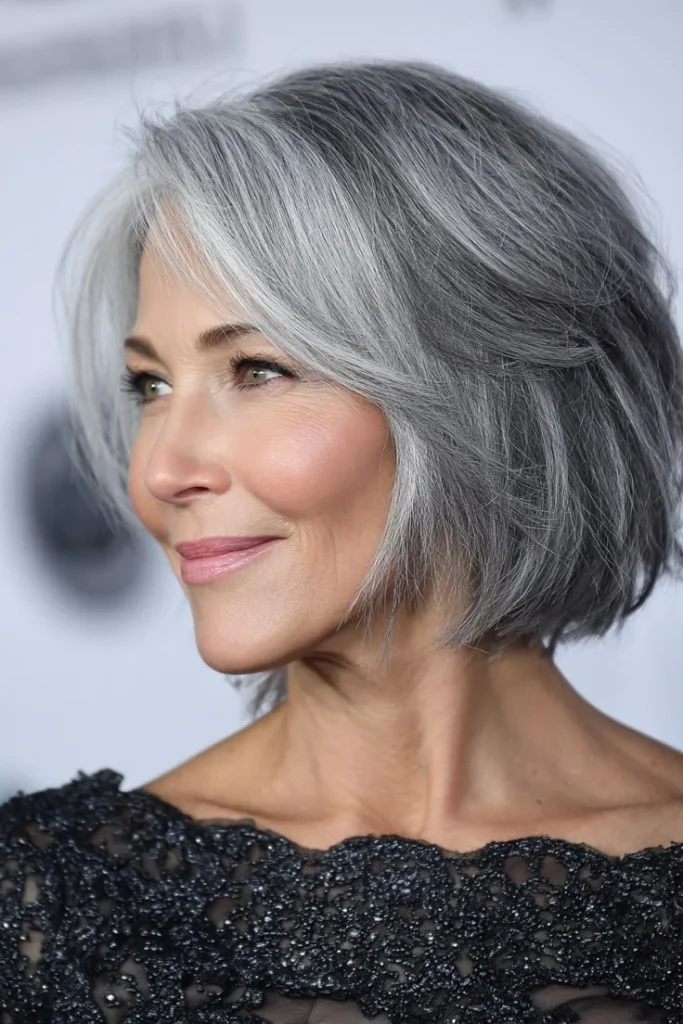
The classic bob remains one of the best hairstyles for women over 60 because its outline can be adapted to almost any face shape. A chin-length bob draws attention to the jaw, while a slightly longer version softens the lower face.
For fine hair, a clean perimeter usually creates more visual density than heavily feathered ends. For thick hair, discreet internal layering removes weight without destroying the shape.
Explore professional women’s haircuts when deciding between a blunt, graduated or softly layered bob.
Shaggy bob
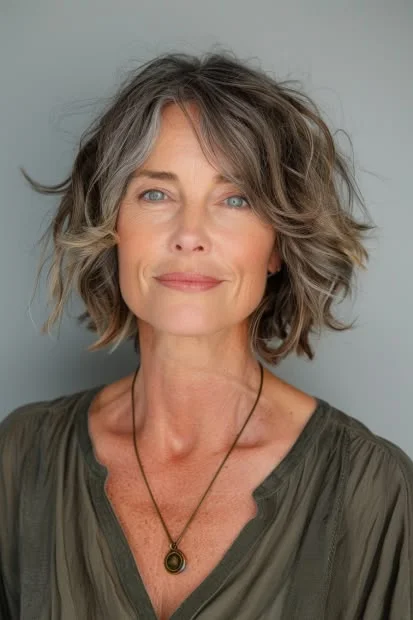
Shaggy bob hairstyles for over 60s suit women who prefer movement over a polished, geometric finish. The cut combines a bob-length outline with shorter layers around the crown and face.
It works particularly well on naturally wavy hair. On very fine hair, however, too many short layers can reduce the weight at the ends, so the stylist should keep the shape controlled.
Medium-layered bob
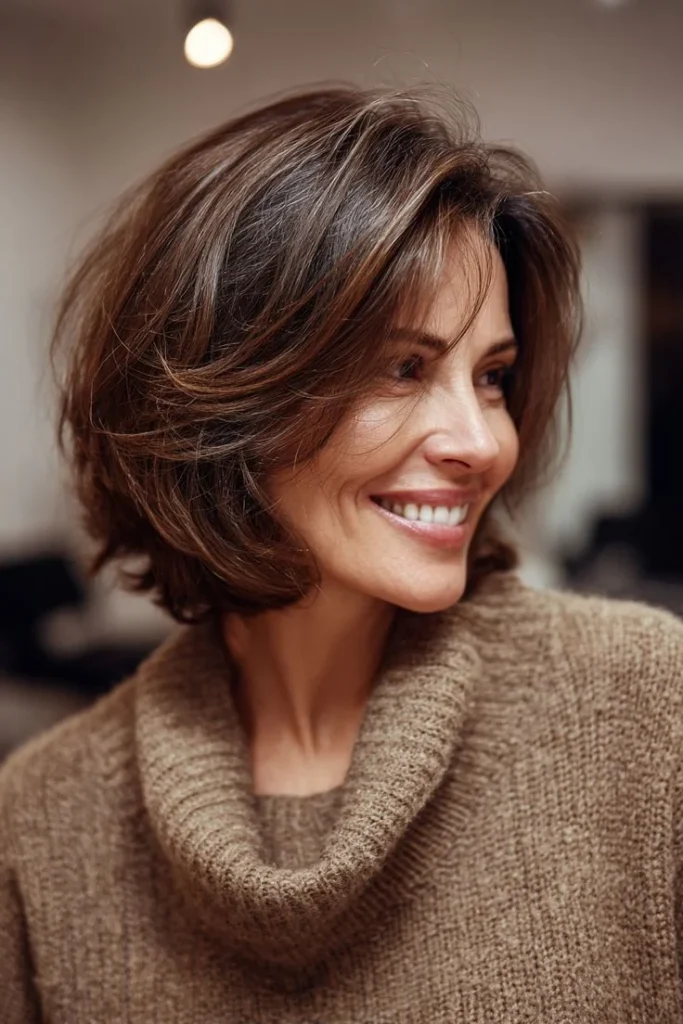
Medium layered bob hairstyles for over 60 offer more styling flexibility than a short bob while remaining easy to manage. The length usually sits between the jaw and shoulders, with layers added to prevent the shape from feeling heavy.
This option works well for:
- medium to thick hair;
- naturally wavy textures;
- women growing out a shorter cut;
- clients who still want to tie their hair back.
Soft face-framing layers can begin around the cheekbones or jaw, depending on the features you would like to emphasise.
Shoulder-length hair with long layers
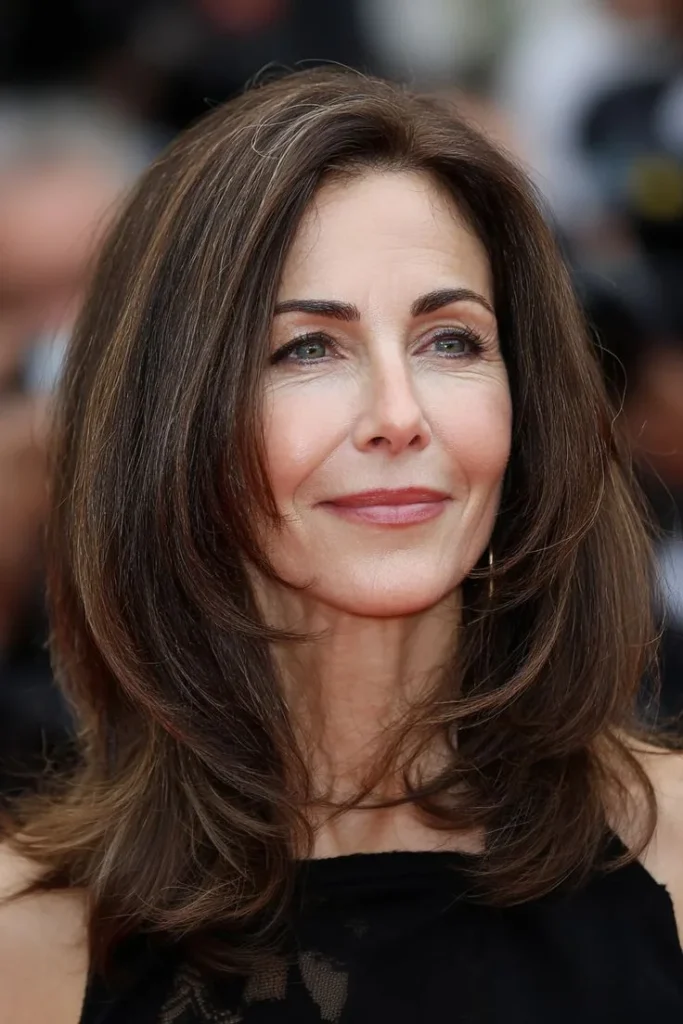
Shoulder-length hairstyles for over 60 are a good middle ground: long enough to feel feminine and versatile, but short enough to remove ageing, fragile ends.
Long layers create movement without sacrificing density. A side fringe or curtain fringe can soften the forehead, while a slightly off-centre part often creates more lift than a rigid centre part.
Long hair with a soft fringe
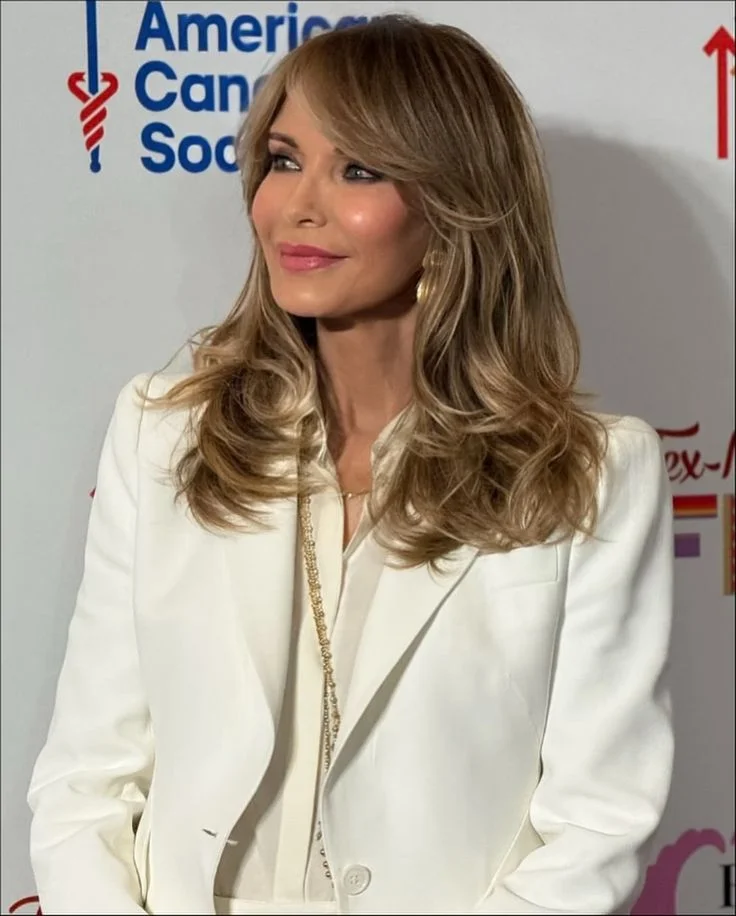
Women over 60 can absolutely wear long hair. The important question is not age, but condition. Long hair looks strongest when the ends remain full, the shape has movement and the length does not pull all the volume away.
Bangs with long hair after 60 can create balance, particularly when the fringe is soft, airy and connected to the side layers. Avoid a very heavy, blunt fringe when the frontal hairline is fine.
In brief, the most dependable choices are a layered pixie, rounded bob, medium layered bob and shoulder-length cut. Long hair also works when its condition and density support the length.
Choosing a haircut for your face shape
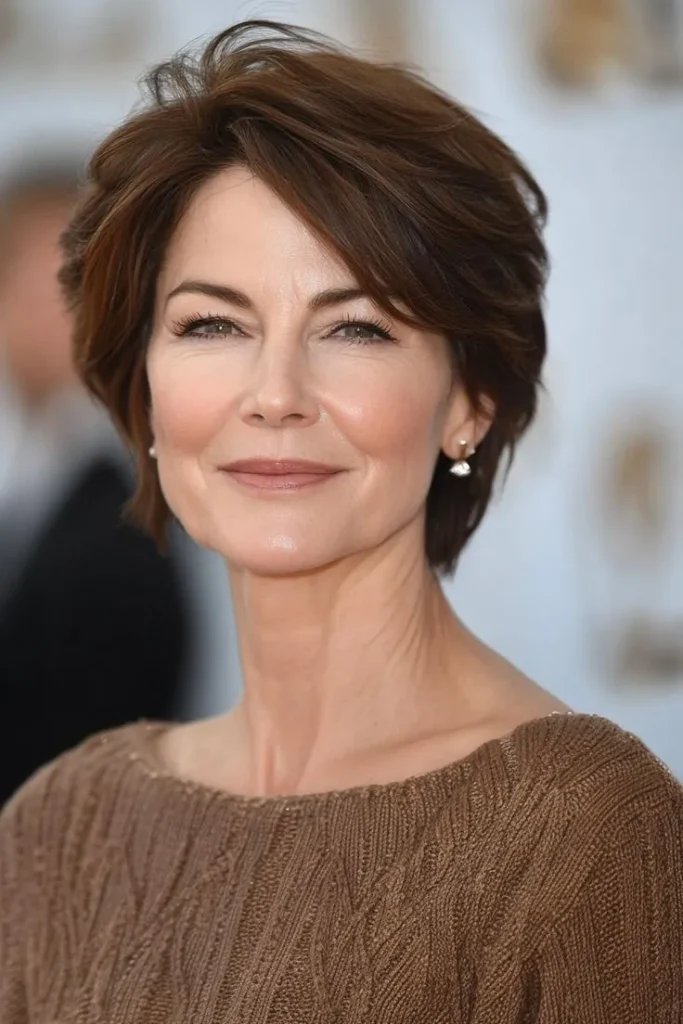
Face shape should guide proportions rather than dictate a fixed style.
| Face shape | Flattering haircut details | Usually avoid |
| Round | Height at the crown, longer front sections, side fringe | Rounded volume directly at cheek level |
| Square | Soft layers, curved fringe, movement around the jaw | Very rigid jaw-length lines |
| Oval | Most lengths; choose according to texture and density | Excessive height that elongates the face |
| Long | Fringe, cheek-level width, chin or shoulder-length shapes | Flat, very long styles without face framing |
| Heart-shaped | Chin-level fullness, side fringe, soft bob | Heavy crown volume with narrow ends |
A stylist should also consider the profile, neck length, glasses and natural hairline. These details often matter more than assigning the face to one perfect geometric category.
In conclusion, choose based on the proportions, as volume, fringe length and the position of the shortest layer can change how the same bob or pixie frames the face.
Hairstyles for over 60 by hair type
Fine or thinning hair
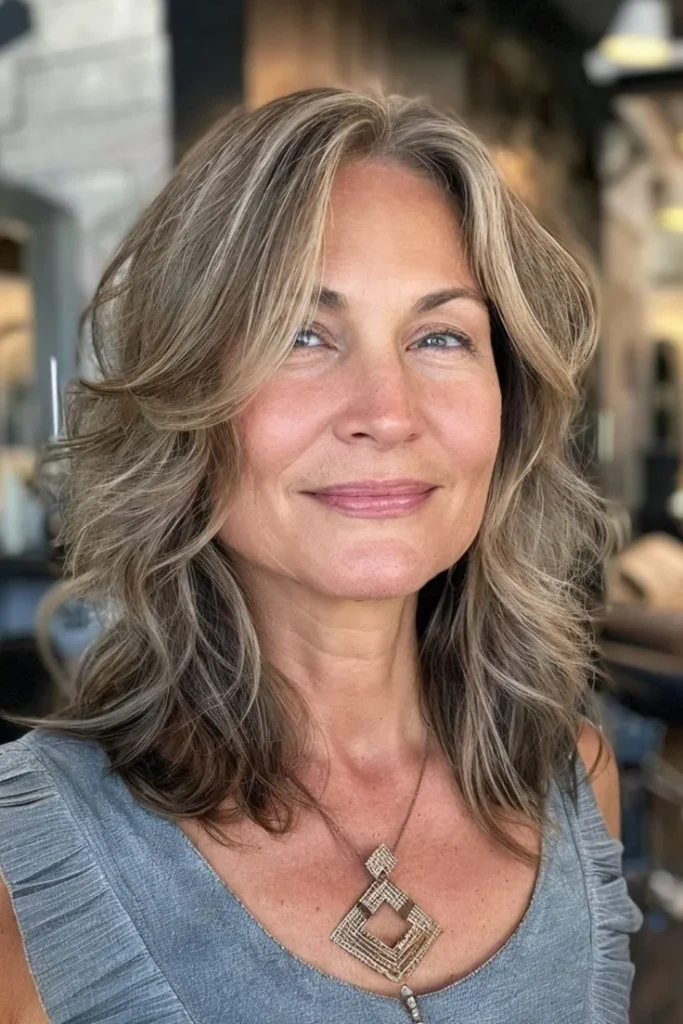
Older short hairstyles for fine hair over 60 should preserve a strong outline. Good options include:
- a gradual pixie;
- a blunt or lightly layered bob;
- a short crop with crown lift;
- a shoulder-length cut with minimal layering.
Avoid excessive razor cutting and thinning scissors through already sparse areas. Sudden or progressive thinning should not simply be treated as a styling problem. The American Academy of Dermatology (AAD) recommends consulting a dermatologist because hair loss has many possible causes and earlier diagnosis may improve the chance of managing it effectively.
Thick hair
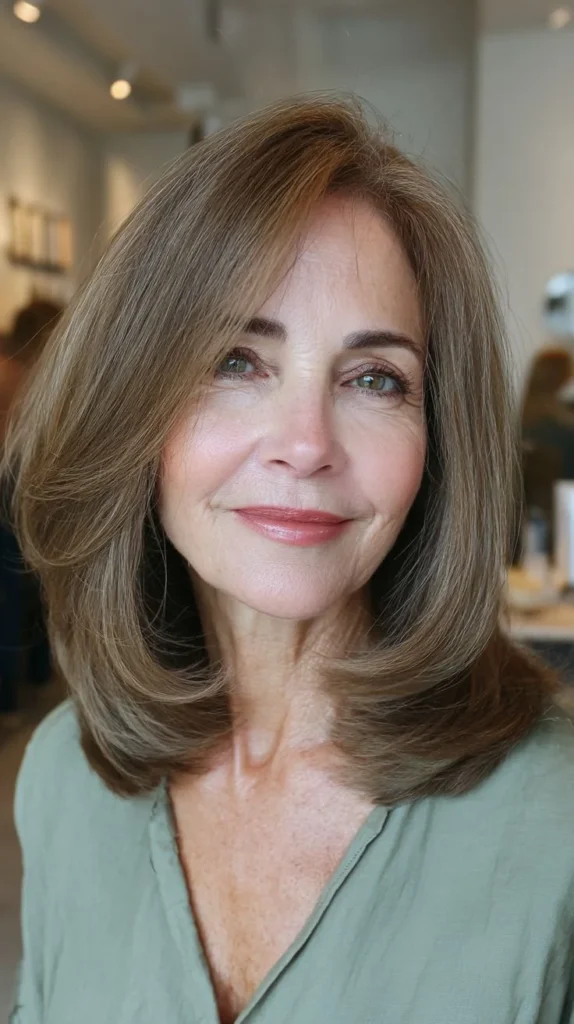
Thick hair needs weight distribution. Internal layers, undercutting in selected areas or a graduated outline can reduce bulk while keeping the surface smooth.
A shaggy bob, layered lob or collarbone cut usually provides enough length for the hair to settle naturally.
Curly and wavy hair
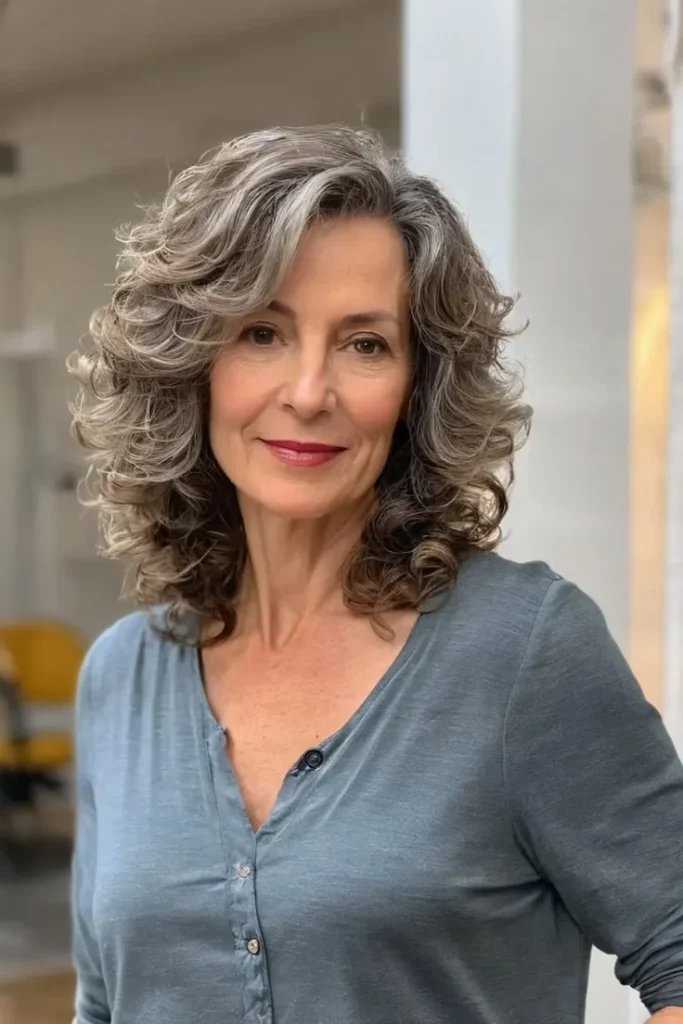
Curly hair should be assessed in its natural state before cutting. Shrinkage, curl direction and the difference between wet and dry length all affect the result.
Dermatologists advise washing curly hair according to its needs rather than automatically shampooing it every day, as frequent washing can contribute to dryness and make the texture harder to manage.
Grey hair
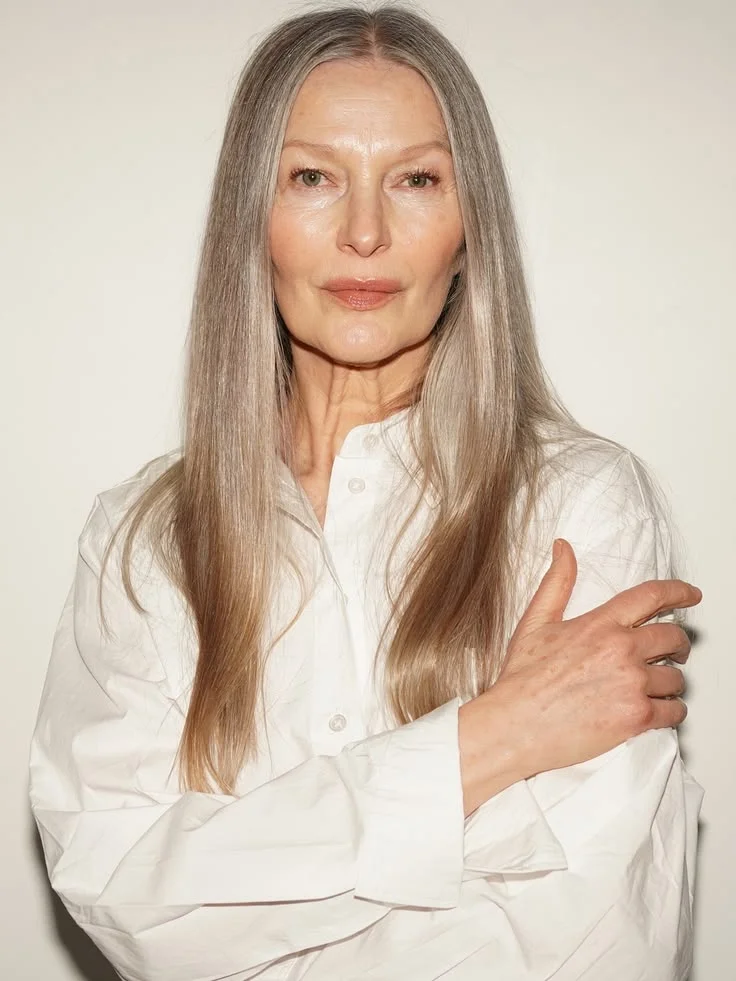
Grey hair is not one texture. It may be soft and fine, coarse and wiry, or a mixture of pigmented and white strands. A polished bob can showcase silver colour, while a pixie makes differences in tone look intentional.
So, fine hair generally benefits from stronger outlines, thick hair from controlled weight removal, curls from shape designed around shrinkage, and grey hair from cuts that support its real texture.
Comparison of low-maintenance hairstyles
| Hairstyle | Best for | Home styling | Salon upkeep |
| Soft pixie | Fine or straight hair | 5–10 minutes | Every 4–6 weeks |
| Textured crop | Coarse, straight or grey hair | 5 minutes | Every 4–6 weeks |
| Rounded bob | Fine to medium hair | 10 minutes | Every 6–8 weeks |
| Shaggy bob | Wavy or thick hair | 5–10 minutes | Every 8–10 weeks |
| Layered lob | Medium or thick hair | 10–15 minutes | Every 8–12 weeks |
| Shoulder-length layers | Most textures | 10–15 minutes | Every 10–12 weeks |
| Long layered hair | Healthy medium or thick hair | 15+ minutes | Every 10–14 weeks |
Timings are approximate. A haircut is only “low maintenance” when it cooperates with the natural texture and usual drying routine.
Haircut mistakes that can add years
No haircut is inherently ageing, but certain choices can make the hair appear flatter, thinner or more severe:
- keeping damaged length simply because long hair feels familiar;
- cutting a dense, straight fringe into a fine frontal hairline;
- removing too much weight from thin hair;
- creating helmet-like volume with no movement;
- using an overly dark, flat colour beside the face;
- ignoring changes in texture and styling the hair as it behaved ten years ago;
- choosing a salon photograph taken on a completely different hair type;
- relying on tight ponytails or buns every day.
Repeatedly wearing tight hairstyles can contribute to traction alopecia and, over time, potentially permanent hair loss.
The issue with hair loss is never age itself, it is just that flat colour, fragile ends, excessive thinning and shapes that fight the natural texture tend to be less flattering.
Hair colour after 60
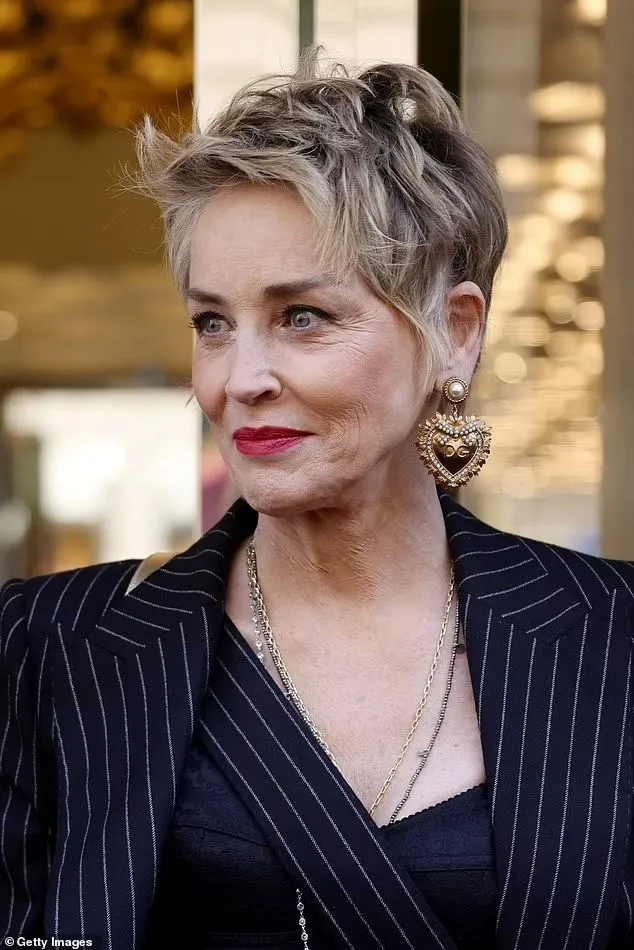
Hair colour after 60 does not need to become lighter by default. It should create a comfortable amount of contrast with the skin and work with the percentage of grey.
Useful approaches include:
- Grey blending: fine light and dark sections soften the line between natural grey and previously coloured hair. Learn more about grey blending.
- Soft root shading: a diffused root avoids a hard regrowth line and can add visual depth. See how root darkening is used to soften transitions.
- Face-brightening pieces: slightly lighter sections around the face can add dimension without colouring every strand.
- Natural silver: clear or violet-toned glosses can refine the appearance of grey hair without hiding it completely.
- Dimensional brunette or blonde: several related shades generally look softer than one dense, opaque colour.
Grey hair develops when follicles stop producing melanin. This is a normal part of ageing, while synthetic dyes to mask it can sometimes irritate sensitive skin, making a patch test especially important.
As we can see, the most flattering colour usually contains dimension. Full grey coverage is an option, not an obligation.
Hair treatment after 60
Mature hair may be more vulnerable to dryness and breakage, so care should focus on reducing avoidable stress.
- Use a gentle shampoo on the scalp rather than aggressively rubbing the lengths.
- Apply conditioner after washing.
- Detangle slowly, beginning at the ends.
- Use the lowest effective heat setting.
- Avoid tight daily hairstyles.
- Schedule trims before the ends become visibly sparse.
- The British Association of Dermatologists recommends protecting white, grey and colour-treated hair from prolonged UV exposure.
- Seek medical advice for sudden shedding, scalp pain, patches or a rapidly widening parting.
The NHS also advises against taking hair supplements without checking for a genuine deficiency, as excessive intake of certain nutrients can itself be associated with hair loss. It is better to get most vitamins and minerals through a balanced diet rather than taking supplements without a clear need. This is particularly relevant to hair health, as excessive selenium intake can cause hair and nail loss.
When coloured or lightened hair needs additional support, an in-salon Olaplex treatment can be discussed with the stylist as part of the wider care plan.
Prepare before visiting a salon
Bring two or three realistic photographs taken on hair with a similar texture and density to your own. Include images of what you do not want as well.
Questions worth asking your hairdresser:
- Will this haircut work when I style it myself?
- Will the fringe suit my hairline and glasses?
- How often will the cut need reshaping?
- Which products are genuinely necessary?
- Can the style be air-dried?
- Will this colour make regrowth more or less noticeable?
- Is my current shedding or breakage something a dermatologist should assess?
For occasional polished looks between cuts, professional hairstyling services can also help you learn which shapes and finishes suit the haircut.