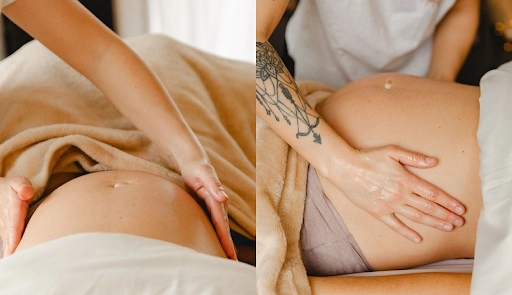
Pregnancy changes much more than the size of your bump. Your centre of gravity shifts, muscles work differently, joints carry additional load, circulation changes and everyday positions that once felt comfortable may suddenly become awkward.
That is exactly why massages during pregnancy should not simply be a regular spa massage with a pregnancy pillow added.
Prenatal massage* is adapted to the stage of pregnancy, your changing anatomy and any symptoms you are experiencing. The therapist changes your position, pressure, areas treated and sometimes the length of the session. They also need to recognise situations in which massage should be postponed and medical advice sought instead.
For most people with an uncomplicated pregnancy, massage can be a comfortable part of prenatal self-care. A 2021 systematic review of 12 randomised controlled trials found that massage during pregnancy was associated with reductions in stress, back and leg pain, anxiety and depression, although the authors also noted limitations in the available research. Importantly, participants in those studies were at least 12 weeks pregnant. We recommend reading the systematic review in the Journal of Clinical Medicine
*Medical disclaimer: This article provides general information and does not replace advice from your midwife, GP or obstetrician. Pregnancy complications, new symptoms and individual medical conditions can change whether massage is appropriate for you.
What makes pregnancy massage different from a regular massage?
A relaxation massage normally starts with a simple question: where are you feeling tense? A prenatal session has several additional issues to consider, so be ready to answer them when a PIED-DE-POULE expert is asking the details:
- How many weeks pregnant are you?
- Is the pregnancy progressing normally?
- Have you had any bleeding, contractions or pregnancy complications?
- Are you experiencing unusual swelling, calf pain or headaches?
- Which positions are currently comfortable?
- Has your midwife or obstetrician given you any specific advice?
The actual technique is then adjusted accordingly.
A specialist pregnancy massage may involve side-lying positioning, additional cushions and bolsters, controlled pressure and careful work around areas that are carrying more load because of pregnancy.
The American College of Obstetricians and Gynecologists (ACOG) states that massage can be used during pregnancy and specifically recommends lying on the side rather than face-down as a suitable position. It also advises telling the therapist you are pregnant and notes that many spas offer prenatal treatments delivered by therapists trained to work with pregnant clients.
So, pregnancy massage is not simply a gentler version of ordinary massage. It is a massage adapted around pregnancy.
Why does your body need specialised massage during pregnancy?
Pregnancy gradually changes the mechanics of the body. As your uterus grows, your centre of gravity moves forward. The abdominal muscles stretch, posture changes and the muscles of the lower back often have to work harder. ACOG describes backache as one of the most common pregnancy problems and explains that additional body weight, posture changes and more flexible pelvic joints can all contribute.
This can affect:
- the lower back;
- hips and glutes;
- upper back and shoulders;
- legs and feet;
- neck;
- general muscular tension.
A carefully adapted pregnancy back massage can therefore focus on the tissues that are compensating for these changes without treating your body as though nothing has changed.
The distinction matters particularly with lower back massage in pregnancy. Pregnancy-related back pain can be muscular, but back pain can occasionally be associated with other conditions. ACOG advises contacting your obstetric care provider if back pain is severe, persists for more than two weeks or occurs alongside symptoms such as fever, pain during urination or vaginal bleeding.
If the discomfort is uncomplicated muscular tension, a focused back massage may be incorporated into an appropriate prenatal treatment after assessment.
Simply put, the purpose is to accommodate the additional physical work that body is already doing.
Benefits of prenatal massage for mother and baby
The strongest reason to book prenatal massage is maternal comfort and other benefits, such as:
- reduced muscular tension;
- less back and leg discomfort;
- relaxation;
- reduced feelings of stress or anxiety;
- improved sense of wellbeing;
- easier rest for some pregnant women.
A systematic review of massage in pregnancy reported positive findings for stress, back pain, leg pain and anxiety, although the quality and size of the available studies mean these benefits should not be presented as guaranteed outcomes. Another systematic review examining manual therapies for pregnancy-related back and pelvic pain found improvements compared with usual care or relaxation, however the overall evidence is limited and called for better-quality research.
Prenatal massage can support your comfort and relaxation, but it should not be advertised as a treatment that guarantees a healthier baby, prevents premature birth or cures pregnancy complications.
RCOG (the Royal College of Obstetricians and Gynaecologists) includes massage among non-medical options that may be considered for pain during pregnancy, alongside rest, hot or cold compresses, physiotherapy, acupuncture, relaxation and exercise.
For a treatment focused primarily on switching off and reducing muscular tension, a specialist may also adapt elements of a relaxation massage to pregnancy-safe positioning and pressure.
Which trimester is best for pregnancy massage?
There is no universal best trimester. What matters is your health, how the pregnancy is progressing and the therapist’s assessment. We drew up a useful timeline.
| Stage | What is changing | Massage approach |
| First trimester: weeks 1-12 | Rapid hormonal change, tiredness, nausea; miscarriage is naturally more common during this period | Some therapists do not offer massage at this stage. Discuss it with your maternity care provider, particularly if you have symptoms or risk factors |
| Second trimester: weeks 13-27 | Growing bump, posture begins changing more noticeably, muscular tension may increase | Often a comfortable stage for prenatal massage; positioning starts becoming particularly important |
| Third trimester: week 28 onwards | Greater mechanical load, back discomfort, leg heaviness and swelling become more common | Sessions usually require more support, side-lying positioning and ongoing adjustment for comfort |
First trimester
Can you have a massage when pregnant in the first trimester? This point does not have a simple yes-or-no answer. The American Pregnancy Association states that massage can begin during any trimester but notes that many facilities choose not to massage during the first 12 weeks because miscarriage is naturally more common during this period.
Notably, the 2021 systematic review of randomised trials did not include participants before 12 weeks, so there is less trial evidence specifically covering massage in early pregnancy.
So, if you are newly pregnant, tell the therapist even if you are not yet showing.
Second trimester
For many women this is when a specialist massage becomes particularly useful. The bump is larger, but movement may still be relatively comfortable.
Sessions can focus on:
- back and shoulder tension;
- hip and gluteal muscles;
- tired legs;
- comfortable relaxation as posture changes.
Third trimester
By the third trimester, small details matter more. Getting on and off the massage couch, turning over and lying in one position for a long period may all require adjustment.
The therapist should prioritise:
- supported side-lying positions;
- frequent comfort checks;
- moderate, appropriate pressure;
- easy transitions between positions;
- avoiding prolonged positions that make you dizzy, breathless or uncomfortable.
The right time for prenatal massage is not determined by the calendar alone. Your trimester, symptoms, pregnancy history and medical advice all matter.
Why body position matters during pregnancy massage
This is one of the clearest differences between an ordinary massage and a specialised prenatal treatment.
As pregnancy progresses, lying flat on your back for an extended period can become uncomfortable because the weight of the uterus may compress major blood vessels. The American Massage Therapy Association discusses supine hypotensive syndrome, in which some pregnant clients can experience dizziness, weakness, nausea, breathlessness or a fall in blood pressure while lying flat.
This is why side-lying massage is so widely used. A typical set-up may include:
- lying comfortably on one side;
- a pillow supporting the head and neck;
- support underneath the bump where appropriate;
- a cushion between the knees;
- extra support behind the back;
- changing sides during the treatment.
The American Pregnancy Association also identifies side-lying as a preferred prenatal massage position and cautions that even specialist tables with abdominal cut-outs can sometimes leave the abdomen inadequately supported.
Positioning is not just about comfort. It is part of the treatment technique.
What should you expect after a pregnancy massage?
Most people expect to leave feeling relaxed, but the effect can be more subtle than the dramatic before-and-after associated with some beauty treatments.
You might notice:
- less muscular tightness;
- a lighter feeling through the back or shoulders;
- temporary relief from everyday aches;
- greater relaxation;
- sleepiness;
- a feeling that moving is a little easier.
Gentle massage should not leave you with significant pain or bruising. After your appointment:
- Get up slowly rather than immediately standing.
- Drink normally according to your thirst, there is no need for a special detox,
- Notice how your body feels later that day.
- Contact your maternity team if you develop symptoms that concern you rather than assuming they are a normal massage reaction.
Massage should feel restorative, not something you need to recover from.
Are there any areas that should not be massaged during pregnancy?
Searches such as where not to massage a pregnant woman or areas to avoid when massaging often produce long online lists of supposedly dangerous pressure points. The reality is more nuanced.
There is not a simple anatomical map where one accidental touch causes labour. The more important questions are how much pressure is used, why the area is painful or swollen, and whether there are signs of a medical problem. Particular caution is needed with:
- painful or unusually swollen legs;
- areas with known or suspected blood clots;
- pronounced or painful varicose veins;
- the abdomen unless an appropriately trained therapist has agreed on very gentle work;
- injured, inflamed or infected skin;
- any area your obstetric team has advised should not be treated.
Leg massage during pregnancy
Mild swelling in both ankles and feet is common in pregnancy. NHS guidance explains that additional fluid and pressure from the growing uterus can contribute to swelling, particularly later in pregnancy.
However, one-sided pain, swelling, warmth or redness can be signs of deep vein thrombosis (DVT) and require medical assessment rather than massage. Pregnancy itself increases the risk of blood clots.
So a leg massage in pregnancy should never be used simply to “work out” unexplained calf pain.
For ordinary bilateral heaviness or fluid retention that has already been assessed as uncomplicated, discuss whether gentle massage or a pregnancy-appropriate adaptation of lymphatic drainage massage is suitable for you.
Foot massage during pregnancy
There is also no evidence-based list of a few magical spots where all foot massage during pregnancy must be avoided.
What matters more is avoiding painful, forceful work and not massaging a leg or foot with unexplained one-sided swelling, redness, heat or tenderness.
Questions about where to avoid foot massage during pregnancy should therefore be answered through medical screening rather than an internet diagram of pressure points.
What about deep tissue massage during pregnancy?
Prenatal massage should feel like a feather-light touch. Deep tissue massage during pregnancy requires additional judgement, because of many nuances. Strong pressure is not appropriate simply because a muscle feels tight, particularly over vulnerable, painful or swollen areas.
Pressure should always be adapted to your stage of pregnancy, medical history and how the tissue feels.
Myths vs facts about massages during pregnancy
| Myth | Fact |
| Pregnant women can only have very light massage. | Pressure can vary. What matters is that it is appropriate to the area, trimester and individual pregnancy. |
| Massage is unsafe throughout the first trimester. | There is not evidence that appropriate massage causes miscarriage, but research specifically in the first trimester is limited and some providers choose not to treat before 12 weeks. |
| A normal massage is fine as long as you tell the therapist afterwards. | Pregnancy changes positioning, screening and technique. Tell the therapist before the treatment begins. |
| Foot massage can trigger labour by touching the wrong spot. | This is much more definite than the evidence supports. The major concern is screening for swelling, vascular problems and other contraindications. |
| Prenatal massage treats pregnancy complications. | It is supportive care for comfort and relaxation, not a replacement for maternity treatment. |
| Swollen legs always need massage. | Sudden or one-sided swelling can require urgent medical assessment. |
| The massage should hurt to release tight muscles. | Significant pain is not a sign that pregnancy massage is working better. |
Why choosing a qualified pregnancy massage therapist matters
A specialist therapist is not valuable because they know a secret massage technique. Their value is knowing when and how to adapt the treatment, and when not to continue.
NHS guidance on complementary therapies during pregnancy recommends using a qualified practitioner, telling them that you are pregnant and remembering that complementary care cannot replace standard antenatal care.
A therapist experienced in prenatal massage should know how to:
- ask relevant health and pregnancy questions before starting;
- select comfortable pregnancy-safe positioning;
- adapt pressure rather than follow a standard massage routine;
- recognise warning signs that require medical advice;
- work around the changing bump and centre of gravity;
- support the body correctly with pillows and bolsters;
- avoid treating unexplained swelling or painful vascular areas;
- adjust the treatment as pregnancy progresses;
- stop immediately if you become dizzy, unwell or uncomfortable.
That is why booking a general massage and simply mentioning that you are pregnant once you arrive is not quite the same as choosing a prenatal treatment from the start.
When to postpone massage and contact your maternity team
Do not treat a massage appointment as the solution if you have:
- vaginal bleeding;
- contractions or suspected preterm labour;
- sudden or severe swelling;
- one-sided leg swelling, redness, warmth or pain;
- severe headache or new vision problems;
- severe or unexplained abdominal or back pain;
- fever or signs of infection;
- breathlessness or chest pain;
- any new symptom your midwife or doctor has asked you to report.
The NHS specifically advises urgent assessment for a sudden increase in swelling combined with symptoms such as severe headache or visual changes because these can be signs of pre-eclampsia.
In general, the best pregnancy massage is not the strongest or most elaborate treatment. It is the one adapted to your body on that particular day.
Which massage oils are safe during pregnancy?
For massage, there is an important distinction between a carrier oil and an essential oil. Simple carrier oils or fragrance-free massage products are generally easier to assess. Essential oils are concentrated botanical products and shouldn’t automatically be considered pregnancy-safe simply because they are natural.
The NHS specifically warns that not all herbal, aromatherapy or other natural-seeming complementary products are safe during pregnancy and advises discussing them with a qualified practitioner and your maternity team where relevant. A sensible approach is:
- tell the therapist about allergies and sensitive skin;
- ask exactly which product will be used;
- choose an unscented option if you are sensitive to smells or nauseous;
- do not assume every essential oil is suitable during pregnancy;
- avoid using concentrated essential oils directly on the skin.
When in doubt, a simple neutral massage medium is often the easiest option.