If you’ve been searching for how to make hair grow faster, here’s the honest answer: the speed barely changes. Your follicles set the pace, and your genes set the follicles. What you can influence is length. Hair that seems stuck at the same point is usually still growing; the ends are simply breaking off about as fast as new hair appears at the roots. So the more useful question isn’t “how can I get my hair to grow faster?” but “how do I stop losing what has already grown?”. This guide answers it from two sides: what a salon can do, and what you can do at home.
Medical disclaimer: this article is general information, not medical advice. Sudden shedding, bald patches or a sore scalp are a reason to book a GP appointment.

How Fast Does Hair Actually Grow?
On average, scalp hair grows about 1–1.25 cm a month, roughly 15 cm a year. So how long does it take for hair to grow an inch? A little over two months. A chin-length bob needs five or six months to reach the shoulders, provided the ends survive the journey. Mid-back is a longer project: allow another two to three years.
The hair growth cycle
| Phase | How long it lasts | Share of scalp hairs | What happens |
|---|---|---|---|
| Anagen (growth) | 2–7 years | about 85–90% | The hair grows; the length of this phase caps your maximum length |
| Catagen (transition) | about 2–3 weeks | a small share | Growth stops and the follicle shrinks |
| Telogen (rest and shedding) | about 3 months | around 10% | The old hair falls out and a new one starts |
The American Academy of Dermatology puts normal shedding at 50–100 hairs a day.
What Affects Your Hair Growth Rate?
Two people can follow exactly the same advice on how to grow hair faster and end up with very different results. Mostly, that comes down to things no shampoo can reach.
- Genes decide how fast your hair grows and how long each hair stays in the growth phase. That second figure is what limits your maximum length.
- Growth tends to slow with age, and strands often get finer.
- Pregnancy, the first months after giving birth, menopause and thyroid problems all affect the cycle.
- A high fever, an operation or a very stressful period can send many hairs into the resting phase together.
- Low iron, too little protein or fast weight loss usually show in the hair a few months later, not straight away.
Hair Growth vs. Length Retention: What’s the Difference?
Growth happens at the root. Length retention happens at the ends, and it’s the reason two people with identical growth rates can have very different lengths. Say you grow 1 cm in a month and lose 1 cm to breakage over the same month. In the mirror, nothing moves.
How much you keep depends on three things: how strong and elastic each strand is, how often it meets heat, bleach and friction, and how regularly you trim, since a split end left alone keeps creeping higher. That’s why, in practice, learning how to make hair grow faster mostly means learning how to keep it.
How to Grow Hair Faster: What Really Works?
Most advice on how to grow hair faster promises to speed up the follicle. The research is less exciting. What actually helps happens in three places: what you eat, how you treat your scalp and how well you protect the lengths.
Nutrition and Hair Growth
Food comes first. The British Association of Dermatologists lists sharp weight loss and extreme dieting among the common triggers of excess shedding, and the NHS names iron deficiency as one cause of temporary hair loss.
- Get enough protein, since hair is mostly keratin.
- Red meat, lentils and leafy greens are good sources of iron.
- Steer clear of crash diets.
- If you feel tired all the time and are shedding more than usual, ask your GP whether a blood test makes sense.
A good diet won’t push hair past its natural rate, but a poor one can slow it down.
Scalp Health and Hair Growth
The scalp is where the follicles live, so it deserves some attention. Flakes and oiliness won’t stop hair growing. An itchy scalp gets scratched, though, and scratching breaks hair.
- Wash often enough that oil and styling products don’t build up.
- Use an anti-dandruff shampoo for flakes, and see a GP if it hasn’t helped after a few weeks.
- Tight ponytails or braids worn every day keep pulling on the hairline. The American Academy of Dermatology lists hairstyles that pull among the causes of hair loss.
- In strong sun, a hat protects your parting.
Preventing Breakage and Split Ends
If you want to know how to grow long hair, start with breakage. Once a hair splits, no product will seal it for good. A serum can hold the ends together for a few days; only scissors actually fix them.
Day to day, that means a few simple habits:
- detangle starting at the ends and work your way up;
- put on heat protectant every time you use a hot tool;
- sleep on silk or satin, or plait your hair loosely at night;
- swap tight elastics for ties that don’t snag.
For hair weakened by colour, bleach or heat, a treatment that works inside the strand, such as K18 Hair Treatment, can make it less likely to snap when you brush or style it.
At-Home Hair Care Routine for Longer, Healthier Hair
If you’re trying to work out how to make your hair grow faster, another product is rarely the answer. Usually it’s the routine that needs adjusting. The hair growth tips below add a few minutes a week, and the payoff builds over months.
Gentle Washing and Conditioning
Shampoo is for the scalp; conditioner is for the lengths. Keeping them there protects the oldest part of each hair, the part that has already survived every wash and blow-dry. Work the shampoo into the roots and let the lather that rinses down take care of the ends. Use lukewarm rather than hot water, condition from the mid-lengths down after every wash, and press the water out with a microfibre towel or an old cotton T-shirt instead of rubbing.
How often you wash depends on your scalp. Some oily scalps need it daily, while dry or curly hair can comfortably go several days. Washing frequency doesn’t change growth speed either way.
Weekly Masks and Scalp Massage
A weekly mask and a few minutes of scalp massage are the easiest habits on this list to keep up.
- Dry hair usually does best with a moisturising mask. Bleached hair that feels stretchy when wet needs protein. Follow the timing on the label.
- For the massage, use the pads of your fingers rather than your nails and move in small circles for 4–5 minutes.
Massage lifts flakes and product residue, and it feels nice. There’s little evidence that it makes hair grow faster, though, so think of it as scalp care rather than a growth hack.
Heat Protection and Gentle Brushing
Heat and friction cost more length than most people realise, so they’re the first thing to look at if you’re working out how to make your hair grow long.
- Let your hair dry partly on its own before you pick up the dryer.
- Medium heat is enough for straighteners and tongs; fine or bleached hair needs even less.
- Heat protectant goes on every section, not only the top layer.
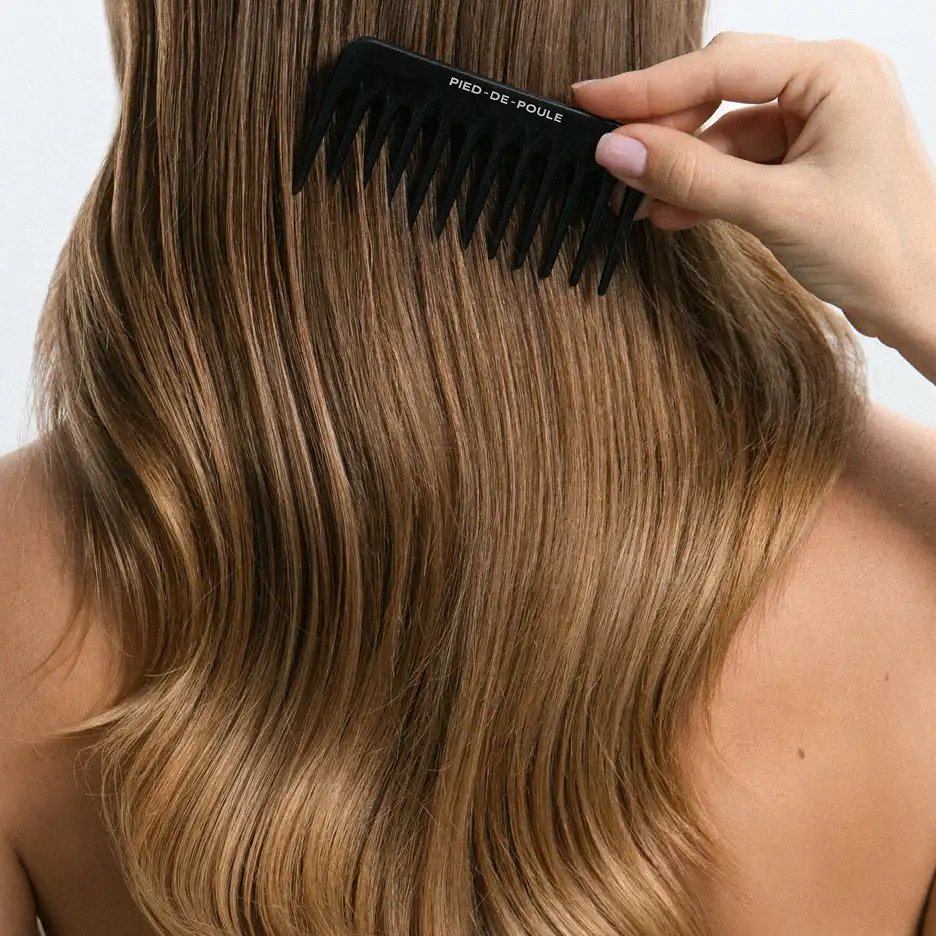
- Use a wide-tooth comb or a soft, flexible brush and start at the ends.
- Forget the old “100 strokes a day” rule. Brushing beyond detangling just means more friction.
Professional Hair Treatments: Can Salon Visits Help Your Hair Grow?
If you’re looking into how to make hair grow faster with professional help, it’s worth knowing what a salon can and can’t do. No treatment changes how fast follicles work. What a good one does is strengthen the hair you already have, so more of it lasts long enough to reach the length you want. The full list is on our Hair Treatments page.
Regular Trims to Prevent Split Ends
Does trimming hair make it grow faster? No. Yet regular trims are one of the most reliable tips for growing long hair, because a split end doesn’t stay put. It keeps travelling up the strand until someone cuts it off, and by then the hair breaks higher than it needed to. A light trim removes only a few millimetres.
- Healthy hair you’re growing out: every 8–12 weeks.
- Bleached or damaged ends: every 6–8 weeks.
Tell your stylist you’re growing your hair out, and they’ll take off only what’s needed. You can mention it when you book Women’s Haircuts.
“Most clients who tell me their hair has stopped growing actually have perfectly healthy roots. It’s the ends that keep snapping off. My rule is little and often: a light trim every couple of months, less heat in between, and a proper conditioning routine at home. That’s usually when the length finally starts to show.”
Nata, hair stylist at PIED-DE-POULE, 67 Mortimer Street
Bond-Repair and Restoration Treatments
Bleaching, colouring, perms and very hot tools break bonds inside the hair. The weakened strands stretch, tangle and snap, and you lose length.
Bond-repair treatments rebuild part of that structure. After a course, most people find their hair:
- breaks less during brushing;
- feels stronger and springs back when stretched;
- copes better with the next colour appointment.
One session helps, but the effect grows over several, and home care between visits makes it last. Olaplex Hair Treatment is one option for lightened or chemically processed hair; your stylist can tell you if it suits yours.
Head Spa and Scalp Detox
A head spa focuses on the scalp, not the lengths. A typical session starts with a scalp check, followed by deep cleansing and exfoliation, a long massage and a treatment chosen for your scalp type.
It’s worth booking if your scalp gets oily or flaky, feels weighed down by styling products, or if dry shampoo has quietly become part of your weekly routine. It also works well as a reset between colour appointments.
A healthy scalp gives new hair a good start, and that is exactly what a Head Spa is for.
Personalised Hair and Scalp Consultations
The conversation before a treatment is often worth more than the treatment itself. A stylist looks at how elastic and porous your hair is, how much colour damage there is and what state your scalp is in. Only then do they decide what comes first.
After a consultation you should know:
- whether your hair is breaking or actually falling out;
- which treatments you can skip;
- what to change at home so it supports the salon work.
If the consultation points to hair loss rather than breakage, the next step is a GP or a trichologist, not another salon treatment.
Professional Hair Treatments vs. At-Home Care: Which Is Better?
When it comes to how to make hair grow faster, home care and salon treatments aren’t competing options. Home care happens every day; salon treatments happen less often but reach deeper into the hair.
| Option | What it does | When you see results | Who it suits |
|---|---|---|---|
| Gentle washing and conditioning (home) | Protects lengths, reduces tangles | Within a few washes | Everyone |
| Weekly mask (home) | Adds moisture or protein | Softer after first use; less breakage in 4–6 weeks | Dry, coloured or heat-styled hair |
| Heat protection and gentle brushing (home) | Cuts heat and friction damage | Fewer broken hairs within weeks | Anyone using heated tools |
| Regular trims (salon) | Removes split ends | Fuller-looking ends straight away | Anyone growing hair out |
| Bond-repair treatment (salon) | Strengthens damaged hair from inside | After one session; best after a course | Bleached or chemically treated hair |
| Head spa (salon) | Deep-cleans the scalp | After one visit | Oily, flaky or product-heavy scalps |
| Consultation (salon) | Finds the cause of breakage, plans care | From the first visit | Anyone unsure where to start |
So if you’re still wondering how to get your hair to grow faster, the honest answer is to combine both. The checklist below turns them into a weekly habit.
Your weekly routine
- ☐ Wash as often as your scalp needs: shampoo on the roots, conditioner on the lengths
- ☐ Apply heat protectant before every heated styling session
- ☐ Use a hair mask once
- ☐ Massage your scalp for 5 minutes
- ☐ Detangle from the ends with a wide-tooth comb
- ☐ Sleep on silk or satin, or in a loose plait
- ☐ Eat protein and iron-rich foods every day
- ☐ Check when your next trim is due

Common Hair Growth Myths
Plenty of popular tips for hair growth don’t hold up. These are the myths we hear most often.
| Myth | Fact |
|---|---|
| Trimming hair makes it grow faster. | Trims don’t affect the follicle; they stop splits, so you keep length. |
| 100 brush strokes a day stimulate growth. | Extra brushing only adds friction and breakage. |
| Daily washing makes hair fall out. | Hairs in the drain were already shed. |
| Salon treatments speed up growth. | They reduce breakage; the follicle keeps its own pace. |
| My hair has stopped growing. | Healthy hair keeps growing; breakage at the ends hides it. |
| Stress doesn’t affect hair. | A major stressful event can trigger heavy shedding two to three months later. |
When to See a GP or Trichologist
Losing 50 to 100 hairs a day is normal. Broken ends are a care problem that trims and gentler habits can fix. Hair falling out at the root is something else, and it needs a diagnosis rather than a treatment.
Book a GP appointment if:
- hair loss starts suddenly or hair comes out in clumps;
- you see bald patches or your parting is getting wider;
- your scalp itches, burns, hurts or looks red and scaly;
- heavy shedding goes on for more than a few months;
- losing hair is affecting how you feel.
The NHS recommends seeing a GP before going to a commercial hair clinic. A GP can order blood tests and, if needed, refer you to a dermatologist. Trichologists specialise in hair and scalp problems but are not doctors, so check that yours is registered with the Institute of Trichologists.
The Real Secret Is at the Ends
Learning how to grow hair faster turns out to be mostly about losing less of it. Nobody can make the follicle work harder, but you can keep more of what it produces. Eat properly, look after your scalp, go easy on heat and brushing, and book a trim or treatment when your hair needs one. Then give it six months and judge by the ends, not the roots. And if your hair is falling out rather than breaking, start with a GP.
FAQ
Does rosemary oil help hair grow faster?
The evidence is limited. A small 2015 trial in people with pattern hair loss found a rosemary oil lotion performed similarly to 2% minoxidil over six months. It didn’t test whether healthy hair grows faster, and larger trials are missing. If you try it, dilute the essential oil, patch-test first and stop if your scalp gets irritated.
Do hair growth supplements actually work?
Supplements are often sold as a shortcut for anyone wondering how to grow hair faster, but they usually help only if you lack the nutrient they contain. Biotin deficiency, for example, is rare, and there is little evidence that extra biotin helps people who already get enough. High doses can also distort some blood test results. If you suspect low iron or vitamin levels, ask your GP for a blood test first.
Does hair grow faster in summer?
Not in any way you’d notice. A UK study in the British Journal of Dermatology found the share of growing scalp follicles peaked in March and was lowest in September, when shedding was highest. Extra shedding in late summer and autumn is normal and passes.
How do I grow out a short haircut without it looking messy?
Plan a shape for each stage instead of just waiting it out. A few tips for growing hair out without the awkward phase:
- book a shaping cut every 6–8 weeks so the back doesn’t outgrow the front;
- move from pixie to bixie, then to a bob and a lob;
- use clips, headbands and texturising products through awkward weeks.
Can hair grow faster after bleach or colour damage?
Bleach damages the hair shaft, not the follicle, so your growth rate stays the same. The issue is length retention: lightened hair breaks easily. Bond-repair treatments, regular trims, low heat and longer gaps between lightening help until healthy regrowth replaces the damaged lengths. If your scalp was burned during lightening, see a GP.