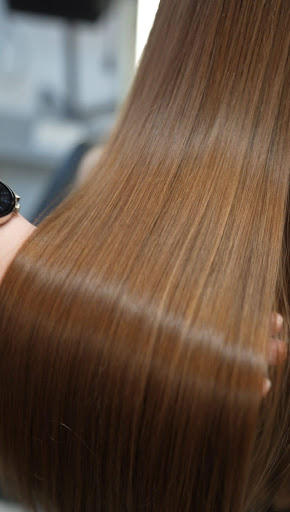
The short answer: the best smoothing treatments for hair depend on what you want to change. Keratin smoothing works best for thick, frizz-prone hair and lasts 2–5 months. Japanese straightening gives a permanent straight result on strong, healthy hair. Bond-repair and “hair Botox” suit damaged, bleached or curly hair when you want to keep your curls. Demi-permanent smoothing offers moderate frizz control for 4–12 weeks.
The difference matters because some treatments only coat the hair’s surface, while others use heat and chemicals to change the bonds that shape each strand – sometimes at the expense of your natural curl pattern.
So, which smoothing treatments for hair actually work, and which are worth choosing for your particular hair type? Let’s compare what happens to the hair during each procedure, how long the results can last and what you should know before booking.

What do smoothing treatments for hair actually do?
Hair smoothing treatments work in different ways, depending on their ingredients and application methods.
- Keratin smoothing is effective for reducing frizz and making daily styling easier.
- Hair Botox and bond-repair treatments improve the feel and appearance of damaged hair without deliberately straightening it.
- Japanese straightening delivers permanent straightening of treated hair but involves significant chemical processing.
- Demi-permanent smoothing offers varying degrees of frizz reduction that is depending on the formula.
Some deposit conditioning substances onto the hair surface, reducing friction and helping strands lie more neatly. Others use heat and chemical reactions to create a longer-lasting change in texture.
There are three main outcomes:
- Surface smoothing makes hair feel silkier, reflects light more evenly and becomes easier to detangle.
- Frizz reduction, as hair becomes less prone to puffiness, particularly in humid conditions, although results vary.
- Texture alteration through chemical processing, which changes the hair’s internal bonds, producing straighter strands.
A smoother finish doesn’t necessarily mean healthier hair. A treatment can improve appearance while still exposing strands to chemical or thermal stress.
For a closer look at everyday frizz management, see our guide to transforming frizzy hair into smooth, silky hair.

Types of smoothing treatments compared
The best smoothing treatments for hair aren’t necessarily the longest-lasting ones. When comparing a smoothing treatment vs keratin treatment, remember that keratin is just one type of smoothing – the key differences are how long the result lasts and whether your natural texture changes.
| Treatment | Expected result | Typical duration | Most suitable for |
|---|---|---|---|
| Keratin smoothing | Less frizz, softer texture, easier styling | 2-5 months | Thick, coarse or frizz-prone hair |
| Hair Botox | Softer, shinier, more manageable hair | 2-6 weeks | Dry, dull or porous hair |
| Bond-repair treatment | Improved strength and manageability of damaged hair | Varies; often requires maintenance | Bleached, coloured or chemically stressed hair |
| Japanese straightening | Permanently straight treated lengths | Until hair grows out | Suitable, relatively strong hair when a straight finish is desired |
| Demi-permanent smoothing | Reduced frizz, sometimes looser waves | 4-12 weeks, sometimes longer | Hair needing moderate smoothing without permanent straightening |
These are approximate ranges, not guarantees. Results depend on the product, hair condition, washing frequency and application technique.
Keratin smoothing treatment
A keratin smoothing treatment is popular because it can make hair noticeably easier to manage without necessarily creating a completely straight finish.
Despite its name, keratin isn’t always the ingredient responsible for the smoothing effect. Many formulas combine conditioning agents with chemical treatments and heat.
A typical application involves cleansing the hair, applying the formula, processing it and using a straightener at a temperature specified by the manufacturer.
The result can include less frizz, more shine and shorter blow-drying time. However, some formulas can also loosen natural curls.
The main concern is formulation safety. Certain products release formaldehyde when heated, even when marketed as keratin treatments. Always ask which product will be used and what its safety information says.

Hair botox and bond-repair smoothing
Hair Botox sounds like an injectable cosmetic procedure, but it has nothing to do with botulinum toxin.
It’s a marketing term for conditioning treatments that typically contain combinations of proteins, amino acids, oils and moisturising ingredients. They can temporarily improve softness and shine, particularly on porous hair.
Bond-repair treatments have a different purpose: addressing certain types of damage within the hair fibre.
For example, K18 hair treatment is designed to support damaged hair structure, while Olaplex treatments focus on bond-building technology.
Another option is Tokio Inkarami, which uses a multi-step approach to improving hair condition.
These treatments can make damaged hair appear smoother, but they are not substitutes for chemical straightening. They also cannot restore severely damaged hair to its original, undamaged state.
Permanent smoothing (Japanese straightening)
Japanese straightening, also called thermal reconditioning, is one of the most dramatic permanent smoothing treatments for hair.
It uses chemical agents to break and rearrange certain bonds within the hair, followed by controlled heat and neutralisation to establish a straighter shape.
Unlike temporary smoothing, the treated lengths remain straight. New growth retains its natural texture, so root touch-ups may be needed.
The trade-off is reduced flexibility. Returning to your original curl pattern generally means growing out the treated hair.
It also carries a greater risk of breakage when performed on weakened, previously processed or unsuitable hair. A detailed consultation and strand testing are particularly important.
Demi-permanent and formaldehyde-free smoothing
Demi-permanent treatments aim to reduce frizz without necessarily delivering the intensity or permanence of Japanese straightening.
Their formulations vary considerably. Some rely mainly on conditioning ingredients, while others use acids and high-temperature styling to achieve longer-lasting results.
The label formaldehyde-free deserves attention. It doesn’t automatically mean a treatment is harmless or free from potentially irritating fumes.
For example, France’s health safety agency ANSES has confirmed a risk of acute kidney injury from straightening products containing glyoxylic acid – see the safety section below.
The safest approach is to evaluate the exact formulation, rather than relying on a treatment’s marketing category.

Which smoothing treatment suits your hair type?
Hair texture is only half the story. A stylist should also consider porosity, elasticity, previous colouring and how your hair responds to heat.
| Hair type | Recommended approach | What to consider |
|---|---|---|
| Frizzy, thick hair | Keratin or carefully selected demi-permanent smoothing | May reduce volume as well as frizz |
| Fine hair | Lightweight conditioning or bond repair | Heavy formulas can leave hair flat |
| Curly hair | Bond repair or curl-preserving conditioning | Strong smoothing may loosen curl definition |
| Afro-textured hair | Moisture-focused care and bond repair; chemical straightening only after specialist assessment | Fragility, shrinkage and previous processing matter |
| Bleached or colour-treated hair | Bond repair and gentle conditioning | High heat and chemical processing increase breakage risk |
| Grey hair | Hydrating and strengthening treatments | Porosity, dryness and yellowing from heat require attention |
For a smoothing treatment for curly hair, decide first whether you want less frizz or genuinely straighter curls. These are two different goals.
The same applies to a smoothing treatment for afro hair. Tightly coiled textures can be smoothed temporarily without permanently changing the curl pattern. Chemical straightening, however, requires particular care, especially if the hair has previously been relaxed or coloured.
A smoothing treatment for grey hair needs a gentler approach. Grey and white strands are often coarser and more porous, and high straightener temperatures can leave them with a yellow tinge. Hydrating and strengthening treatments are usually the first option. If you’re also considering colour, grey blending can be planned alongside your conditioning routine.
Are smoothing treatments safe? Downsides to know
Are smoothing treatments good for your hair? They can improve manageability and appearance, but their safety depends on the ingredients, technique and condition of the hair.
The main concerns are:
- Formaldehyde exposure. Formaldehyde itself is prohibited as a cosmetic ingredient in the UK, but some heated smoothing formulas contain ingredients that release it. The gas can irritate the eyes and airways and is classified as a carcinogen. The US FDA explains which product types require particular attention.
- Other chemical risks. Glyoxylic-acid-based straighteners have been associated with acute kidney injury. This concern is documented in research published in Kidney International and in safety assessments by ANSES.
- Heat damage. Excessive straightener temperatures can weaken the hair shaft, particularly when it has already been bleached.
- Breakage and texture changes. Strong chemical processing can reduce elasticity and permanently alter treated lengths.
- Scalp irritation. Certain ingredients may cause sensitivity or allergic reactions.
Before booking professional smoothing treatments for hair, ask the stylist:
- What is the exact product name and ingredient list?
- Does the formula contain or release formaldehyde when heated?
- Is a strand test advisable for my hair?
- Will the treatment change my natural curl pattern?
- What results and maintenance should I realistically expect?
A professional should be comfortable answering all of these. If a treatment promises risk-free, permanent results for every hair type, treat it with scepticism. At PIED-DE-POULE, these questions are part of every hair treatment consultation, before any product touches your hair.

Smoothing treatment aftercare: the first 72 hours and beyond
The first few days after smoothing affect how long your result lasts. Washing and styling rules depend on the formula – some modern treatments allow washing the same day – so always follow your stylist’s instructions. For most classic keratin treatments, the guidance looks like this.
Smoothing treatment aftercare checklist
First 48–72 hours
- Don’t wash your hair or get it wet, including in rain or steam
- Avoid ponytails, clips, hair ties and tucking hair behind your ears
- Skip the gym and saunas – sweat counts as moisture
- Sleep on a silk or satin pillowcase to reduce friction
First two weeks
- Use a sulphate-free, sodium chloride-free shampoo
- Wait about two weeks before colouring, unless your stylist advises otherwise
- Protect hair before swimming in chlorinated or salt water
Long term
- Keep straightener temperatures moderate and always use heat protection
- Book a conditioning treatment if ends start to feel dry or brittle, rather than repeating chemical smoothing too soon
Professional care such as Kevin Murphy hair treatments can help maintain softness and manageability between appointments.
Salon vs at-home smoothing treatments
Smoothing treatments for hair at home can be useful when the goal is temporary softness, shine or easier styling.
Conditioning masks, smoothing creams and leave-in products generally offer a less intensive alternative to salon chemical processing.
However, they won’t reproduce the long-lasting effects of professional straightening.
| Factor | Salon treatment | At-home treatment |
|---|---|---|
| Results | Can provide longer-lasting smoothing or straightening | Usually temporary |
| Personalisation | Hair assessment and product selection | Depends on your own judgement |
| Chemical exposure | Varies by formula; professional controls are important | Lower for ordinary conditioners, but DIY chemical kits may carry substantial risks |
| Cost | Higher initial expense | Usually lower per application |
| Maintenance | Depends on treatment | Generally requires frequent reapplication |
The smoothing hair treatment price depends on the technique, hair length, density and time required. A cheaper option isn’t necessarily better value if the result is unsuitable or the hair needs corrective care afterwards.
Avoid attempting professional-strength chemical straightening at home. The FDA specifically discourages consumers from using formaldehyde-containing smoothing products themselves.
For a more informed choice, explore the hair care treatments available at PIED-DE-POULE and arrange a consultation.
A stylist can assess your hair’s current condition, discuss the finish you want and recommend an appropriate treatment — including when avoiding chemical smoothing is the better option.